General
Father Amir strengthened nation’s stature through diplomacy
Doha, Qatar: The late Father Amir H H Sheikh Hamad bin Khalifa Al Thani served as Amir of the State of Qatar from 1995 to 2013 and is widely regarded as the architect of the country’s modern transformation.
Born in Doha in January 1952, he completed his education in Qatar before graduating from the Royal Military Academy Sandhurst in the United Kingdom. After joining the Qatar Armed Forces, he rose to the rank of Major General and played a significant role in strengthening and modernising the military.
He later served as Heir Apparent, Minister of Defence, and Chairman of the Supreme Council for Planning before assuming leadership of the nation on June 27, 1995.
During his reign, Qatar experienced remarkable economic growth and comprehensive national development. The country’s GDP increased more than twenty-fourfold, while per capita GDP rose by approximately six times. Expansion of the North Field led to a dramatic rise in liquefied natural gas production, helping Qatar become the world’s largest LNG exporter in 2006. His government also established institutions to strengthen economic planning, diversify investments, and build long-term financial resilience.
H H the Father Amir also championed major reforms in education, governance, media, and social development. He established Qatar Foundation in 1995 to promote education, science, and community development, and supported greater freedom of expression by ending press censorship and abolishing the Ministry of Information. The launch of Al Jazeera in 1996 marked a new era for Arab media. His leadership also saw the introduction of municipal elections, the extension of voting and candidacy rights to women, the adoption of Qatar’s first permanent Constitution, and the launch of Qatar National Vision 2030 to guide the country’s sustainable development.
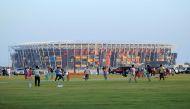
Beyond Qatar’s borders,H H the Father Amir strengthened the nation’s international standing through active diplomacy, mediation efforts, and global engagement. Under his leadership, Qatar became a prominent venue for political, economic, cultural, and scientific dialogue, culminating in its successful bid to host the 2022 FIFA World Cup — the first Arab and Islamic nation to do so.
On May 31, 1977, he was appointed the Heir Apparent and Minister of Defence. On May 10, 1989, Sheikh Hamad was appointed Chairman of the Supreme Council for Planning, which was assigned the task of formulating Qatar’s social and economic policies.
Soon after His Highness assumed the reins of power on June 27, 1995 he embarked on forging development and reform plans and programs. His plans for reconstruction were comprehensive, thorough, dimensional and multifarious in approach leading to a quantum leap in the development of the country, thus triggering wider development that encompassed education, health, sports, culture, media and infrastructure.
During his tenure, the country saw immense progress in the economy and energy sector. The North Field gas production boomed, and liquefied natural gas exports started from it in 1996, resulting in a rapid increase in the country’s earnings. In 2006, Qatar became the largest LNG exporter in the world, and in 2010 its LNG production capacity reached 77 million tonnes per annum.
In October 2001, the Supreme Council for Economic Affairs and Investment was established under the chairmanship of His Highness to oversee the economy, energy and investment affairs. This was done to diversify local and foreign investments to develop Qatar’s financial reserves and diversify public sources of income.
Among first decisions taken by his Highness after taking office was the establishment of “Qatar Foundation for Education, Science and Community Development” in August 1995 to support scientific and cultural drive in the country.
On June 8, 2004 the first permanent Constitution of the State of Qatar was promulgated- after a popular historic referendum held on April 29, 2003 – to achieve goal of introducing the means of democratic governance of the State by approving a permanent constitution that lays down the basic pillars of the society, expresses for the popular participation in decision-making, and ensures the rights and freedoms of citizens.
Under the new Constitution the people are the source of power, and the governance was founded on a system of separation of powers and their collaboration.
The country during the reign of His Highness was widely opened up economically, as well as in terms of development, civilisation and culture, and has become a hub for political, economic, cultural and scientific conferences. Qatari diplomacy also played a leading role in conflicts resolution and containment in different parts of the world.
On December 2010, Qatar became the first Arab and Islamic nation to win the hosting of the 2022 FIFA World Cup, by virtue of the ambitious and non-traditional investment ventures pursued by the country under the rule of His Highness.
His Highness was awarded many decorations by Arab and foreign countries in recognition of his efforts in strengthening bilateral relations and promoting areas of cooperation between nations and peoples.
On 25 June 2013, His Highness Sheikh Hamad handed over the reins of leadership to his Heir Apparent Sheikh Tamim bin Hamad.
The Achievements ofH H the Father Amir
Constitution:
On July 13, 1999, His Highness issued Amiri Decree No. (11) of 1999 stipulating the establishment of a competent committee to prepare the draft of a permanent constitution in line with the country’s progress and development. His Highness received the draft of the new constitution on July 2, 2002.
On April 29, 2003, a public referendum overwhelmingly approved draft constitution by 96.6%. The large turnout in the ballot boxes further demonstrated the response of the Qatari people to the appeal made by His Highness the Amir.
On June 8, 2004, the Permanent Constitution of the State of Qatar was issued, stating in its preamble the essential and guiding principles of the State’s policy and the organization of authorities and system of rule, laying out the basic pillar for the society, embodiment of popular participation, guaranteeing the rights and freedoms for the citizens.
Foreign Policy:
The foreign policy of the State of Qatar is based on the principle of consolidating international peace and security, promoting peaceful settlement of international disputes, mutual respect and common interests, peaceful coexistence and international cooperation, adherence to the values of justice and openness and respect for human rights.
The foreign policy of Qatar in the era of His Highness accomplished many feats, including: stablishing the Qatari Committee for the Rescue of Jerusalem in April 1996 to support the Palestinian cause and defend Islamic holy sites in Palestine. Sponsoring talks between the Taliban in Afghanistan and the US in order to find a solution to the conflict in Afghanistan; mediating the Lebanese reconciliation in 2008 with the Doha Agreement; sponsoring the Agreement signed between the Republic of Djibouti and the State of Eritrea on June 6, 2010. Signing of the Doha Document for Peace in Darfur in 2011 after more than two years of Qatari mediation; leading successful mediation efforts that resulted in the resolution of the dispute between Sudan and Eritrea, and the opening of the Kassala- Al Laffa road in 2011 to promote confidence-building between the two countries; and signing of the Palestinian reconciliation agreement between the Palestinian factions - “Doha Declaration”- on February 6, 2012.
In October 2005, Qatar received the non-permanent membership of the UN Security Council for two years and chaired the Council in October 2006. Qatar presided over the 66th session of the United Nations General Assembly in 2011-2012.
In March 2013, H H chaired the 24th ordinary session of the Arab League Council at the Summit Level hosted by Qatar, where the National Coalition for Revolutionary Forces and the Syrian Opposition held the seat of the Syrian Arab Republic in the League of Arab States. At the summit, H H launched an initiative to establish a fund for the support of Jerusalem with a capital of $1bn to fund projects and programmes that preserve the Arab and Islamic identity of Al-Quds Al-Sharif and to strengthen the steadfastness of its people and to enable the Palestinian economy to develop its own capacity, to disassociate itself from the Israeli economy, and to counter the policy of isolation and siege. Qatar contributed a quarter of a billion dollars to the fund.
View this post on Instagram
A post shared by The Peninsula Qatar (@peninsula_qatar)
Qatar NationalVision 2030:
In 2007, under the guidance and leadership of His Highness, the Qatar National Vision 2030 was prepared and approved in 2008.
The National Vision prompted a more modernised way of thinking, opened new horizons and defined the features of the society that the government and people of Qatar aspire to establish.
Developing Energy Sector:
Qatar’s success in the development of the energy sector was the result of vigorous national efforts, ambitious aspirations and bold decisions led wisely and determinedly by His Highness. This required overcoming many obstacles.
The 1980s saw a sharp decline in oil production due to field obsolescence. Production declined from 500,000 bpd in the 1970s to 300,000 bpd in 1987.
However, the efforts exerted by the State of Qatar, since His Highness took over the reins of power, increased production to 680,000 barrels per day in 2000, and to 760,000 barrels per day in 2005.
The first shipment of liquefied natural gas (LNG) was exported in late 1996 ushering a major economic breakthrough, which became evident in 2006 when Qatar became the world’s largest liquefied natural gas exporter and in 2010, when its production capacity reached 77 million tons of liquefied natural gas annually. At a ceremony held in Ras Laffan Industrial City, His Highness said, “Qatar is celebrating the achievement of one of its historic goals with a feat that will be forever etched in the history of the international gas industry as the day when Qatar officially became the world’s leading producer of liquefied natural gas.”
Communications and Media:
During the rule of His Highness, a number of locally, regionally and internationally leading and groundbreaking achievements took place within communication and media spheres:
Censorship of the local press was lifted in October 1995 and Law No. (25) of 1995 was issued on the protection of intellectual works and copyright.
In 1996, Al Jazeera News was established ushering in a new era in the region. In 2006, it expanded to become Al Jazeera Media Network with several channels under its umbrella.
On May 3, 1997, His Highness established the Qatar General Authority for Radio and Television which, on March 18, 2009, became the Qatar Media Corporation. It governs all audiovisual media in the state.
On March 30, 1998, His Highness abolished the Ministry of Information to make room for the freedom of the media and the press. In 2004, the Supreme Council for Information and Communication Technology (ICT) was established to organise the ICT sector, build a knowledge-based society and create a sophisticated technological infrastructure.
Education:
Human development was the main focus of His Highness’ strategy, as affirmed by the Qatar National Vision 2030.
The State of Qatar has launched a wide educational renaissance characterized by an increase in the number of schools and universities, the development of curricula and teaching methods, the provision of modern educational means, and the openness to international experiences in education. Specialised colleges and technical schools have emerged; Education City was inaugurated in 2003 and includes a number of educational, scientific, research and cultural institutions. As per Decree Law No. 24 of 2008, 2.8% of government revenues in the state budget were allocated to support scientific research.
In 1995, Qatar Foundation for Education, Science and Community Development was established. As a cultural and educational institution, its mission is to nurture the future leaders in the state of Qatar and develop their capabilities through the consolidation of the culture of excellence and innovation in society. Now Qatar Foundation houses a number of leading international universities and research centers, among them is the Hamad Bin Khalifa University established in 2010.
Health:
During the rule of H H the Father Amir, the State of Qatar has paid great attention to the developing the health sector and bolstering its performance. The number of hospitals in the country increased from only four in 1998 to 13 in 2012: Al Khor Hospital (opened 2005), Al Amal Hospital (2006), the Heart Hospital (2011), Cuban Qatari Hospital (2012) and Al Wakra Hospital (2012).
Aspetar Hospital is considered the first hospital in the region specialised in orthopedic and sports medicine. It includes highly skilled international experts in the field of sports medicine and orthopedics. It was chosen as FIFA Medical Centre of Excellence in 2008.
Infrastructure:
The infrastructure projects in the country were diverse and covered many areas: Construction of towers and high-rises in the Al-Dafna area to provide a business environment suited to the different sectors of the state. Construction of Hamad International Airport, one of the largest airports in the region. Works began in 2005 and operations launched in April 2014.
On June 6, 2011, His Highness established the Qatar Railways Steering Committee (Rail) which later on became Qatar Rail. It is a mega project comprising three major projects: Doha Metro, Lusail Light Transit, and the Long Distance Rail for the transport of people and goods.
In 2007, His Highness ordered the construction of the new Doha Port, with a total capital of 27 billion riyals. This project is one of the largest green projects in the world. It covers an area of more than 26 square kilometers in a strategic area located south of Doha and includes the new Doha Port, the new Amiri Naval Base, and the Third Economic Zone.
Economic Indicators:
The growth of the energy sector was the main driver of economic development during the rule of HH. The contribution of the hydrocarbon sector to the GDP increased from 37% to 54%. The value added of this sector increased from QAR 11 billion to about 403 billion, i.e. an increase of 22.2% at current prices, while the growth rate reached 11.4% at constant prices (2004 prices).
The size of this contribution has had a significant impact on other economic indicators:
Gross domestic product (GDP) at current prices increased from about QR30bn to about QR735bn, which is equivalent to 24.5 as it was during the first period and an annual increase of 19.5% during the same period. At constant prices, this output is more than seven times the annual increase of 11.7%.
GDP per capita increased from QR60,000 to QR 370,000, i.e. an annual increase of 10.6%. This large increase made the GDP per capita one of the highest in the world, much higher than that developed countries.
Cultural Field:
During his rule, the State of Qatar sponsored many cultural festivals and intellectual forums, and many cultural and heritage institutions have been established through which the history and heritage of Qatar has been revived. The most important cultural projects were:
Souq Waqif: One of Qatar’s most prominent heritage, tourism and commercial landmarks. It started as a popular market and a meeting place for the people of Qatar in the 1920s. It stood witness to the Pearl Era, and was restored while preserving its architectural and historical identity. Qatar Museums Authority was established in 2005 to oversee and reorganise state museums. The fruits of this work were: The Museum of Islamic Art, which opened in 2008 and is one of the most important architectural landmarks in the region, was designed by world renowned architect I.M. Pei. The Arab Museum of Modern Art “Mathaf” opened in 2010.
Non-Hydrocarbon Sector:
The contribution of the non-hydrocarbon sector increased -affected by hydrocarbon revenues - from around QR18.7bn at current prices, at the beginning of the rule of His Highness, to about QR332bn at the end of his reign; i.e. an annual increase of 17.3% at current prices, while at constant prices this increase was 12% annually .
The following are some developments that occurred on some of the components of this sector during the period 1995-2013: The manufacturing sector registered a 9.4% annual growth rate at constant prices. The growth of the construction sector was remarkable, it was estimated at 17.8% annually at constant prices. Distribution, trade, hotels and restaurants sectors also witnessed high growth rates reaching 18% at current prices and 13.1% at constant prices. The transportation and communications sector also registered increased growth with a growth rate of 17.6% per annum at constant prices.
Exports of goods and services increased from about QR13bn to about 538.5bn, an annual increase of 22.9%. The increase in exports was mainly due to the expansion in LNG and oil production and the increase in their prices.
Social Field:
Social sector had seen major achievements illustrated as follows: In 1996, increasing the social security for some categories by 50%.
These were: widows, and divorcees, needy families, persons with disability, orphans, those unable to work, elderly, families of prisoners, abandoned wives and families of missing persons. In 1999, municipal elections were held in which women won their right to run for election for the first time in the history of Qatar. In aim of building a prosperous Qatari society, pensions were increased by 40% in 2006, in addition to a 40% increase in the basic salaries of civil servants. This continued in 2011, when the salaries of civil servants working for governmental entities increased by 60% and military salaries increased by 120%.
Youth and Sport:
During the rule of His Highness sports infrastructure developed quickly, and the State of Qatar hosted many events and sports championships that established high standards organisation-wise, and made Qatar the sports capital in the region.
Doha hosted the World Table Tennis Championship in 2004, the World Weightlifting Championship in 2005, the 15th edition of the Asian Games in 2006, the 2010 World Indoor Championships in Athletics “Doha 2010”, the 2011 Asian Cup, and the 12th Pan Arab Games “Doha 2011” and the 9th World Congress on Sport and the Environment in the same year. In 2008, Aspire Academy was established to provide a high-quality sports environment that enhances the level of sport and prepares athletes in various sports disciplines to meet the needs of the Qatari society and achieve its sporting ambitions regionally and globally. The most notable sports achievement during his rule was in 2010 when Qatar won the bid to host the 2022 FIFA World Cup.
Investment:
In 2000, the Supreme Council for the Investment of State Reserves was established to manage and invest the State’s reserves. On October 23, 2001, His Highness set up the Supreme Council for Economic Affairs and Investment to undertake, in general, all matters related to economy, energy and investment, as well as the development of economic, financial, trade and energy policies.
On June 23, 2005, His Highness established the Qatar Investment Authority, which is affiliated to the Supreme Council for the Investment of State Reserves, with the aim of developing, investing and managing state reserve funds and other funds entrusted to it by the Supreme Council.