Doha, Qatar: As part of Doha Bank’s strategic transformation journey, the Bank announced yesterday, the launch of a new corporate identity. The new identity reflects the Bank’s evolving position in the market, its forward-looking vision, and its commitment to delivering unmatched customer experience. The new brand identity represents a significant step in the Bank’s ongoing transformation journey. Over recent years, the Bank has been actively pursuing a comprehensive transformation strategy to realize an ambitious vision centered on delivering unmatched customer experience and best-in-class banking products and services. As such, the new identity extends far beyond visual evolution of the brand, reflecting the Bank’s broader transformation agenda. It also underscores the Bank’s commitment to the values that have guided it since its establishment, while highlighting its future-oriented approach to embracing innovation and leveraging advanced technologies to create seamless banking experiences and broaden access to financial solutions for customers in Qatar and across the markets where the Bank operates. Commenting on the launch, the Chairman Sheikh Mohamed bin Fahad bin Mohamed Jabor Al Thani said: “Since its establishment almost five decades ago, Doha Bank has been accumulating a legacy of customer trust. We achieved this through unwavering commitment to our core values, continuous innovation and development, and active contribution to Qatar’s national growth. We have consistently fulfilled our role as a trusted financial intermediary across the economy while delivering outstanding banking services to both individuals and businesses. Today, the launch of our new brand identity marks a new chapter in a journey of continued success.” Sheikh Abdulrahman bin Fahad bin Faisal Al Thani, Group Chief Executive Officer of Doha Bank, added: “As Qatar continues to advance towards the realization of its National Vision, Doha Bank remains committed to continuously enhancing its products, services, and operations. The launch of our new corporate identity marks an important mile-stone in our strategic transformation journey and celebrates the achievements we have accomplished across the organization. It reflects our deep-rooted institution-al and community values while demonstrating our readiness to embrace the opportunities of the future. Above all, it underscores our enduring commitment to building trust, simplifying banking services, and harnessing technology to create value for our customers and the community we proudly serve.” On her part, Al-Anoud Khalid Al-Attiyah, Head of Marketing, Public Relations and Communications at Doha Bank, said: “The new Doha Bank identity has been built upon the Bank’s long-standing legacy. The logo comprises the letter D, rendered in bold and smooth lines inspired by the sail of the traditional Qatari dhow. The design reflects our commitment to our authentic values while symbolizing continuous progress, innovation, and a clear vision for the future.” She further highlighted the symbolism behind the new brand colors, stating: “We carefully selected a visually balanced color palette rich in meanings and symbolism. Inspired by Qatar’s shores, the identity incorporates a deep shade of blue representing depth, growth, and progress, complemented by a sand beige color that reflects our strong roots and enduring connection to our values and traditions” The new corporate identity will be rolled out progressively across all customer touch-points and stakeholder communications in accordance with a phased implementation plan, beginning in Qatar and extending across Doha Bank’s international network.

Doha, Qatar: Commercial Bank has been recognised with two prestigious awards by International Finance for Best Mobile Banking App and Most Innovative Use of AI Technology in Banking. International Finance Awards recognises banks that lead the way in performance, innovation, and leadership across the global banking industry. This recognition highlights Commercial Bank’s ongoing investment in digital transformation, with artificial intelligence being firmly embedded in its technology, and its growing leadership in digital banking and innovation in Qatar. With the CBQ Mobile App at the core of this achievement, the Bank continues to prioritize customer experience through secure, practical mobile banking solutions that give customers seamless access to a wide range of services. Shahnawaz Rashid, EGM and Head of Retail Banking at Commercial Bank, said: “These awards reflect Commercial Bank’s commitment to leading digital banking in Qatar through continuous innovation and customer-centric transformation. Our Mobile App continues to set the benchmark for secure, intuitive banking, while the award for Most Innovative Use of AI highlights our strategic use of artificial intelligence to enhance customer experience, security, and operational efficiency across our digital ecosystem. We remain committed to driving innovation, delivering exceptional value to our customers, and reinforcing our position as Qatar’s digital banking leader.” Ghinwa Baradhi, EGM and Chief Operating Officer at Commercial Bank, said: “At Commercial Bank, we are investing in AI to accelerate our journey in becoming a more customer-centric, agile, and data-driven organization. AI for us is about delivering tangible outcomes while enhancing customer experiences. Through agile ways of working, we are creating a culture of experimentation, collaboration, and rapid delivery that allows us to better anticipate and respond to our customers’ evolving needs. This recognition is a testament to the commitment and passion of our teams, whose efforts are helping shape the future of banking and creating lasting value for our customers.”
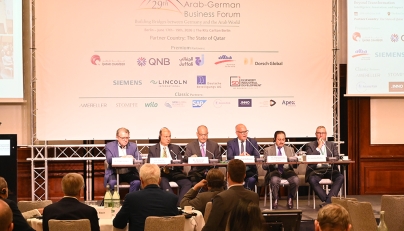
Doha, Qatar: QNB Group, a leading financial institution in the Middle East and Africa, yesterday issued its Q2 2026 Strategic Progress Update, highlighting continued execution across innovation, sustainability, and institutional capability development across its international network. During the second quarter, the Group advanced a series of initiatives aligned with its long-term strategic priorities, focused on strengthening economic resilience, supporting future-ready industries, and enabling sustainable growth across key markets. These developments reflect QNB’s disciplined approach to long-term value creation, underpinned by diversified operations, strong governance, and continued investment in innovation and human capability. Abdulla Mubarak Al-Khalifa, Group Chief Executive Officer of QNB, said: “Our Q2 performance demonstrates clear leadership in financing the region’s future, from pioneering sustainable energy projects to empowering the next generation of innovators. Our focus remains on supporting economic development, strengthening institutional resilience, enabling innovation, and delivering sustainable long-term value across the markets we serve. The diversity of our international platform, combined with disciplined execution and strong governance, continues to position the Group to navigate evolving market conditions while maintaining focus on responsible growth and customer-centric innovation.” Expanding world capacity through strategic partnerships and financing During the second quarter, QNB continued to support strategic sectors and long-term economic development through targeted financing initiatives across its international network. In North Africa, QNB Egypt participated in the landmark financing of Green Sky Capital’s $500m Sustainable Aviation Fuel (SAF) facility in Egypt’s Suez Canal Economic Zone, the largest SAF production facilities in the Middle East and Africa.. The project is expected to produce up to 200,000 tonnes of biofuel per annum, contributing to an annual reduction of up to 500,000 tonnes of carbon dioxide equivalent, underscoring our Corporate Banking division’s commitment to financing green infrastructure. The project supports the development of future energy solutions while reinforcing the region’s role in emerging sustainable aviation fuel value chains QNB Egypt also signed a medium-term financing agreement worth EGP 5.5 billion with MARAKEZ to support the continued expansion of the District 5 mixed-use development in East Cairo. The project contributes to broader economic activity through integrated residential, commercial, and lifestyle infrastructure. Further supporting economic development and private sector growth, QNB Egypt signed a credit facility agreement worth EGP 3 billion with GlobalCorp Financial Services Group to support financial leasing and real estate financing activities. The facility is designed to expand access to flexible financing solutions across multiple sectors, supporting investment, business growth, and financial inclusion. QNB Egypt also successfully arranged an EGP 11.98 billion syndicated loan for Kased Khair for General Supplies and Contracting to finance the development of new marine berths at East Port Said Port. The project is expected to strengthen Egypt’s logistics and maritime infrastructure, enhance trade connectivity, and support long-term economic growth. The Group also continued to support energy transition initiatives across its international network. In Türkiye, QNB Türkiye provided $38m in long-term financing to support two landmark renewable energy projects. This strategic funding includes $23m dedicated to a state-of-the-art 36MW self-consumption solar power plant, alongside the structured distribution of the remaining $15m – originating from a partnership initiated in 2025 - to partially finance a 140 MW wind power investment. Advancing innovation and future capability The Group continued to strengthen its focus on innovation, education, and future workforce capability through initiatives designed to support knowledge-based growth across the countries we operate in. During the quarter, QNB partnered with Carnegie Mellon University in Qatar (CMU-Q) to establish the QNB Center for Business Innovation, a platform focused on advancing business innovation, practical learning, and future-ready talent development. Creating and delivering value QNB continued to strengthen its position as one of the region’s leading financial institutions through strong performance, international reach, and continued focus on customer value. During the period, QNB remained the most valuable banking brand in the Middle East and Africa according to Brand Finance, with a brand value of $10.3bn and a global ranking among the world’s 50 most valuable banking brands. The Group’s Brand Strength Index (BSI) remained stable at 86, reflecting continued trust among customers and stakeholders. The Group also participated in major international forums focused on strengthening economic cooperation and investment flows between the Arab world and Europe. This included Golfe Vision 2026 in Paris, a leading platform for dialogue between France and the Gulf region, as well as the Arab-German Business Forum in Berlin, held under the theme “Building Bridges Between Germany and the Arab World.” Through its participation, QNB contributed to discussions on trade, investment, and opportunities for deeper cross-border collaboration, reinforcing its commitment to strengthening commercial ties between regional and international markets. Strengthening sustainability and institutional resilience During the quarter, QNB Group was named “Sustainable Lender of the Year” at the 2026 Middle East Transition Finance Awards organised by Environmental Finance, recognising the Group’s role in advancing sustainable finance across the region. This award reflects the impact of our sustainable finance framework, which guided the deployment of over $11bn towards green, social, and sustainability-linked projects. QNB's visit to Enaya Specialized Care Centers. Supporting communities and inclusive development The Group continues to support initiatives that contribute positively to the wellbeing of the communities in which it operates. As part of its Eid Al Adha community engagement activities, QNB Qatar organised visits to Enaya Specialized Care Centers, providing support and gifts to patients as part of efforts to promote wellbeing and community connection during the festive period. Outlook As regional and international markets continue to evolve, QNB remains focused on disciplined execution across its strategic priorities while maintaining a long-term approach to sustainable growth and institutional resilience. The Group will continue to strengthen innovation capability, support strategic sectors through responsible financing, and further integrate sustainability across its operations and client activities. Looking ahead to Q3 2026, QNB Group will continue to build on its strong momentum by advancing a number of strategic priorities.


 Woqod achieves QR398m net profit in first half of 2026
Doha, Qatar: Qatar Fuel Company (Woqod) announced that its Board of Directors chaired by Ahmed Saif Al-Sulaiti approved among other things the financial results of Woqod Group for the first half (H1) ended on 30 June 2026. Woqod Group’s net...
Shell offloads S.Africa downstream business to Abu Dhabi
London: British energy giant Shell announced Tuesday a deal to sell its South African downstream business, including 580 fuel stations, to the Abu Dhabi National Oil Company (ADNOC). Shell said the sale, valued at about $1 billion, formed part of...
 Gold prices hit two-week high
Singapore: Gold prices rose to a two-week high on Tuesday. Spot gold climbed 1.7 percent to $4,145.24 an ounce, after hitting its highest level since Jul. 7 earlier in the day. US gold futures for August delivery jumped 1.9 percent...
 QSE index opens lower
Doha, Qatar: Qatar Stock Exchange (QSE) general index fell by 0.14% at the start of Tuesday's trading, losing 14.48 points to reach 10,252 points, under pressure from four sectors. The market data showed gains in the sectors of Transportation (+0.26%),...