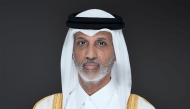
Abdalla Mohamed
As the catastrophic conflict in Sudan continues to devastate the country, displacing millions and creating one of the world's gravest humanitarian emergencies, the international community finds itself in a familiar diplomatic impasse.
Traditional mediation efforts have repeatedly stalled, leaving a critical vacuum in the search for a sustainable political solution. Against this backdrop, attention is increasingly turning toward Doha. Guided by a foreign policy structurally anchored in Article 7 of its Constitution—which commits the State of Qatar to the peaceful settlement of international disputes—Qatar possesses a diplomatic toolkit uniquely suited to navigating the hyper-complex, multi-layered conflict in Sudan.
Doha's potential to facilitate a breakthrough in Sudan is not rooted in theoretical idealism but in a well-established record of mediating some of the world's most challenging conflicts. Qatar gained international recognition by facilitating negotiations between the United States and the Taliban that culminated in the 2020 Doha Agreement, demonstrating its ability to sustain dialogue between actors separated by profound ideological divisions.
Similarly, in Central Africa, Qatar demonstrated diplomatic agility by facilitating the 2022 Doha Agreement between Chad's transitional authorities and more than forty political and armed movements, paving the way for their participation in the National Inclusive and Sovereign Dialogue
Unlike many external mediators whose diplomatic initiatives are constrained by alliance politics, military commitments, or ideological alignments, Qatar has cultivated a foreign policy centered on dialogue with diverse actors while maintaining credibility across competing regional and international camps. Its diplomacy relies less on coercive leverage than on sustained communication, confidence-building, and the ability to maintain open channels with governments, armed movements, and international organizations simultaneously.
This capacity to engage multiple stakeholders without becoming identified with a single political camp has become one of the defining characteristics of the "Doha model" of mediation.
More recently, Doha demonstrated its capacity to manage highly sensitive geopolitical disputes by facilitating prisoner exchanges and maintaining indirect communication channels between the United States and Iran.
These diplomatic achievements share a common characteristic: Qatar's ability to build trust among sharply polarized actors while preserving its reputation as a credible and discreet intermediary.
The need for a different mediation approach in Sudan has become increasingly evident following the limited progress achieved by previous diplomatic initiatives. The early Jeddah negotiations and subsequent internationally supported efforts struggled to address an exceptionally fragmented conflict through predominantly bilateral frameworks, while simultaneously operating within a broader geopolitical environment shaped by competing regional interests.
Among the factors contributing to these difficulties was the controversial decision to structure negotiations around parity between the Sudanese Armed Forces and the Rapid Support militia, a framework that many critics argued complicated efforts to preserve institutional legitimacy and the authority of the Sudanese state.
Likewise, consultations held under the auspices of the international Quintet in Addis Ababa encountered significant obstacles after procedural disputes and accusations of administrative bias prompted several major Sudanese civilian and political groups to suspend or boycott their participation.
Collectively, these experiences suggest that externally driven, top-down diplomatic frameworks are unlikely to succeed unless they command broad domestic legitimacy and reflect Sudan's complex political and institutional realities.
Applying Qatar's mediation experience to Sudan requires recognizing that Doha approaches the country not as a newcomer but as a long-standing diplomatic partner. Qatar served as the principal mediator behind the Doha Document for Peace in Darfur, a comprehensive peace process built upon years of consultation with regional actors, tribal leaders, armed movements, civil society organizations, and representatives of the Sudanese government.
This institutional memory provides Qatar with an important comparative advantage. Rather than being perceived as an external actor seeking influence, Doha enjoys a degree of historical credibility derived from its sustained engagement with Sudanese stakeholders and its consistent emphasis on national sovereignty and inclusive political dialogue.
An equally important strength of Qatar's approach lies in its integration of diplomacy with humanitarian engagement. In international forums, including the United Nations Human Rights Council and the Berlin International Conference on Sudan, Qatari officials have consistently argued that humanitarian assistance, while indispensable, cannot substitute for a comprehensive political settlement.
At the same time, Qatar Charity has implemented humanitarian assistance worth approximately QAR 98 million, benefiting more than one million Sudanese affected by the conflict through the provision of food, medical care, shelter, and emergency relief. By simultaneously addressing urgent humanitarian needs and pursuing political dialogue, Qatar advances a mediation model that seeks to respond to both the immediate consequences and the structural drivers of violent conflict.
The greatest contribution a Qatari initiative could make may lie in its ability to serve as a bridge among multiple regional and international diplomatic tracks rather than replacing them.
Sudan's peace efforts have become fragmented across parallel initiatives involving regional organizations, neighboring states, and international partners. Qatar is well positioned to help connect these parallel processes by leveraging its strong relationships with Western governments, its active role within the Arab League, and its constructive engagement with African institutions.
By shifting the focus from geopolitical competition toward a genuinely inclusive Sudanese political process that restores the centrality of civilian voices and state institutions, Doha could help rebuild the foundations of a viable peace process.
Having played important mediation roles in conflicts ranging from Afghanistan to U.S.–Iran negotiations, Qatar has repeatedly demonstrated that successful diplomacy depends less on coercive power than on credibility, patience, and the ability to maintain dialogue where others cannot. Sudan's tragedy demands precisely this kind of diplomacy.
While no mediator can guarantee peace, Qatar's distinctive diplomatic experience and accumulated institutional credibility may offer one of the most promising pathways toward rebuilding an inclusive political process capable of ending one of Africa's most devastating conflicts.