Doha: The Qatar Stock Exchange index closed lower on Sunday, declining 130.88 points, or 1.45 percent, to end at 8,874.73. During the session, 113.67 million shares worth QR 222.03 million were traded across 13,659 transactions in all sectors. Nine companies saw gains, while 38 others declined, and six maintained their previous closing prices. The market capitalization at the close of trading stood at QR 539,796,505,029.014, compared with QR 546,048,080,593.668 in the previous session.

Doha, Qatar: Entrepreneurs and investors from Qatar and abroad can access a range of market information, business data and location-based insights through Qatar Business Map Platform, a digital initiative of the Ministry of Commerce and Industry (MoCI) designed to support market research and more informed business decisions. The platform provides users with access to data and insights that can assist in exploring commercial activities, analyzing markets, identifying suitable business locations and discovering investment opportunities across the country, according to MoCI. Designed for people considering establishing a new business as well as those exploring investment opportunities, the platform brings together information that can help users develop a clearer understanding of Qatar’s commercial landscape. Among the information available is the number of businesses and shops in specific areas, giving users an overview of existing commercial activity. The platform also provides information about the demographic composition of areas, allowing entrepreneurs and investors to examine the characteristics of communities when researching potential markets. Another feature helps users identify the areas most aligned with their target audience. This can be relevant for businesses seeking locations that correspond with the customers they intend to serve. Users can also explore the types of existing activities and businesses across different areas, providing insight into the commercial mix in different parts of the country. The platform further maps the geographic distribution of activities and businesses, including points where commercial activity is concentrated. This geographic information allows users to examine business patterns across Qatar and consider different locations as part of their market research. According to infographic shared by the Ministry, the Business Map Platform includes six services aimed at helping users study the market. One of these is AI Map Analysis, which allows users to explore and analyze data in ways intended to provide a clearer understanding of market conditions. The Find the Best Location service is designed to help users identify locations suitable for the nature of their business and target audience. Location-based information can provide an additional resource for entrepreneurs evaluating where to establish a commercial activity. The platform also offers Monitor Business Closures, enabling users to track business closures and monitor market changes and opportunities. Through Discover New Businesses, users can follow market developments and emerging opportunities. The service provides another way of examining changes in commercial activity and identifying areas where new businesses are developing. The Explore Business Types service allows users to examine commercial activities according to business type, sector and geographic location. This can help users study how different business categories are distributed across Qatar. The sixth service, Attract Foreign Investment, provides information to support the exploration of foreign investment and its distribution across Qatar. Together, these services create a digital resource for entrepreneurs, investors and others conducting preliminary market research.

Doha, Qatar: At the Google Cloud Summit Doha, held at the Qatar National Convention Centre (QNCC) on 22 September 2026, Msheireb Properties announced a strategic collaboration with Google Cloud and Mannai InfoTech, an ICT division at Mannai Technologies, to deploy Gemini Enterprise. This strategic initiative marks an important step in Msheireb Properties’ digital transformation journey, bringing advanced agentic AI capabilities into its operations to enhance efficiency, enable smarter decision-making and support its vision of a smart and sustainable city rooted in Qatari heritage. As the developer of Msheireb Downtown Doha, the world’s first sustainably regenerated downtown, Msheireb Properties continues to advance innovation in smart city development. The adoption of Gemini Enterprise will enable the organization to transform how it manages and accesses information across its extensive asset portfolio, using advanced AI-powered search, retrieval and agentic capabilities. Through this partnership, Msheireb Properties, and Mannai InfoTech will work with Google Cloud to explore and implement AI-driven use cases that can improve operational efficiency, enhance the experience of employees and stakeholders, and create new opportunities for intelligent and sustainable city management. The integration of the Gemini Enterprise with Msheireb Properties’ enterprise collaboration and workspace planning tools was enabled through the technical expertise of Mannai InfoTech. The announcement at QNCC underscores the growing momentum of Qatar’s technology ecosystem. For Msheireb Properties, this is an investment in the cognitive infrastructure of a smart city and a contribution to the goals of Qatar National Vision 2030. “Msheireb Downtown Doha was built on the belief that heritage and innovation can shape a better way of urban living. Our collaboration with Google Cloud and Mannai InfoTech builds on that foundation. With Gemini Enterprise, our teams can draw on the knowledge behind every building and service in the city, making faster and better-informed decisions for the people who live, work and visit here,” said Senior ICT Manager, Msheireb Properties Eng. Ahmad Al Korbi.
Qatar Stock Exchange index closes lower
Doha: The Qatar Stock Exchange index closed lower on Sunday, declining 130.88 points, or 1.45 percent, to end at 8,874.73. During the session, 113.67 million shares worth QR 222.03 million were traded across 13,659 transactions in all sectors. Nine companies...
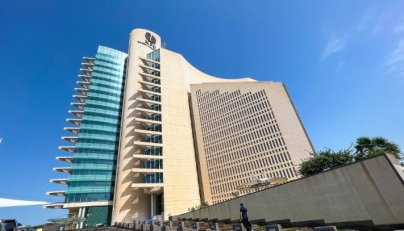 Kuwaiti oil price rises by $4.89 per barrel
Kuwait: The price of Kuwaiti oil rose by $4.89 to $108.10 per barrel in Thursday's trading, up from $103.21 on Wednesday, according to the Kuwait Petroleum Corporation. In global markets, Brent crude futures rose by $4.08 to $104.28 per barrel,...
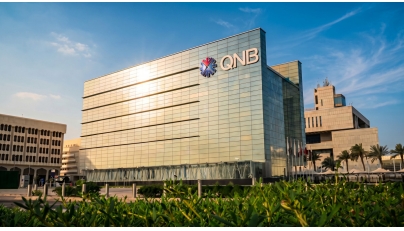 Republic of Korea reshapes role in global trade amid record exports: QNB
Doha, Qatar: Republic of Korea has demonstrated a strong ability to adapt to shifts in global trade, supported by record exports, semiconductor leadership and expanding security and commercial partnerships, Qatar National Bank (QNB) said in its weekly report. The bank...
 ‘Qatar stocks trading cautiously ahead of earnings season’
Doha, Qatar: Qatar Stock Exchange (QSE) index ended this week’s trading down 2.03 percent, losing 186.630 points compared with the end of the previous week to settle at 9,005 points, under pressure from six sectors. The banks and financial services...