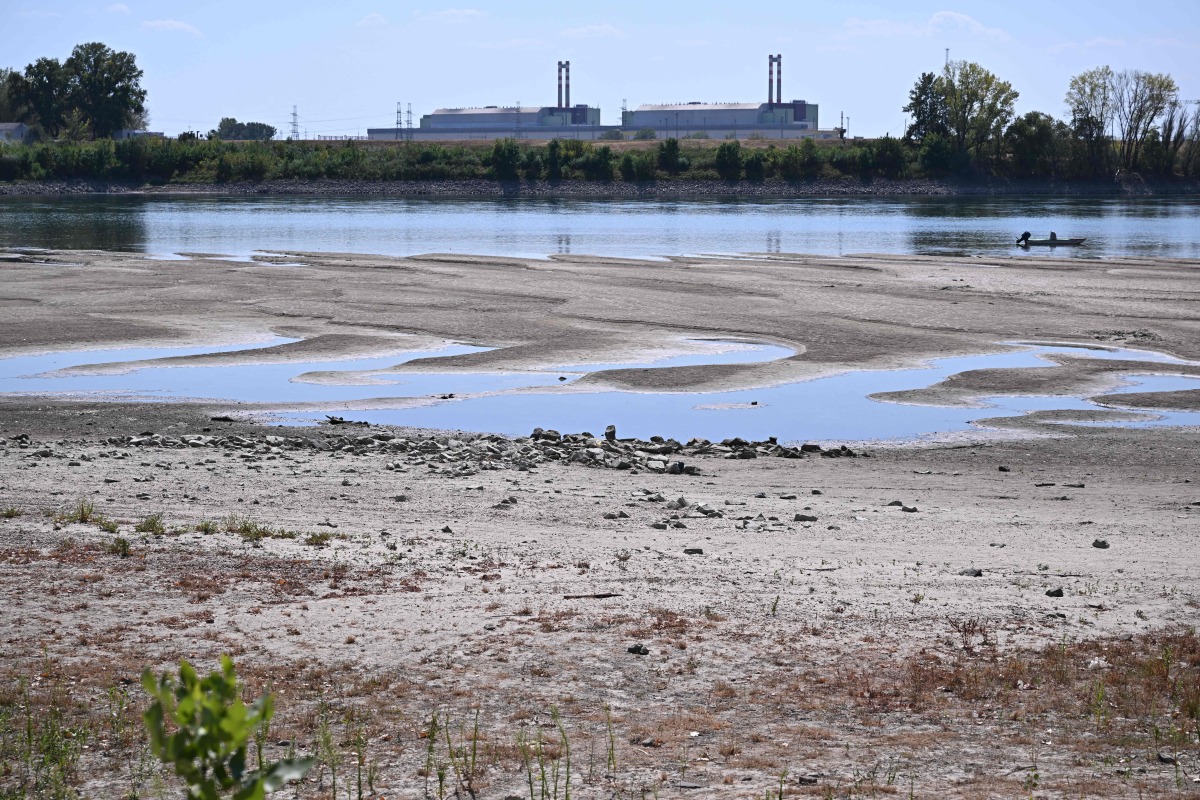
:The dried-up Danube riverbed is pictured with the Paks power plant at the background, near Dunaszentbenedek, close to Paks town on July 31, 2026. (Photo by Attila KISBENEDEK / AFP)
Budapest: Hungary is preparing to shut down its only nuclear power plant for the first time in its 44-year history as record-low water levels in the Danube River disrupt cooling operations, authorities said today.
The country's Prime Minister Peter Magyar told a press conference that the Paks Nuclear Power Plant could remain offline for several weeks as water levels in the Danube are expected to continue falling.
Located about 90 kilometers south of Budapest, the plant is currently operating at less than half of its normal capacity, generating around 965 megawatts of electricity compared with its usual output of about 2,000 MW.
Magyar said further reductions in power generation were expected later in the day and that the facility was likely to be shut down completely by Tuesday or Wednesday. He stressed that the shutdown could be carried out safely and would pose no risk to the public or the environment.
The four-reactor Paks plant relies on water from the Danube to cool its reactors. However, exceptionally low river levels have hampered the ability of intake pumps to draw sufficient cooling water, forcing operators to progressively reduce output.
Paks generates nearly half of Hungary's electricity. A complete shutdown would mark the first time the plant has gone entirely offline since it began operations 44 years ago, underscoring the growing impact of prolonged drought and extreme heat on critical energy infrastructure across Central Europe.