The Carnegie Mellon University in Qatar (CMU-Q) is set to play major role in Qatar’s journey to achieving economic diversification and knowledge-based society in line with the country’s long term vision.
The premier American university’s Doha campus is working to focus and explore the wider applications of innovative technologies such as Blockchain, Artificial Intelligence (AI) and Fintech, which are expected to be a game changer and driving the new wave of digital revolution, said senior official of the private nonprofit research university, whose main campus is located in Pittsburgh, Pennsylvania.
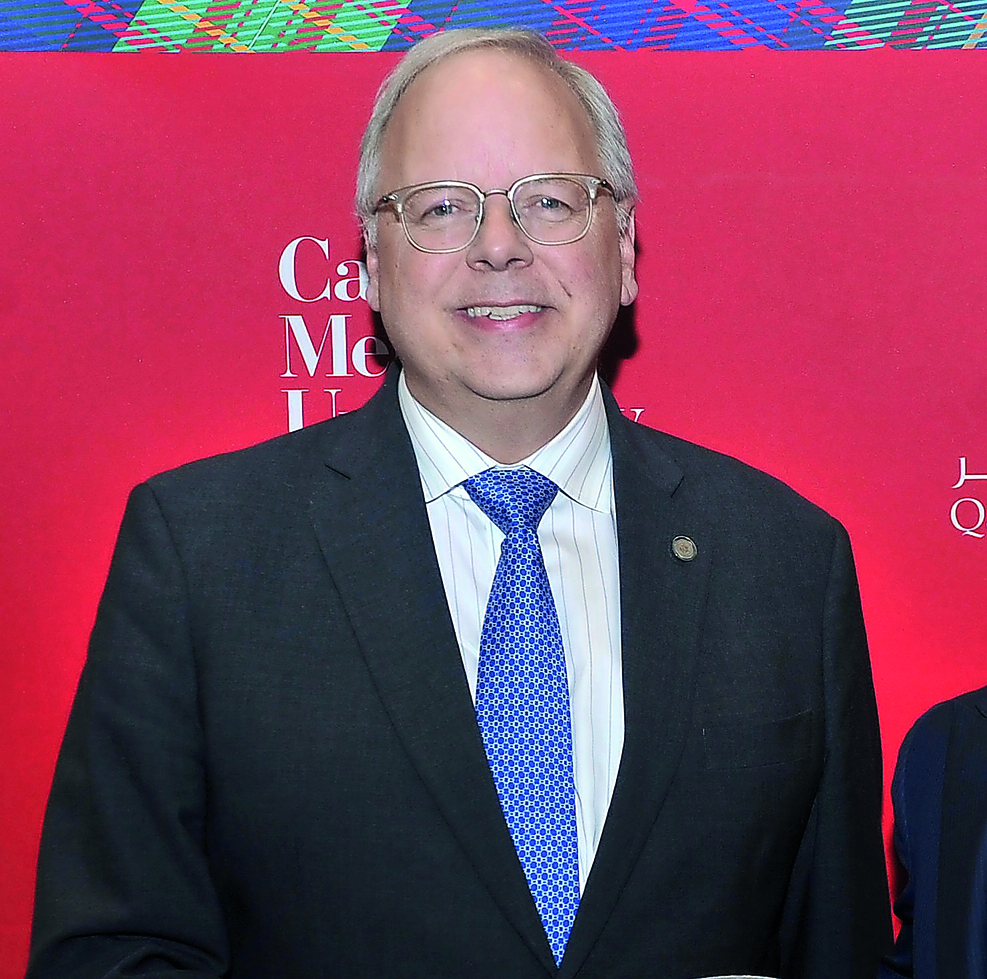
“We have dedicated faculties who are working on Blockchain technology. There is a lot of great application of the technology, but it is important to distinguish Blockchain from the currencies such as Bitcoin etc. The innovative technology can have wider applications, and our faculties are exploring the various possibilities,” Michael Trick (pictured), Dean of CMU in Qatar, told The Peninsula.
Trick added: “Blockchain technology has very interesting future. But I think the most interesting aspect is when it moves away from currency to some other fields such as supply-chain.”
CMU-Q has plans to have courses that adapt to what market and businesses need and looking forward to introduce new programmes which will be in line with Qatar’s long term vision.
“Clearly this is (introducing new courses) an important issue and I would not be surprised to see more courses in areas such as cybersecurity, AI, and advanced computing technology. This is a great direction for us as well as Qatar,” said Dean Trick.
Commenting on Fintech (financial technology), he said that the CMU-Q is working in close cooperation with major stakeholders from the banking and financial sector, including the Qatar Central Bank (QCB, the regulator) and Qatar Financial Centre (QFC) Authority, the Doha-based business and financial centre providing legal and business infrastructure for financial and other services.
“Fintech is really a strong direction for us to work. We have programmes and my senior Associate Dean is really into Fintech and its various applications that will help Qatar emerge as the regional hub of the financial technology and other services,” Trick added.
“Currently the programme that we offer here are business, computer science, information systems, and biology. All of that are very important for the diversification of the Qatari economy.”
On cybersecurity he noted that it is a huge issue in Qatar. Every company and the government entity face it. And without home-grown people, who are educated and trained here, it won’t be easy to find a viable and sustainable solution to the problem.
He also said that CME-Q, through its students, is playing a good role in this regard. And it is also trying to strengthen its contribution to the state’s efforts in enhancing capabilities and preventive measures to ensure cybersecurity by collaborating with various stakeholders.
“CMU-Q has undergraduate programmes on computer science and information systems. It also offers cybersecurity courses within it, and many of our students take internship and position in cybersecurity issues and a lot of them also opt to pursue Masters Degree and specialised studies in CMU to meet the market demand,” he said.