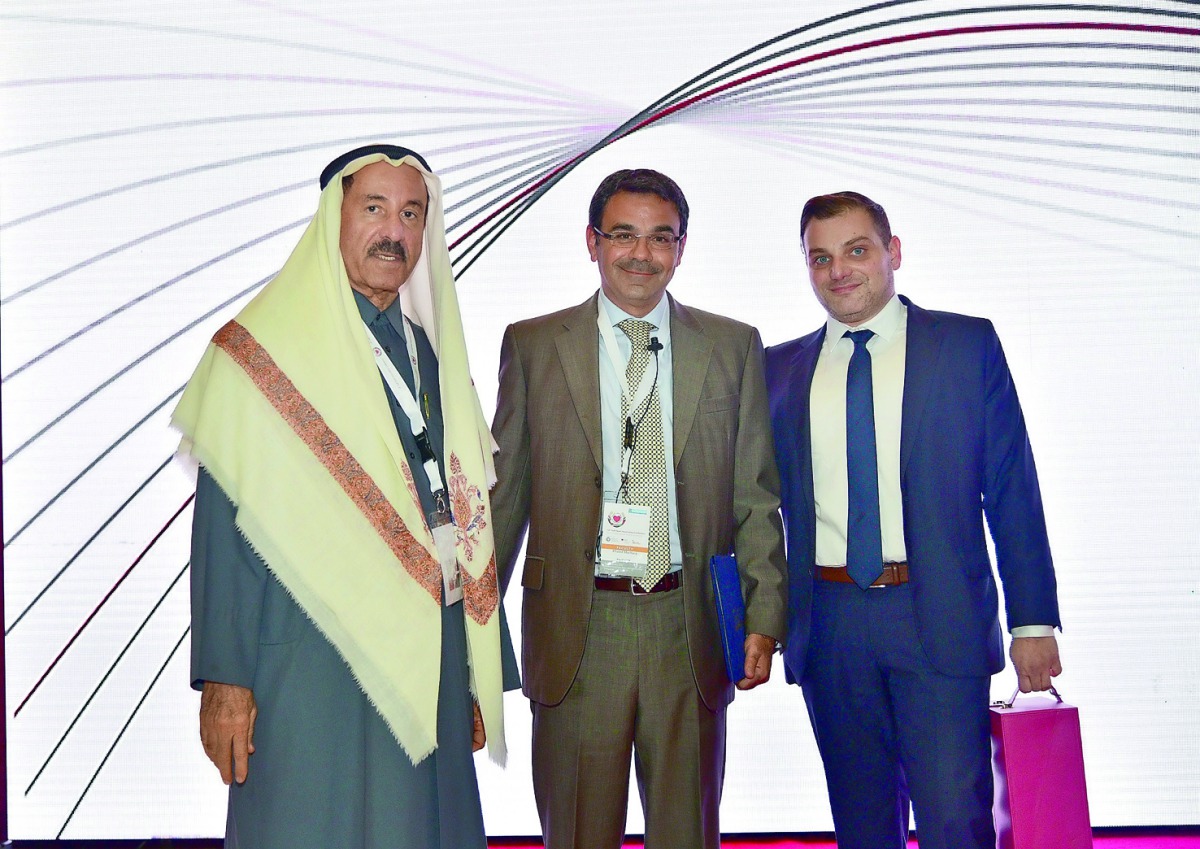
From left: Dr Hajar Ahmed Hajar Al Binali, Prof. Khaled Machaca and Dr Charbel Abi Khalil at the WCM-Q’s Biomedical Research Program.
DOHA: Weill Cornell Medicine – Qatar (WCM-Q) has participated in an international heart conference, hosting a symposium on cardiology and diabetes. The 14th Gulf Heart Association Conference and 11th Gulf Vascular Society Symposium were held with WCM-Q supporting the event as a platinum sponsor and providing speakers and moderators.
Patients with diabetes have a heightened risk of developing several cardiovascular disorders, such as hypertension, stroke, coronary heart disease, cardiomyopathy, congestive heart failure and coronary heart disease. Dr Charbel Abi Khalil, Assistant Professor of Genetic Medicine and Assistant Professor of Medicine at WCM-Q, delivered a lecture entitled ‘Epigenetic basis of cardiovascular complications of diabetes’. Dr Abi Khalil explained how diabetes triggers epigenetic changes on the DNA and predisposes people to certain cardiovascular complications.
Prof Machaca, Associate Dean for Research at WCM-Q, gave an introductory speech outlining the scope of WCM-Q’s Biomedical Research Program (BMRP). Other speakers at the WCM-Q symposium included Dr. Mark Cooper, Professor of Medicine at Monash University in Australia, who spoke about inflammation, oxidative stress and cardiovascular outcomes in patients with diabetes; Dr Michel Marre, Professor of Medicine at Paris VII – Sorbonne Paris Cite University, who discussed new anti-diabetic drugs and their effects on the heart in diabetics; and Dr Samer Kabani, Associate Professor of Medicine at the Lebanese American University in Beirut, who spoke about the current situation and the challenges that are faced by researchers studying the heart and diabetes in the Middle East.
Prof. Khaled Machaca said it had been a pleasure to help sponsor this exceptional event and act as a moderator for one of the symposia. He said: “Cardiovascular conditions are a global medical issue and have a devastating impact on the lives of patients and their families. Conferences like this create and strengthen the links between experts and institutions, facilitating collaborations and allowing knowledge to be disseminated more easily, ultimately providing clinicians with the tools to improve patient outcomes. Studies into cardiovascular conditions are central to WCM-Q’s research focus and this conference has proved to be a fascinating and valuable event for everyone involved.”