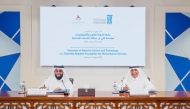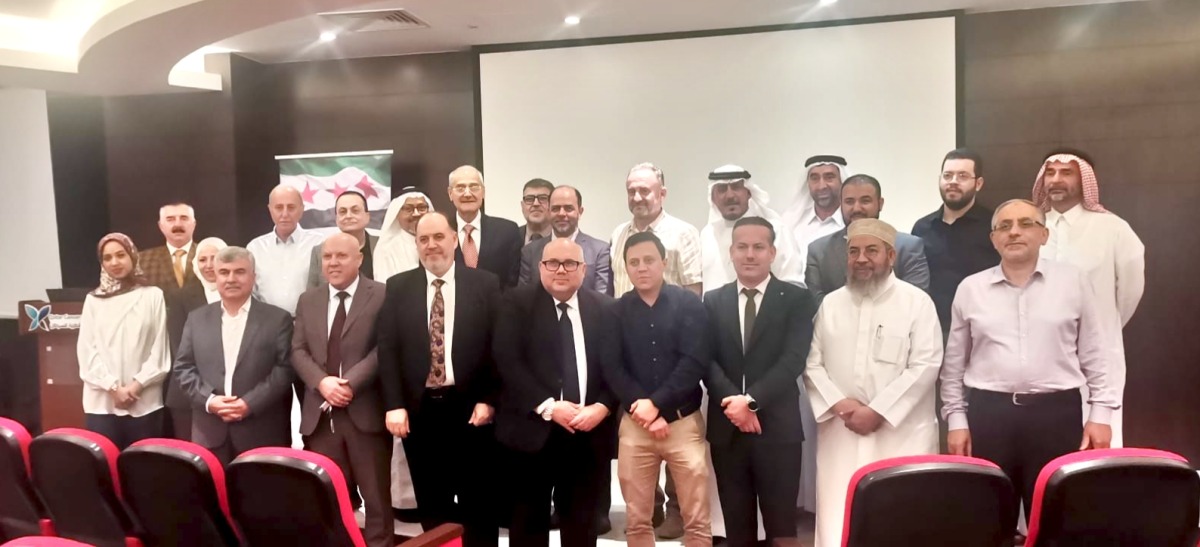
Doha, Qatar: The Syrian Medical Association in Qatar, in collaboration with the Qatar Cancer Society, organised a scientific and cultural symposium entitled ‘The History of Medicine in Islamic Civilisation’ at Al-Razi Hall of the Qatar Cancer Society, with the attendance of a distinguished group of physicians, academics, and scholars interested in the history of medicine and Islamic civilisation.
The event was moderated by Dr. Mahdi Alwani and opened with a welcoming address and an introduction to the programmes and initiatives of the Qatar Cancer Society, delivered by Dr. Hadi Mohammad Abu Rasheed, Director of Programmes and Scientific Advisor at the Society. He highlighted the organisation’s efforts in public awareness, community support, and healthcare initiatives.
Dr. Hassan Al-Sawwaf, President of the Syrian Medical Association in Qatar, emphasised the importance of reconnecting younger generations with the scientific and civilizational heritage of the Islamic nation, while also strengthening the scientific and cultural presence of the Syrian community in Qatar.
The symposium featured a keynote lecture by Professor Dr. Abdul Nasser Kaadan, lecturer at Weber State University in the United States and President of the International Society for the History of Islamic Medicine. His presentation explored the contributions of Muslim scholars and physicians to the establishment and advancement of medical sciences, as well as the influential role of Islamic medical institutions throughout history.
Professor Dr. Ibrahim bin Mohammed Al-Muzaini, Professor of Civilizational Studies and the History of Science among Muslims at Imam Mohammad Ibn Saud Islamic University, also participated with a distinguished literary contribution, presenting a poem praising the achievements of Muslim physicians and scientists and their profound humanitarian and scientific impact on world civilization.
In addition, Dr. Mohammad Monajed, Secretary-General of the Syrian Medical Association in Qatar, stressed the importance of organising such scientific and cultural events in promoting scientific awareness and cultural understanding within society. He noted that these initiatives help strengthen the confidence of medical professionals, especially younger healthcare generations, in their historical and scientific heritage, while also providing a deeper understanding of the present through a meaningful connection with the past.
At the conclusion of the symposium, attendees expressed their appreciation for the rich scientific and cultural content of the event, praising its role in highlighting the civilizational and scientific contributions of Muslims and in fostering cultural and intellectual dialogue within Qatar’s diverse academic and professional communities.