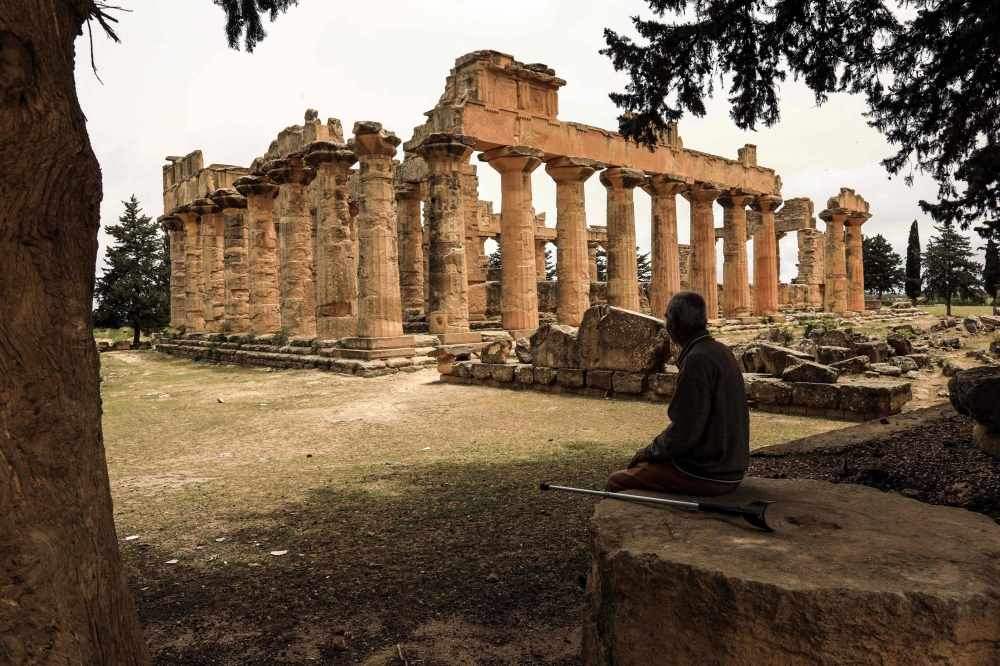
(Files) A man sits in the shade in front of the Temple of Zeus at the archaeological site of Cyrene, near the town of Shahat on Libya's northeastern Mediterranean coast, on May 18, 2026. (Photo by Abdullah Doma / AFP)
Shahat, Libya: In eastern Libya, a small group of passionate archaeologists are striving to safeguard the ancient ruins of Cyrene and Apollonia -- sites first targeted by jihadist groups, then ravaged by Storm Daniel.
The UNESCO-listed ruins were once at the heart of a unique network of Greek colonies in North Africa.
"Breathtaking," tour guide Hamdi Al-Kailani said, surveying the imposing Temple of Zeus at Cyrene. The monument, he added, is slightly bigger than the Parthenon in Athens.
While calm reigns there today, Cyrene -- much like other sites across eastern Libya -- was the target of looting by jihadists, including the Islamic State group, when the country descended into chaos following the fall of longtime ruler Muammar Gaddafi in 2011.
With state institutions largely absent, local experts and aficionados had to improvise.
"We were so afraid," recalled Smail Dakhil, who oversees the dilapidated Museum of Cyrene, which houses statues of Apollo and Zeus, and a storage of more than 40,000 rare artifacts salvaged from the ancient city.
"We came up with a plan among colleagues to hide the small statues, gold coins and archives in our homes," he told AFP.
Larger sculptures that could not be moved, including a rare female sphinx, were protected by volunteer archaeologists and residents who "stood watch over the sites around the clock so no thefts were recorded in Cyrene", Dakhil added.
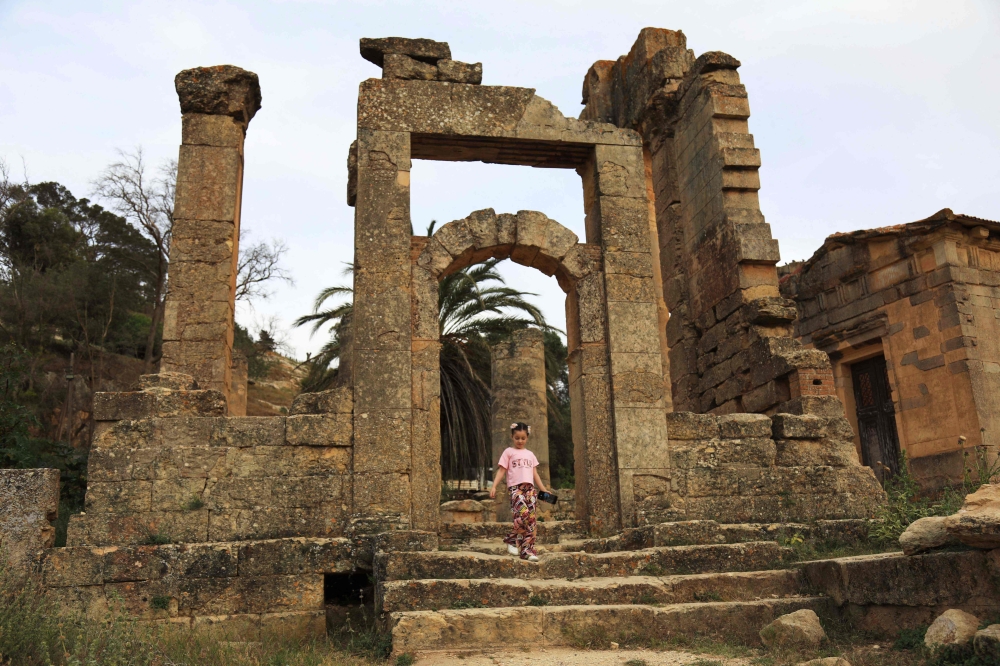 (Files) A girl visits the Sanctuary of Apollo at Cyrene near the ancient historical town of Shahat in the northeastern Mediterranean coast of Libya on May 17, 2026. (Photo by Abdullah Doma / AFP)
'In shock'
In 631 BC, settlers from the Greek island of Thera, now Santorini, founded Cyrene and four other colonies -- Apollonia, Ptolemais, Arsinoe and Berenice -- along the coast of today's eastern Libya.
At its height, Cyrene had as many as 100,000 inhabitants and developed a rich intellectual life centred on the arts, music and science, with theatres and a renowned school of philosophy.
Earthquakes and wars eventually reduced the cities to ruins, and they were only rediscovered in the 18th century.
During Gaddafi's rule, they received little attention as the country's official ideology emphasised pan-Arabism.
Then came Storm Daniel in 2023, with major floods sweeping through Derna, about 100 kilometres (60 miles) east of Cyrene, and killing thousands of people.
"The day after, everyone who loves this site came by," said Anis Hamid Younes, who oversees renovation works along a sacred pathway linking upper Cyrene to the Temple of Apollo.
"We were in shock," he added.
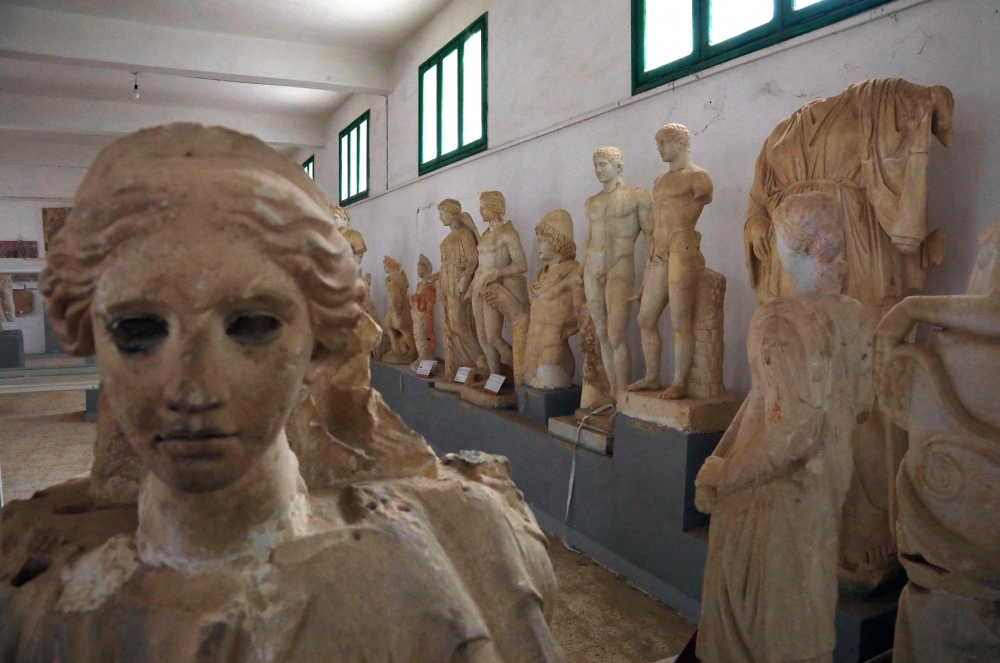 (Files) The preserved statues from the Cyrene archaeological site are pictured near the ancient historical town of Shahat on May 17, 2026.
Younes leads a team that has spent months clearing fallen blocks and rubble, salvaging valuable objects and rebuilding a sanctuary and nearly 60 metres (200 feet) of an antique wall.
Despite what he described as "outdated equipment" and "a lack of resources", Younes said he hoped the area would reopen to visitors in September.
Storm Daniel brought destruction and death -- but also new discoveries.
Archaeologists have since unearthed engravings and funerary offerings hidden among thousands of Green and Roman tombs.
'Change of attitude'
Some 20 kilometres away, experts are increasingly concerned about Apollonia, Cyrene's former port, a third of which has already been submerged by the sea over the centuries.
"Before Daniel, we estimated the risk of losing the site at 50 percent," said Talal Al-Hasey, a local official at the Department of Antiquities. "Now it's 80 percent."
"Urgent intervention is needed... Some structures are completely exposed to marine erosion," he added.
Sitting on one of the rock-cut seats of a Greek theatre, Ahmad Essa Abdulkariem, a senior Department of Antiquities official, lamented "the absence of assistance from UNESCO and other international organisations".
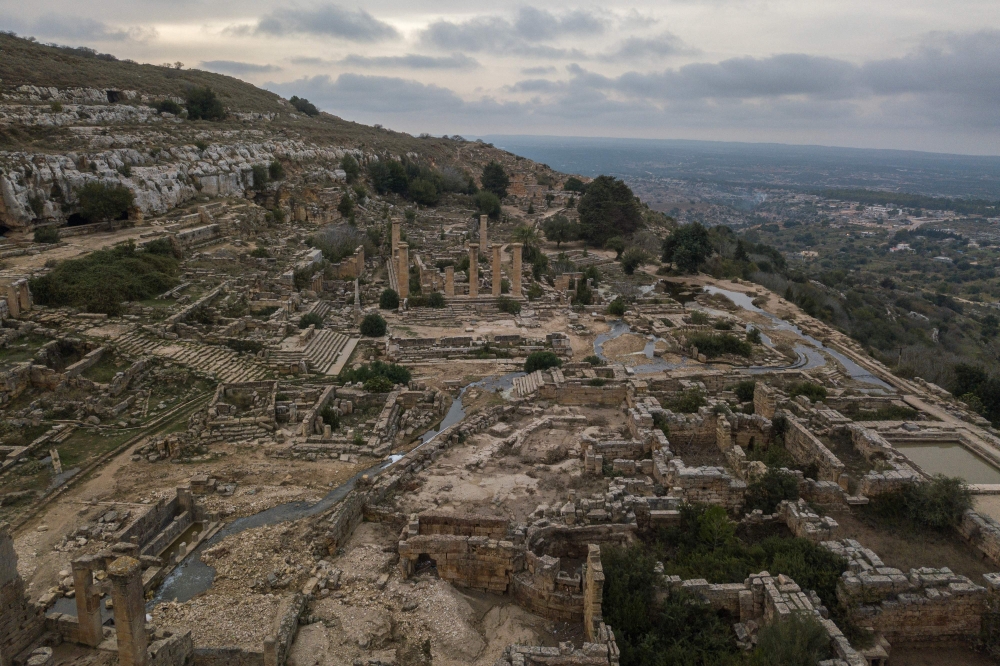 (Files) This aerial view shows the ruins at the site of the ancient Greco-Roman city of Cyrene (Shahat) in eastern Libya. (Photo by Ozan Kose / AFP)
He said the department had made "repeated requests" for help with sites listed as endangered since 2016, but in vain.
Charaf Ahmimed, UNESCO's new director for the Maghreb, told AFP he was "not aware" of the requests, noting "UNESCO's desire to return in force" to Libya. He said he planned to visit Cyrene and Apollonia this summer.
Essa also said he hoped for a "change of attitude" among Libyan leaders towards the sites as the country remains split between a Tripoli-based, UN-recognised government and an eastern-based rival authority.
"They must stop thinking there are other priorities... Oil will run out one day, while these sites will exist forever," he said.
He argued that the hydrocarbon-rich country should invest in tourism and the promotion of its archaeological heritage.
Fresh from a trip to Paris, Essa said he dreamt of having a museum of comparable stature to the Louvre in Libya's eastern region of Cyrenaica.
Such space could also help Libya recover hundreds of ancient items now held abroad, including around 250 in Paris and another 200 at the British Museum in London.