

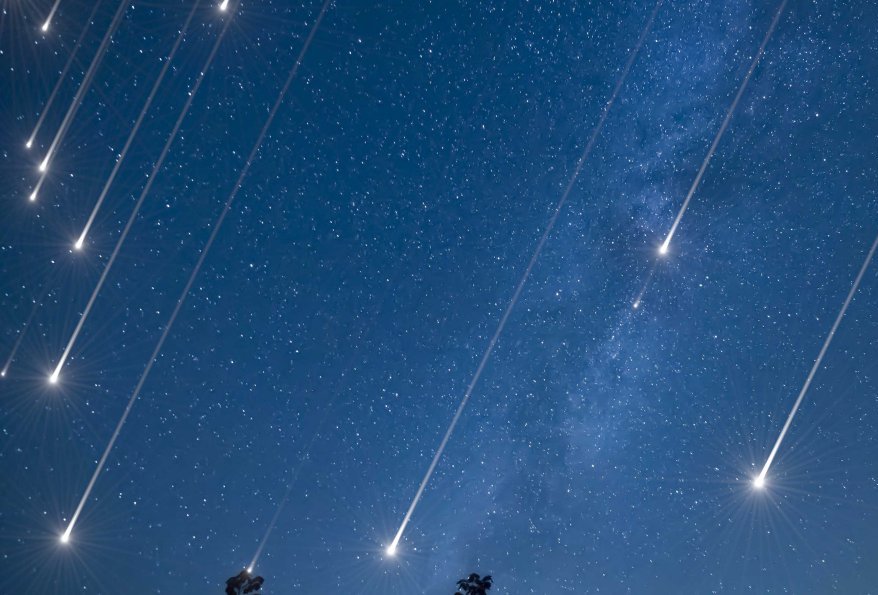
Lyrid meteor shower peaks on Saturday.
A spectacular treat awaits stargazers in Qatar as the Lyrid meteor shower peaks on Saturday, generating a visual extravaganza of fast-moving shooting stars. Qatar will experience the first meteor shower since January during the overnight hours on Saturday, according to experts.
A meteor shower happens when a number of meteors flash across the sky from roughly the same point. The annual Lyrid meteor shower takes places annually between April 16 and April 25. This year, it will peak on April 22, with the greatest number of meteors falling during the few hours before dawn.
Stargazers would be able to see between 10 and 20 Lyrid meteors per hour and sometimes going up to 100 Lyrids meteors per hour according to experts. The Lyrids shower occurs when the Earth slams into the dusty debris expelled by the ancient Comet Thatcher. Most of the meteors are specks not larger than a sand grain that plummet into earth’s atmosphere. The fragile debris grains disintegrate long before they reach the ground.
However, as they travel at immense speeds, these tiny particles put on an impressive show.
People here can observe the meteor shower with plain eyes, without any astronomical telescope. However, they must be away from the city and light. Enthusiasts can also take pictures of the Lyrids meteor by digital cameras, but must increase exposure time to take best photos.
“The best time for viewing and observing meteors is after midnight until dawn, while the best location is a dark location without light and environment pollutions,” said a statement issued yesterday by Dr Mohammed Al Ansari and Dr Beshir Marzouk of the Qatar Calendar House.
This will be an excellent year for viewing the Lyrids as the moon will be in the crescent phase, thus reducing the light from the moon which would otherwise interfere with viewing conditions. However, despite the meteors originating from the same point, they will appear in all areas of the sky as they streak away from the point in all directions. Hence, people simply need to look up at the open sky without having to focus on a single point.







