Doha: To modernise veterinary quarantines, the Ministry of Municipality and Environment (MME), represented by the Department of Animal Resources has started implementing a project to build integrated veterinary quarantines near Hamad Port and Ruwais Port.
The facilities will be developed as per the modern international veterinary standards. Moreover, the staff will be trained to enable them to deal with the latest technologies. The project is expected to complete in the last quarter of this year and it will start operations immediately by the decision of the Livestock Affairs Department.

This project is part of the Ministry’s efforts to establish modern veterinary quarantines at each entry point to examine incoming animals before they are allowed to enter the country’s territory, with the aim of achieving food security and protection from common diseases that are transmitted from animals to humans, as well as protecting livestock within the country from diseases.
The new veterinary quarantines project at an estimated cost of about QR95m is distinguished by the design, facilities and services according to the best standards and specifications, which is being implemented by one of the national companies specialised in this field and under the supervision of specialists in the Public Works Authority (Ashghal).
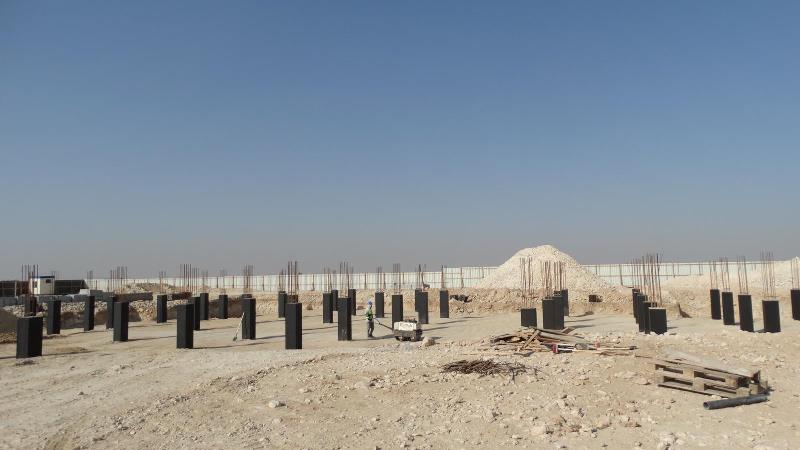
The veterinary quarantines include administrative buildings, laboratories and veterinary clinics to examine incoming consignments, slaughterhouses and incinerators.
The veterinary quarantines are located near Ruwais Port on an area of 30,000 square metres comprising six barns in an area of 16,000 square metres with the capacity to accommodate 16,000 sheep and goats or 1,600 camels or 2,600 cows.
The quarantine facility also includes an incinerator operating with a capacity of 650kg per hour, in addition to a semi-automatic slaughterhouse that includes three production lines with a production capacity of 250 sheep and goats and 50 camels and 50 cows per shift.
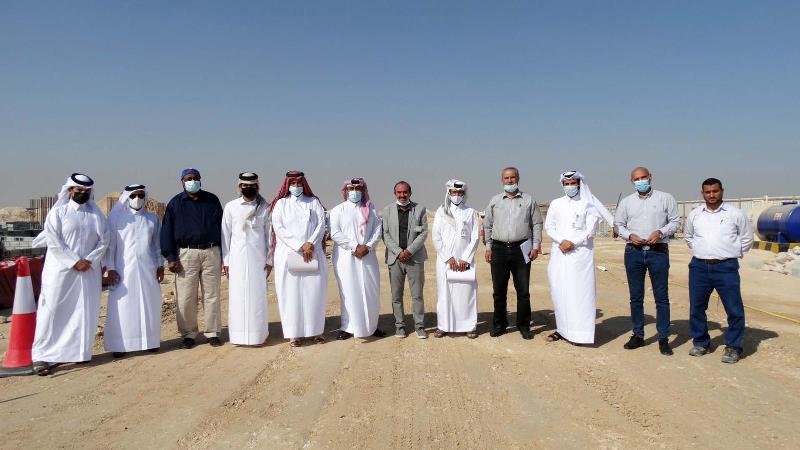
The veterinary quarantine located near Hamad Port is in over an area of 90,000 square metres comprising 20 barns with a capacity of 40,000 sheep and goats, or 2,000 camels or 4,000 cows, in addition to an incinerator operating at a capacity of 650kg per hour and a well-equipped slaughterhouse with three production lines with the capacity of 600 sheep and goats, 100 camels and 100 cows per shift.
These modern quarantines have the ability to deal from within veterinary quarantine, for the first time, because they include animal quarantine, slaughterhouse, and incinerator, in cases where there are consignments that do not meet the health specifications and requirements.