

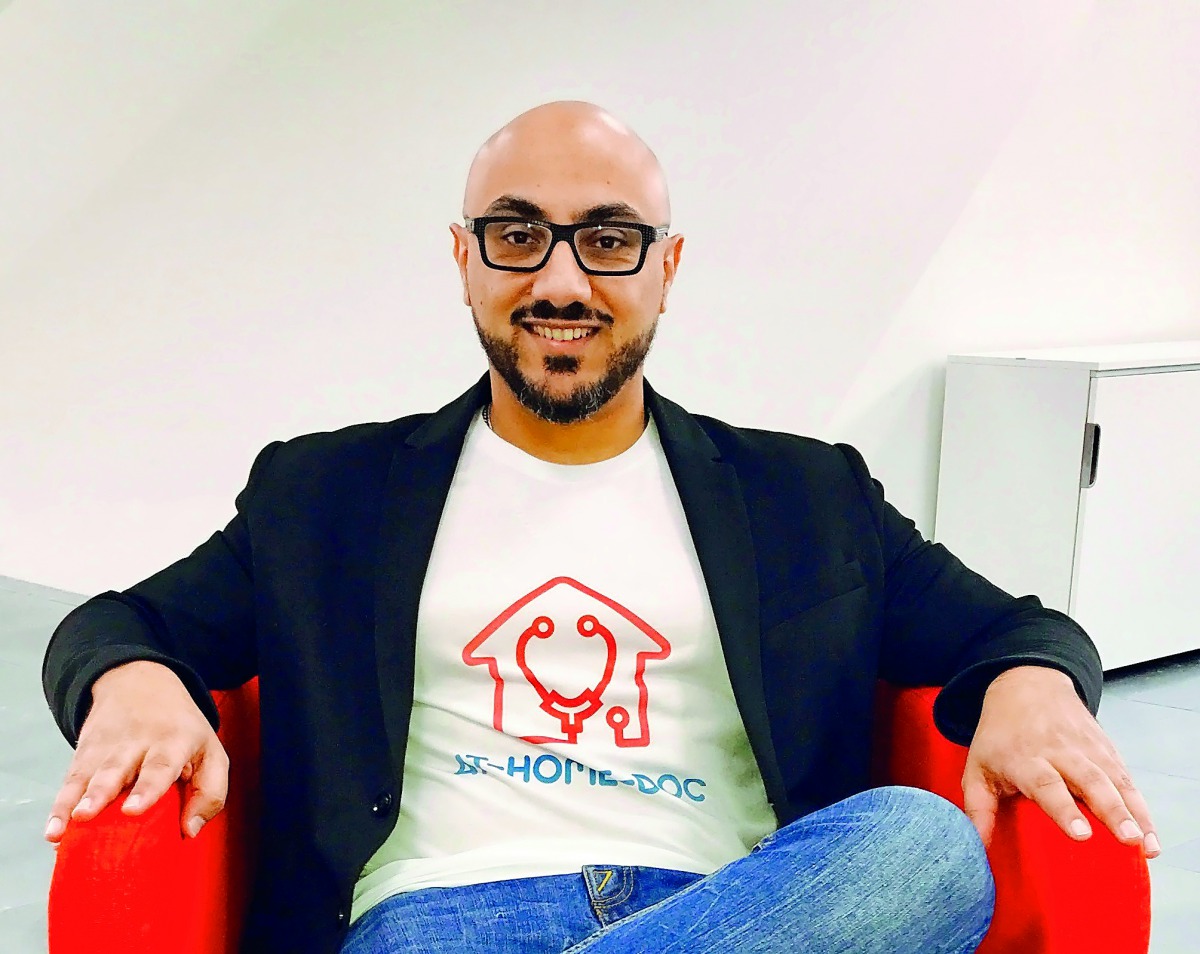
Hesham Elfeshawy
Doctors will now be available at your door step, with an all new service launched by a private medical company here.
Filling a major gap in the healthcare sector and lightening the load on emergency care in the country, Australia-based Medihealth Solutions, have initiated a service that provides physicians to attend to healthcare needs at home.
The service, “At-Home-Doc” brings in doctors to a patient’s home when in need of any treatment or diagnosis. The service, which is yet to be formally launched, is receiving much response from the public, with some three to four calls each day.
“Calling a physician to check you at home is not a novel idea; it is practiced worldwide, though in this region, the service is not much available. In Australia these kinds of services are covered by insurance ,” said Hesham Elfeshawy, one of the co-founders of At-Home-Doc service.
The At-Home-Doc involves a mobile application which is yet to be released. The app can be downloaded and patients just have to fill the initial data. Patients can then start requesting doctors when needed. Elfeshawy along with his twin brother Hatem, who is a doctor based in Australia, founded the service.
“At-Home-Doc is currently charging QR350 for a home-visit consultation.There is a value here, patients are saving time, they are at home, and the doctor comes to provide a full fledged medical check-up. The chaperons with the doctor also delivers medicines prescribed. Our doctors are eligible to give a sick leave according to ministry requirements. We have also partnered with some labs to come to patients and collect specimens, in case certain examinations are required. So unless there is a need for imaging, patients can stay at home,” he said.
In the long run the service provider hopes to arrange imaging appointments , where patient just needs to walk-in and get the required tests done. The results would also be collected by the service provider and doctor would do a free follow-up.
However, Elfeshawy stresses that At-Home-Doc is not an emergency service provider, though they can give guidance when needed. When emergency or critical cases request for doctors, the app automatically routes it to 999.“This is like a virtual clinic. Our whole service is based on two main pillars - quality and technology. To ensure we provide the most advanced service, we have highly trained GPs from Australia who are certified with the Australian Medical Council and also triage nurses, who do the initial assessment. Also on the technology side, the whole service is designed in such a way that the medical director gets to know how each patient was examined, standards followed and medication according to standards or not,”he said.
Meanwhile, Elfeshawy stresses that At-Home-Doc would take a huge burden off the emergency departments here.
“There is an overwhelming burden on the healthcare sector, with some 80 percent of the cases at emergency being acute and minor. Home GPs usually sees these kinds of cases, through our service, we can filter this overwhelming flow of minor cases at emergency and close a major gap in Qatra’s healthcare system,” he said.
At-Home-Doc service has a licence from the Ministry of Public Health to operate as a medical and nursing agency. The group had to face much challenges to initiate the service here.
“The service is first of its kind in Qatar. HMC does provide similar service, but that is for specific group of patients. Here anyone who needs a doctor can just notify us and have a doctor visit their home in less than two hours time,” Elfeshawy said.
"The past two years were full of challenges and if it wasn't for the diversity of experiences in world class medical field, customer centric business culture and the support of local expertise in both healthcare and medical educational environments, we wouldn't have made it to this point," he said.







