The Ministry of Transport and Communications through the Qatar Computer Emergency Response Team (Q-CERT) spares no effort to ensuring the country’s cyber security amid global cyber threats and attacks which are becoming more advanced.
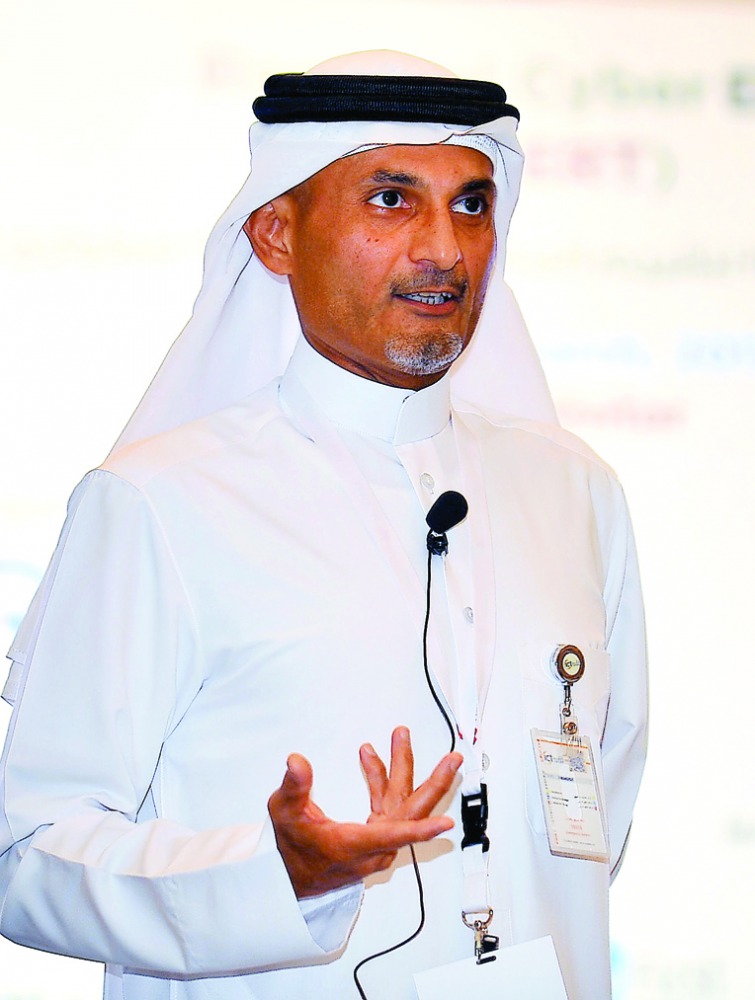
“Qatar Computer Emergency Response Team, Q-CERT, works tirelessly to maintain our cyber security against worldwide threats that might affect us and remains vigilant to ensure an electronic environment free of hacking that might hinder the way we use and benefit from technology. The Ministry also provides support for all entities in this domain countrywide,” said Eng. Khalid Al Hashmi (pictured), Assistant Undersecretary of Cyber Security at the Ministry.
“The Ministry also holds regular national training programmes and cyber drills to further enhance State institutions’ response and readiness efficiency,” said Al Hashmi at the fifth regional Cyber Drill for Arab countries, organised by the ITU-Arab Regional Cybersecurity Center (ARCC) in collaboration with the ITU Arab Regional Office.
Hosted by Qatar and represented by the Ministry of Transport and Communications, the workshop brings together the Arab region’s cyber security operation centres and private information security emergency centres.
“The Ministry of Transport and Communications has been embracing the strategies and plans that help contribute to maximising the benefits gained from the latest world technologies on the path of bolstering our ICT sector,” he noted.
The workshop aims to boost communication capabilities, team building, and cyber threat response capabilities, aiming to maintain the ongoing efforts that Arab computer emergency response teams (CERTs) exert for combating cyber threats. It also works as a platform for further cooperation and discussions on current cybersecurity challenges.
This workshop aims to consolidate the capabilities in addressing and responding to cyber attacks through simulation of different attacks so as to take the necessary steps to address and respond to these attacks and this workshop will give us the opportunity to exchange experiences and information to consolidate cooperation between member countries.
“The modern society is reliant on ICT with the increasing internet use among world population which has a strong economic impact on different countries. Yet this development will result to a number of risks and challenges that require to be met at national and international levels. Cyber attacks have become more frequent and complex which affect crucial sectors such as health, energy, transport and finance, among others,” said Ebrahim Al Haddad, Regional Director, ITU Arab Regional Office.
Cyber security, being an important element in human activity and due to its complexity, requires concerted efforts at virtual and real situations by all key stakeholders in public and private sectors, civil societies and NGOs and at an international level, stressed Al Haddad.
He highlighted the major role UN plays as “a facilitator and that calls all countries to collaborate in order to discuss and implement solutions to build an open and at the same time trustworthy cyberspace.”
Badar Al Salehi, Head of ITU-ARCC, underscored the centre’s keenness in helping enhance the capabilities of different countries in the region amid meteoric rise in cyber attacks which have shown advancement based on reports.
The workshop runs until Thursday at the Four Seasons Doha Hotel.