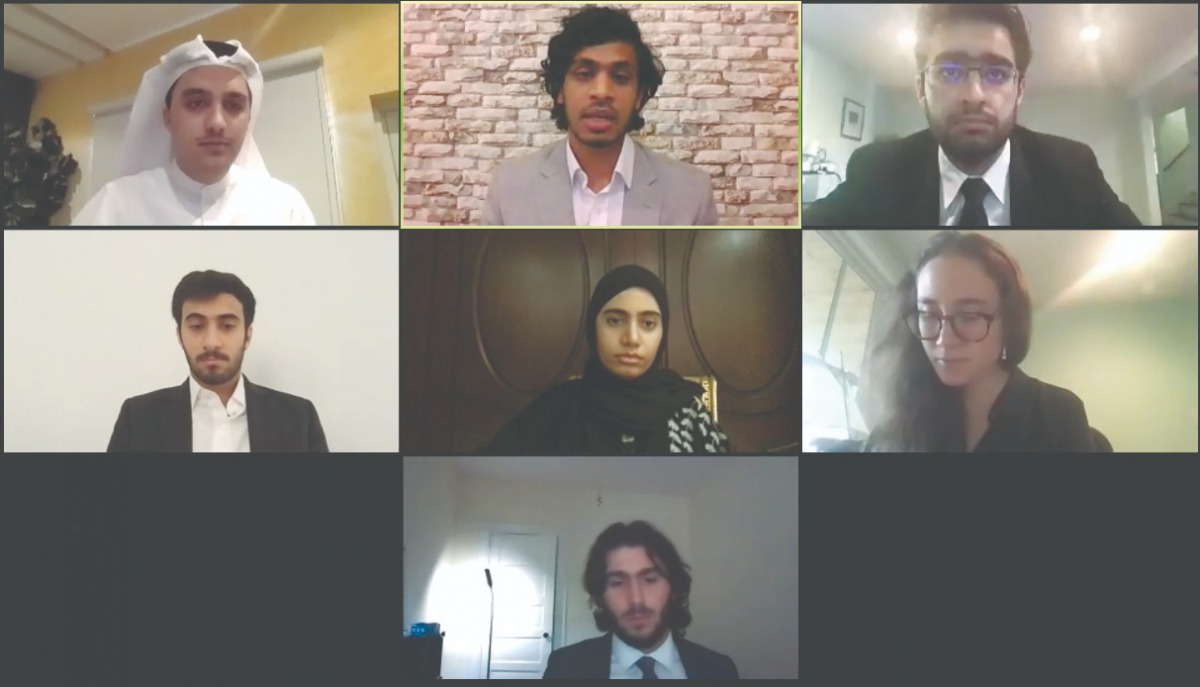
Participants during the debate, via zoom.
Doha: The global methodology of the Qatar Debate Center, a member of the Qatar Foundation, organised a debate entitled “Is pluralism a successful or a failed experiment?” via zoom, recently.
It coincided with the activities of the United Nations Global Goals Week on the theme of “global challenges and local solutions”, as this year’s issue was based on the events of 2020 and the changes and divergence of opinions that occurred to them. Among the most important points that were discussed was that pluralism succeeded in achieving peace and security at the global level. The event saw about 200 attendees.
The speakers were from Qatar and America. The debate was run by Coach Mobert Wasi of Qatar Debate Center, who said, “I was honoured to manage the debate that took place between the best debaters at Harvard and Qatar. One of the most important outcomes of the debate was the change in the audience’s views before and after the debate. This drew my attention to the fact that the audience had a background and an opinion on the issue, but they wanted to listen to the intellectual debate between the debaters and reprogramme the views on their position on the issues at hand.
“The debate’s course, and refutation of issues and the proposals that took place were alarm that confirmed importance of intellectual discussions and hope that communicating ideas to people and presenting views is a proof to reconsider the public’s concepts and preconceived ideas.”
During the debate, participants presented their ideas and evidence with a logical analysis away from bias and dispersion as examples of wars and conflicts and stages of success and failure.
They affirmed that pluralism, despite the difference of opinions, contributes to deepening the concept of global citizenship, and creates a positive climate for tolerance and acceptance of the other opinion with different culture and belonging.
They also showed that coexistence with pluralism reduces isolation in the global community and prevents creating groups characterised by rigid mindsets that are not subject to change and peaceful coexistence