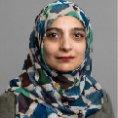
Dr. Mahfoud Amara
From November 2-6, Doha became the centre of global attention in sport science as it hosted, for the first time in the Middle East and North Africa, the International Society of Sport Biomechanics (ISBS) conference. This event, jointly organised by Qatar University and Hamad Bin Khalifa University, marked another milestone in Qatar’s growing legacy as a hub for scientific and sporting excellence.
With over 200 research papers and participants from 40 countries, the conference showcased the latest advances in understanding how human movement, technology, and data combine to enhance sport performance, prevent injuries, and improve rehabilitation. Yet, amid this impressive international presence, one observation stood out: the limited participation from Arab researchers in sport biomechanics. Despite the field’s growing relevance, contributions from the Middle East and North Africa remain concentrated in just a few centres.
This gap reveals both a challenge and an opportunity. Sport biomechanics, often viewed as a highly technical, laboratory-based science, is in fact essential to the everyday realities of sport - training, competition, and recovery. It offers athletes, coaches, and medical teams the insights needed to make data-driven decisions, reduce injuries, and optimise performance. In an era where every movement can be captured, analysed, and improved through technology, biomechanics becomes the bridge between human potential and scientific precision.
At the same time, the conference opened a broader philosophical debate: how much data is too much? In a world where every action on the field can be tracked, measured, and monetised, sport risks losing some of its spontaneity and artistry - the very essence that makes it captivating. Much of the technology showcased - motion sensors, force plates, and wearable devices - is designed to protect athletes by reducing injuries and managing workloads. Yet these tools also raise ethical questions about data ownership, privacy, and human autonomy in a sport increasingly shaped by metrics. As sport becomes a multi-billion-dollar industry driven by analytics and budgets, the human element - the creativity, emotion, and unpredictability - must remain central.
The Doha conference also highlighted Qatar’s unique ecosystem: universities with advanced research facilities, elite medical and rehabilitation institutions, and a sports industry that is rapidly professionalising. What is now needed is greater integration - linking academic research, applied science, and the professional sport environment more systematically. Stronger collaboration between sport scientists, engineers, coaches, and policymakers could position Qatar as a global leader in applied sport biomechanics.
Beyond the scientific sessions, delegates also experienced Qatar’s cultural and touristic offerings - from desert dunes and kayaking to the Museums and city tours. These activities demonstrated how international conferences can serve as a powerful vehicle to showcase the country’s hospitality, heritage, and world-class infrastructure. For many participants, the conference was not only an intellectual exchange but also a discovery of Qatar itself - a nation that continues to blend science, culture, and ambition in its vision for the future.
* The views expressed are the author’s own and do not necessarily reflect the views of the publication.

Dr. Mahfoud Amara is an Associate Professor in Sport Social Sciences and Management at Qatar University.