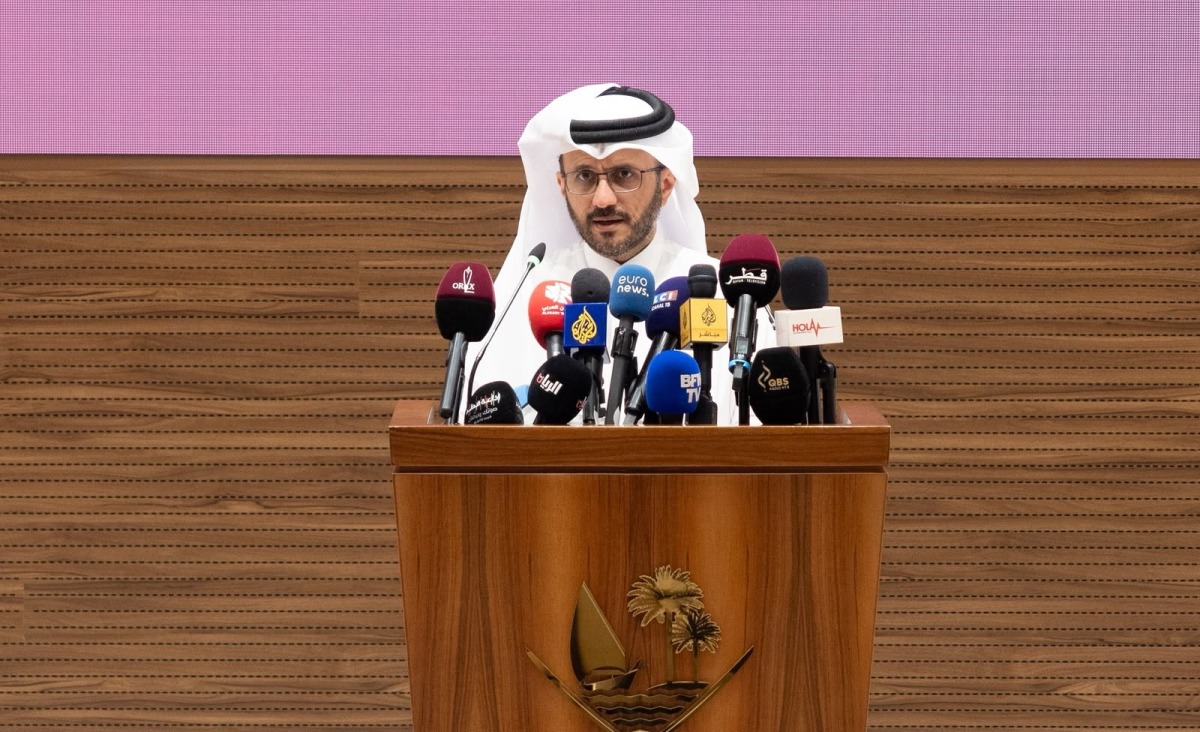
Doha: Advisor to the Prime Minister and Official Spokesperson for the Ministry of Foreign Affairs Dr. Majed bin Mohammed Al Ansari affirmed that the visit of US envoys Steve Witkoff and Jared Kushner to Doha is part of meetings with mediators in the State of Qatar to discuss various regional issues, including negotiations with Iran, the Lebanese file, and other matters.
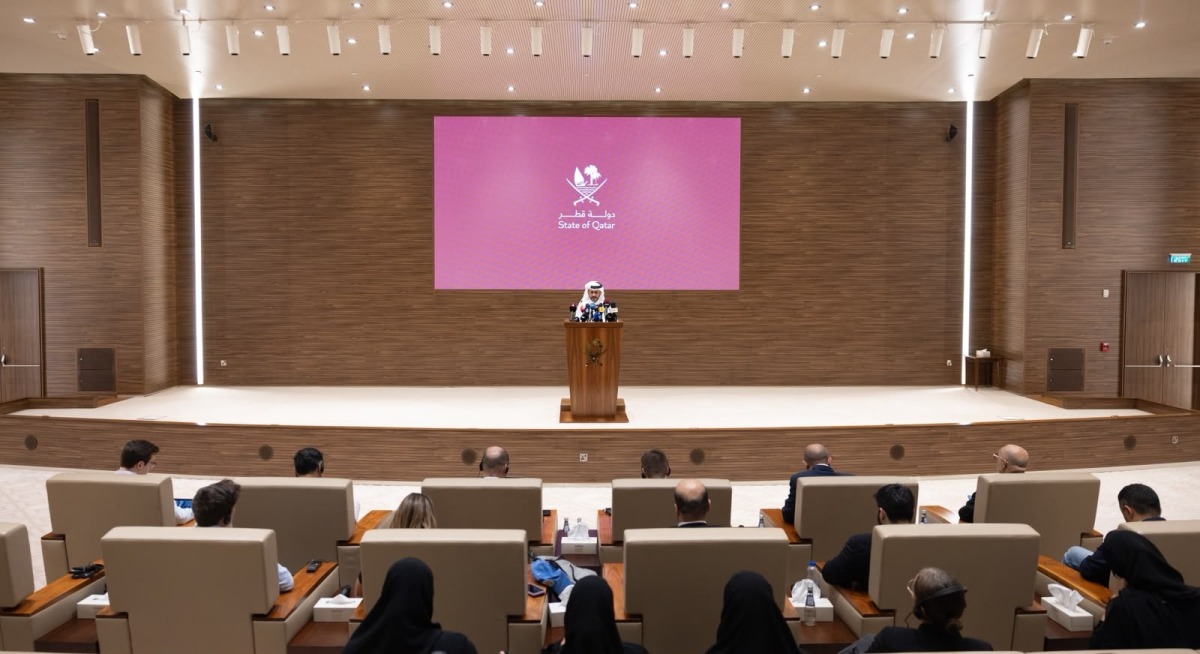
He clarified that there are currently no high-level meetings between the Iranian and American sides under the agreed negotiation mechanism.
During the Ministry of Foreign Affairs' weekly press briefing, Dr. Al Ansari said that technical meetings between the parties have continued, both directly and indirectly, since the talks held in Lausanne, through communication with the various parties involved.
He stressed that Qatar is committed to maintaining this mechanism, as previously agreed, with technical meetings continuing between each round of high-level negotiations.
He added that the Iranian and American technical delegations remain in session, noting that these meetings are taking place in different contexts and with the participation of mediators to ensure their continuity, whether in Doha or elsewhere.
Regarding the recent escalation in the Strait of Hormuz, Dr. Al Ansari said that Qatar had worked diligently to contain the situation, emphasizing that the technical negotiations are still ongoing despite the escalation.
He noted that escalation only widens the gap between the parties, adding that the Strait of Hormuz is one of the key issues under discussion, alongside other topics included in the memorandum of understanding, such as Iran's nuclear program and the broader regional situation.
Dr. Al Ansari reiterated Qatar's position that there should be no obstacles to freedom of navigation in the Strait of Hormuz, describing it as an international waterway.
He also stated that the US delegation is in Doha to meet with mediators and Qatari officials, and that the discussions cover regional issues of mutual interest, including Lebanon, without any direct talks with the Iranian side.
On the issue of frozen Iranian funds, Dr. Al Ansari explained that the funds are linked to the 2023 agreement between the United States and Iran to establish a humanitarian channel in Qatar, through which the funds would be used for humanitarian purchases for Iran under the terms of the agreement.
He said that Qatar does not own the funds but serves as the financial intermediary managing the accounts under the agreement. Whether the funds are transferred depends on the agreement of both parties and the progress of negotiations, which has not yet occurred.
Regarding the Strait of Hormuz, Dr. Al Ansari reiterated that Qatar's position is based on respect for international maritime law, which guarantees freedom of navigation through the strait.
He said this position is shared by Qatar, other Gulf and regional states, and the wider international community.
Qatar's position is clear and consistent, he added, and doesn't accept any change to the current status of the Strait of Hormuz, whether through unilateral action or otherwise.
Qatar remains in full coordination with countries across the region, he stressed, including Qatar's brothers in the Sultanate of Oman, through daily communication to ensure the safe passage of navigation through the strait.
Regarding the first phase of the understandings, the Advisor to the Prime Minister and Official Spokesperson for the Ministry of Foreign Affairs explained that it focuses on mine clearance and ensuring safe navigation through the Strait of Hormuz.
He noted that the current priority is the safety of crews aboard ships and cargo vessels, pointing out that while some vessels have crossed safely, others have come under attack.
In this context, Dr. Al Ansari expressed the State of Qatar's appreciation for the role played by the Sultanate of Oman, affirming Qatar's solidarity with Oman against any violation of its sovereignty, whether through attacks or incursions into Omani territorial waters.
Regarding war reparations, he said that in war, there are no winners or losers; everyone loses when war occurs.
He stressed that Qatar's priority is to end the war, restore normal navigation through the Strait of Hormuz, and protect citizens, residents, and the peoples of the region from the consequences of the conflict.
He added that clearing the strait of mines is a complex process, and that Qatar welcomes any international technical contribution that could assist in this effort, while emphasizing that decisions on how such operations should be carried out rest with the countries of the region.
He noted that the crisis requires an international effort to reach an appropriate solution.
Regarding de-escalation measures, the Advisor to the Prime Minister and Official Spokesperson for the Ministry of Foreign Affairs explained that communication channels have been established for this purpose.
He stressed that Qatar believes the countries of the region are capable of resolving their differences through dialogue and negotiations.
He also noted that discussions are continuing with various partners on mechanisms for holding meetings that bring together the different parties on the basis of good neighborliness, respect for the sovereignty of regional states, non-interference in internal affairs, and joint efforts to strengthen regional security and stability, while taking into account the security concerns of all parties.
He expressed hope that such efforts would have a positive impact on both the security and economic conditions of the region.
Regarding whether the situation could return to what it was before the war, Dr. Al Ansari said that the conflict has affected regional relations, maritime security, and the broader regional security architecture in the Middle East.
He noted that restoring the region to its pre-war state requires serious consideration, as there are many issues that must be placed on the table.
He added that for the State of Qatar, there is no alternative to dialogue, putting the issues on the table, and pursuing regional solutions that take into account the reservations and security concerns of all parties, emphasizing that this remains a fundamental principle of Qatar's foreign policy in its relations with all countries.
He continued that the State of Qatar was subjected to attacks that violated its sovereignty. However, he emphasized that, thanks to the wisdom of its leadership and the capabilities of its armed forces, Qatar was able to deter these attacks. He added that the door is now open for negotiations and dialogue.
Regarding the existence of guarantees, the Advisor to the Prime Minister and Official Spokesperson for the Ministry of Foreign Affairs stressed that all guarantees during wartime are ultimately subject to realities on the ground.
He noted that the current reality includes a ceasefire, a memorandum of understanding, and an ongoing negotiation track supported by the State of Qatar in its role as a mediator supporting the parties.
He reiterated that the most important guarantee lies in reaching a peaceful settlement and bringing the war to an end.