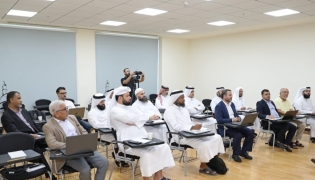
Doha, Qatar: The Shura Council convened Monday at its headquarters, chaired by HE Speaker Hassan bin Abdullah Al Ghanim.
The session was attended by representatives from various ministries and authorities, alongside sports media practitioners, opinion writers, and individuals interested in social and cultural affairs.
At the opening of the session, Director of Sessions and Committees Affairs Department Ahmed Sultan Al Ghanim read out the agenda, with the council endorsing the minutes of the previous session.
The council weighed in on the public deliberation request submitted by a number of Excellencies the members on promoting sport clubs' activities, as well as their social, cultural, and value-based role.
As such, HE the Speaker underlined the State of Qatar's foremost priority, under the prudent leadership of HH the Amir Sheikh Tamim bin Hamad Al-Thani, to dedicate comprehensive care for people, particularly children and young people, as they are the core pillar of building a prosperous and advanced community and achieving Qatar National Vision 2030 (QNV2030).
HE Al Ghanim recalled Article 22 of the nation's constitution, stipulating that the country takes care of the younger generation and shields it from causes of corruption and exploitation, as well as physical, mental, and spiritual negligence, offering them the appropriate conditions to grow their abilities across various fields, guided by proper upbringing.
The nation's attention to people is manifested in the remarkable progress it has witnessed throughout the past decades in multiple sectors, foremost of which is the sport sector, with the nation harnessing all human and material potential, culminating in a world-class sport infrastructure, Al Ghanim noted.
He further indicated that the Qatari younger generation has achieved sport milestones both on the regional and global stages, notably the increase in the number of professional and societal sports practitioners in the country.
The Speaker stressed that sport clubs are one of the most important institutions that help achieve QNV2030, clarifying that they play a pivotal role in achieving the four pillars underpinning this vision, chiefly human development, social development, economic development, and environmental development.
These pillars, he said, undertake roles that go beyond sports to encompass the development of the individual physically, mentally, culturally, socially, and ethically, in addition to their role in building the community.
Al Ghanim called on the custodians of these youth clubs and centers, when conducting their athletic activities, to sharply focus on the social, cultural, and ethical dimensions, among others, to achieve the objectives for which they were established.
For their part, Excellencies the members emphasized that the role of these clubs cannot be ignored in social upbringing, which vividly complements the roles of family, school, mosque, media, and other community institutions.
The members addressed the multiple contributions of those clubs in all societies, noting that these kinds of sport institutions help explore and care for sport talents and efficiently qualify them to represent their national teams, while socially reinforcing relationships and engagement between their members and residents, as well as the productive use of leisure time, contributing to the enhancement of physical and mental well-being.
They further noted the educational and ethical roles of those clubs through instilling values of patriotism in young people, in addition to fostering the spirit of collective work, punctuality, and discipline, which ultimately help build their positive character to be effective community members.
The members further applauded the outstanding roles of clubs nationwide, along with their comprehensive facilities that go beyond stadiums and sport halls, such as green spaces, walking, running, and biking trails, outdoor fitness equipment, fitness centers, and sports academies across various disciplines.
This is alongside service, commercial, and recreational facilities, which help encourage community members, particularly residents living near these clubs, to engage in community-based physical activity and take full advantage of the available services, they noted.
Accordingly, the members implored the administrations of sport clubs to optimally capitalize on the available potential, alongside the colossal support provided by the nation, through engaging in diversifying their voluntary initiatives and societal services, increasing their social and cultural events, in terms of both quality and quantity.
They likewise called for broadening the engagement of all community segments in the activities of these institutions by dedicating quality activities and special programs for the elderly and persons with disabilities.
In addition, the members called for expanding non-sporting activities year-round and effectuating cultural committees in these clubs beyond the summer break.
They also emphasized collaboration with youth centers nationwide under the Ministry of Sports and Youth to organize joint community programs, indicating that club custodians should balance their focus on football and other sports with broader community and cultural activities.
It is essential to integrate clubs with educational and cultural institutions and civil society organizations to unify efforts, leverage available resources, and serve young people while achieving the shared objectives of these enterprises, the members stressed.
The members indicated that it is quite possible to achieve this collaboration through connecting the academic aspect with physical and sport activities, holding a variety of cultural events, as well as voluntary programs for community members, thereby strengthening the clubs' role as cultural and social enterprises.
Partnership with the private sector is imperative to support social clubs' activities to avoid complete dependence on state budgets, in pursuit of providing additional income resources, achieving financial independence, and advancing various societal activities, the members concluded.
They called on the curators of these clubs to project their roles in serving the community and promoting their cultural and social activities, as well as voluntary programs through a variety of media outlets, including digital platforms to reach all community segments.
The foremost of these segments, the members noted, are children and young people, who account for the largest percentage of the nation's population and mostly use social media platforms.
Following thorough deliberations on this matter, which earned the members' full consensus on strengthening the roles of these clubs and exploring essential solutions for potential challenges that could encounter these institutions when undertaking this role, the council decided to refer the public deliberation request to the Education, Culture, Sport and Media Affairs Committee for further perusal and submission of its report to the council.
During the session, the council approved the draft legislation amending certain provisions of Law No. (25) of 2018 on selective tax and referred it to the government.