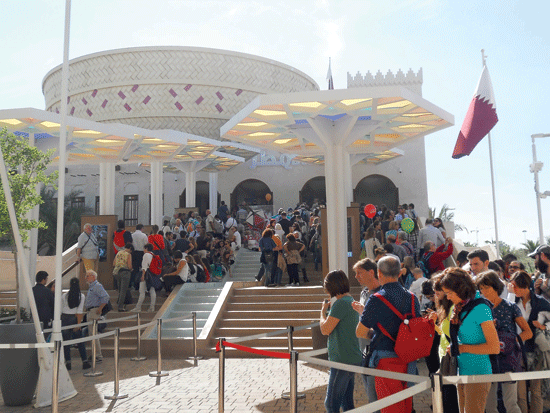
DOHA: Qatar’s commitment to environmental sustainability and healthy, safe and plentiful food for all is being highlighted on the international stage at Expo Milano 2015.
Weill Cornell Medical College in Qatar (WCMC-Q), one of those contributing to Qatar Pavilion, was invited to take part because of its groundbreaking Sahtak Awalan health campaign promoting health issues, organic food and sustainability among young people and the wider Qatar community for the past three years and explaining how to prevent disorders like obesity and diabetes.
These issues are now being highlighted to a global audience.
Expo Milano is one of the biggest events of its kind in the world, with more than 140 participating countries and 20 million visitors during its six-month period.
Dr Javaid Sheikh, Dean, WCMC-Q, said Expo Milano was a wonderful opportunity to show the world Qatar’s commitment to food sustainability, coupled with improving health in the region, and contribution WCMC-Q is making towards this vision.
As part of WCMC-Q’s contribution to Qatar Pavilion, two researchers gave presentations.
Dr Joel Malek, Assistant Professor, Genetic Medicine, and Director, Genomics Core, WCMC-Q, led a team that was the first in the world to map the genome of the date palm — an important agricultural crop in the Middle East.
Dr Malek outlined how his research could help farmers to selectively breed the date palm, making it more resilient to future changes in the environment, health and agricultural needs of the future.
Dr Shahrad Taheri, Professor of Medicine, and Director, CRS Core, WCMC-Q, spoke about Sahtak Awalan and its facets, including Yalla Natural roadshow, which encourages people to eat organic, healthy food; and the Greenhouse Project, which provides schools with greenhouses to educate children about benefits of eating and growing fruit and vegetables.
Dr Taheri also talked about obesity, its implications and benefits that even a small amount of weight loss bring to the individual.
The Peninsula