Doha: Following the success of its earlier themed series, ‘Science Fiction in Film-Spaceships in Cinema’ and ‘Fashion in Film-Costume as Character’, Doha Film Institute (DFI) is presenting a new themed programme for cinema enthusiasts, highlighting the importance of visual illusions in filmmaking to provide a real sensory experience.
Themed ‘Masters of Illusion’, the programme runs from June 1 to 5 at Katara Drama Theatre, and explores the fascinating world of visual perceptions created by master filmmakers to provide audiences with a cinema experience that tricks the mind through the art of deception.
The series includes works of some of the most celebrated filmmakers who have defined the use of illusions in their mise-en-scene and added to its popularity along with a master class, ‘Masters of Illusions, Masters of World’, by international film expert and programmer Teresa Cavina.
The films include Federico Fellini’s 8½’ (Otto e Mezzo); The Matrix by the Wachowskis; Guillermo del Toro’s Pan’s Labyrinth; The Prestige by Christopher Nolan; The Mummy/The Night of Counting the Years (Al Mumia’) by Shadi Abdel Salam; Andrei Tarkovsky’s Mirror and Tim Burton’s Alice in Wonderland.
The Master Class on June 3 will help audiences find out how great filmmakers such as Fellini, Nolan and Tarkovsky, among others, built their film universes around optical illusions to create a fictional world we inhabit and believe in.
Cavina is an Italian festival programmer, script analyst and co-production expert. She was a programmer at the Venice International Film Festival and Festival del Film Locarno, and founder and artistic director of the Rome Film Festival. She has also served as artistic director of the Festival International de Programmes Audiovisuels (FIPA), and programming director of the Abu Dhabi Film Festival. She also founded the New Cinema Network in Rome, an international co-production platform featuring training and support for second-time filmmakers.
The Prestige (US/UK/2006) narrates the friendly rivalry between stage magicians Robert Angier and Alfred Borden in the 19th century that becomes a vengeful battle when a trick goes wrong, with tragic results. The film is jammed with mind-bending plot twists — a hallmark of director Nolan’s films — but perhaps what is most gratifying is that the film is structured like an elaborate magic trick. It will be shown at 9pm on June 1.
Mirror (Russia/1975) is generally considered one of cinema’s masterworks, and an ethereal pastiche of significant moments in the life of a dying poet. The film jumps among three discrete time periods, when Alexei, the narrator is a child in the mid-1930s, an adolescent during World War II and very ill in his forties.
During the film, we are witness to Alexei’s memories and second-hand memories, dreams about his mother, newsreel footage of WWII and the Spanish Civil War and scenes of the present — all loosely drawn from Tarkovsky’s experiences and centring on family relationships and the recent history of Russia. The film will be screened at 9pm on June 2.
Pan’s Labyrinth (El laberinto del fauno) (Spain/Mexico/US/Mexico/2006) is about the adventures of young Ofelia who moves between the magical world of the labyrinth and the brutal conflict of her home. The film is wonderfully ambiguous as to whether the labyrinth is merely a product of her overactive imagination. Ofelia is a lover of fairy tales, and it is her belief in the enchanted realm that provides the film with its enduring charm. It will be shown at 5.30pm on June 3.
The Matrix (US/Australia/1999) by the Wachowski Brothers is a brilliant pastiche of references to dystopic novels like Nineteen Eighty-Four and Brave New World and tropes borrowed from pop-culture items like The Terminator, as well as a liberal dose of contemporary cognitive theory. In our age of “the 1%” and the Panama Papers, it consideration of day-to-day reality as an illusory construct used to control the masses remains relevant. Intelligent, politically astute and highly entertaining, the film will be shown at 9pm on June 3.
The Mummy/The Night of Counting the Years (Al Mumia’)(Egypt/1969) from Shadi Abdel Salam is shot almost entirely at dusk or dawn, and is a haunting, dreamy story of an Egypt in search of its identity — one in which the dead, forgotten for millennia, seem ever-present, while the living fight over their legacy.
When ancient pharaonic artefacts are found for sale on the black market late in the 19th century, Egyptian authorities jump into action, determined to prevent further tomb-raiding and preserve the relics of antiquity. It’s an eerie tale inspired by the real-life discovery of a cache of royal mummies. It will be shown at 5.30pm on June 4.
8½’ (Otto e Mezzo) (Italy/France/1963) is a brilliant film ensconced in the Western canon since its release in 1963. A sort of comical and bitter-sweet tour of the mind of a conflicted artist, the film is made up of Guido’s dreams, daydreams, imaginings of his upcoming film and his memories, as they puncture, embellish or distract from his current reality. The film will be screened at 9pm on June 4.
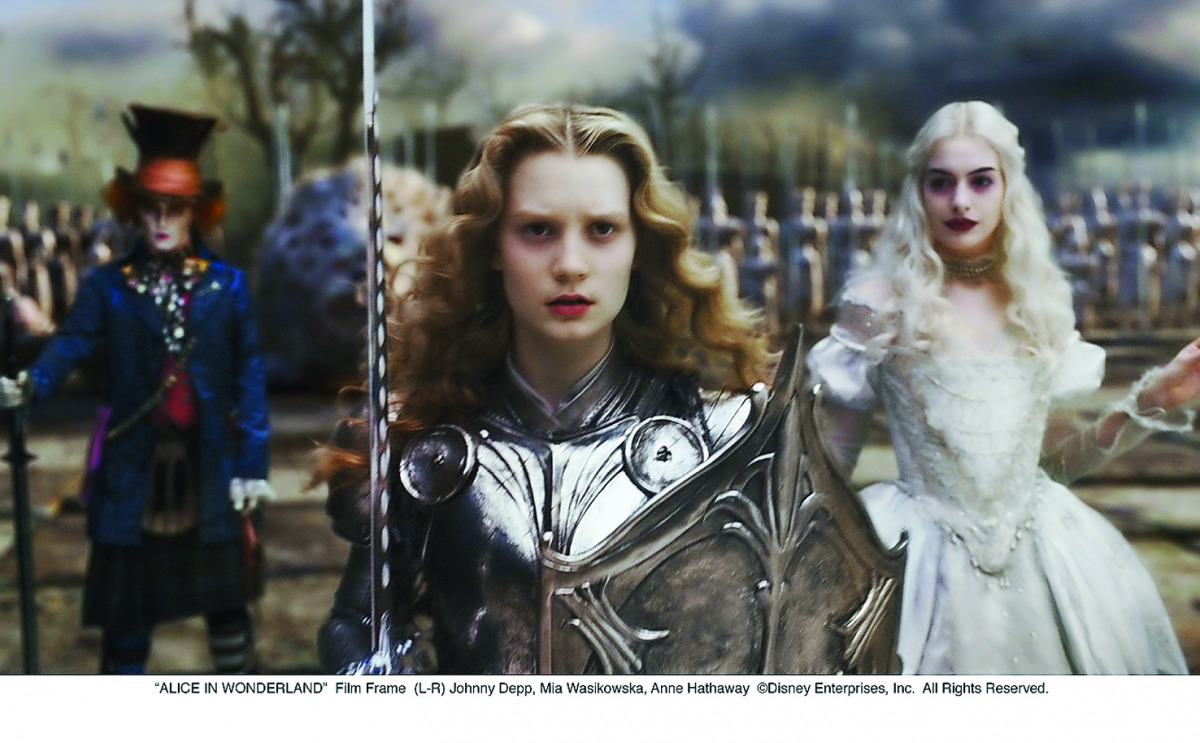
A free family screening of Tim Burton’s Alice in Wonderland (US/2010) will be held at 2.30pm on June 4. Based on Lewis Carroll’s fantasy novels, Alice’s Adventures in Wonderland and Through the Looking-Glass, and inspired by Walt Disney’s 1951 animated film of the same name, the fantasy film tells the story of Alice Kingsleigh, 19, who is told that she can restore the White Queen to her throne because she is the only one who can slay the Jabberwocky, a dragon-like creature controlled by the Red Queen and terrorises Wonderland’s inhabitants.
For ticket prices and details, visit: www.dohafilminstitute.com
DFI’s Thematic Series, part of DFI Cinema, provides cultural and creative discoveries for audiences in Doha all year long, contributing to the diversity of screen culture in the region. It is aimed at strengthening appreciation for the arts and contributing to the evolution of Qatar’s rich cultural fabric, and offers audiences opportunity to view films that may not necessarily reach cinemas, and exposes them to the history of the medium and new perceptions through a diverse programme.
The Peninsula