
By Rajesh Kumar Singh and Manoj Kumar
NEW DELHI: Indian Finance Minister Arun Jaitley unveiled a budget for the poor on Monday, announcing new rural aid and health programmes in a strategy shift that could boost his ruling party in coming state elections.
Presenting his third budget, Jaitley described Asia's third-largest economy as a bright spot in a gloomy landscape and reiterated a forecast that it would grow by 7.6 percent in the fiscal year that is drawing to a close.
But he said the government wanted to ensure that the benefits of growth were more widely shared among India's 1.3 billion people.
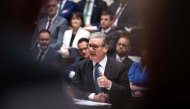
"We have a shared responsibility to spend prudently and wisely for the people, especially for the poor and downtrodden," the 63-year-old finance minister, who wore a powder-blue jacket,
said in his opening remarks to lawmakers.
The spending package for the 2016/17 fiscal year from April 1 marks a radical shift from Prime Minister Narendra Modi's initial focus on investing in infrastructure in a bid to kick-start private-sector investment that remains weak.
Jaitley described his three priorities as: strengthening India's firewalls by ensuring macroeconomic stability and prudent fiscal management; driving growth through domestic demand; and reforms to boost economic opportunity.
Key areas of policy focus would be farming, social reforms, infrastructure and recapitalising India's banking system.
Modi's landslide election victory in 2014 raised hopes he would draw a line under India's socialist past, cut welfare and reduce the government's role in business.
In its first two years in power, his government splurged on roads and railways at the expense of welfare programmes in the hope of creating economic stimulus.
Modi's gamble was that infrastructure investment would yield dividends for the poor and the rural community. Four in 10 Indians rely directly on farming for their livelihoods, the government estimates.
Rising rural distress after back-to-back droughts and a recent heavy election defeat in a largely agricultural state have upset that calculus.
It has also left Modi's nationalist ruling party open to attacks by the opposition, who use a Hindi phrase to deride Modi for leading a "suit and boot" government that only works in the interest of the rich.
Jaitley's reeled off a list of $16 billion in measures targeted at the countryside, including spending on a job creation scheme, farmers' welfare and building of rural roads.
He targeted a total of $130 billion in credit to farmers.
Listed below are the highlights of the Union Budget 2016:
* To reduce multiplicity of taxes and cascading, 13 taxes with collections of less than Rs.50 crore a year abolished
* Income tax deptartment will expand e-sahyog to assist small taxpayers
* Scope of e-assessment to be expanded to seven mega cities to simplify compliance for taxpayers
* Taxation proposals to increase government revenue by Rs.19,610 crore
* Penalty to be 50 percent of tax in income under-reporting cases, 200 percent in misreporting of facts
* Tax arrears can be paid in lieu of interest liabilities in retrospective taxation cases
* Direct Benefit Transfer in fertilisers on pilot basis in few districts
* Services provided by EPFO exempted from service tax
* Limited tax compliance window from June 1 - September 30 for declaring undisclosed income at 45 percent including surcharge and penalties
* Clean energy cess increased from Rs.200/tonne to Rs.400/tonne on coal, lignite and peat
* Moving towards a low tax regime with non-litigious approach
* Committed to provide a stable and predictable taxation regime
* Relief of Rs.3,000 per year to taxpayers with income below Rs.5 Lakh per year to benefit one crore taxpayers
* Surcharge on income tax for incomes exceeding Rs.1 crore per annum raised from 12 percent to 15 percent
* Service tax exempted for general insurance schemes under Niramayi Swasthya Bima Yojana
* Suitable changes to be made in customs and excise duty rates to improve competitiveness and boost Make In India
* Plan, Non-Plan distinction to be removed from 2017-18
* For income below Rs.5 lakh per annum, tax ceiling has been raised from Rs.2,000 to Rs.5,000
* Relief to those in rented houses: Deduction raised from Rs.24,000 to Rs.60,000 under Section 88G
* Corporate income tax: Incentives for new manufacturing companies and relatively small enterprise companies
* Fiscal deficit for 2016-17 targeted at 3.5 percent
* Committed to implementing General Anti-Avoidance Rules (GAAR) from April 1, 2017
* New policy for managing assets of public enterprises
* Comprehensive approach to be adopted for government investment in central public sector enterprises
* Three initiatives for better delivery of public services
* Increased allocation of Rs.1,80,000 crore under PM MUDRA Yojana
* Market Stabilization Fund for Pulses gets Rs.900 crore
* Financial Data Management Centre for integrated data collection and analysis
* RBI Act being amended to provide statutory basis for monetary policy framework
* 100 percent FDI to be allowed through FIPB route in food products produced and marketed in India
* Department of Disinvestment to be renamed Department of Investment and Public Asset Management
* Comprehensive plan being drawn up to be implemented in the next 15-20 years for exploiting nuclear energy
* Government to provide health insurance of up to Rs.1 lakh per family; 300 generic drug stores to be opened under PM Jan Aushadhi Yojana
* Roads and highways allocated Rs.55,000 crore, 50,000 km of state highways to be taken up for upgradaing to national highways
* Stand Up India scheme allocated Rs.500 crore for SCs, STs women entrepreneurs
* Government to incentivise gas production from deep sea and other unutilised deep sources
* Public Utility Resolution of Disputes Bill for resolution of infra sector disputes
* Pradhan Mantri Kaushal Vikas Yojan gets Rs.1,700 crore
* Digital depository for school leaving certificates
* Higher education financing agency to be set up with fund of Rs.1,000 crore
* National Skill Development Mission has imparted training to 76 lakh youth; 1,500 multi-skill training institutes to be set up
* Model Shops and Establishments Bill to be circulated for voluntary adoption by states
* Current account deficit down to $14.4 billion
* Rs.2.87 lakh crore for rural and urban local bodies
* Animal welfare programme, animal health card, e-marketing platform for connecting breeders
* 100 percent village electrification to be achieved by May 1, 2018
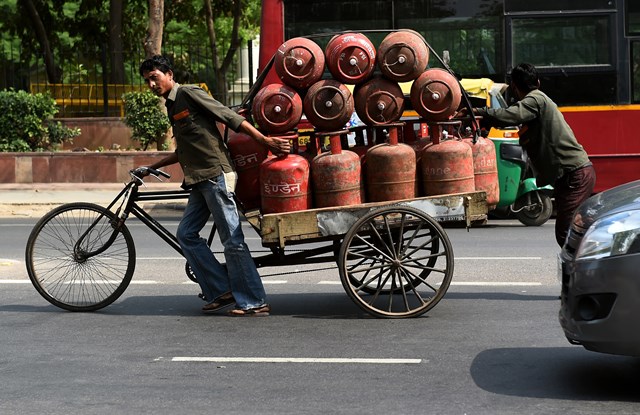
* Appreciation for 75 lakh middle class and lower middle class families for willingly giving up LPG Subsidy
* Rs.19,000 crore allotted for PMGSY
* Rs.8.5 lakh crore of agricultural credit targetted in 2015-16; and Rs.9 lakh crore in 2016-17
* Rs.35,984 crore allocated for agriculture in 2016-17
* Five lakh acres to be brought under organic farming over three-year period
* MGNREGA to get Rs.38,500 crore
* Recapitalisation of banks during next fiscal
* Prudent fiscal policy needed, domestic demand should be raised, reforms need to be carried out
* Farm, rural sector, infra and social sector to get more funds
* Need to prioritise expenditure given recommendations of 7th Pay Commission and OROP implementation
* Nine pillars for reforming India, among them agriculture, social sector, education, infra, fiscal discipline, and tax reforms
* Presenting budget when global economy in a serious crisis
* Amidst global headwinds, the Indian economy has held its own
* Converted challenges we inherited into opportunities
* CPI inflation down to 5.4 percent from 9 percent-plus, bringing big relief to the public
* Forex reserves at highest-ever level
Agencies