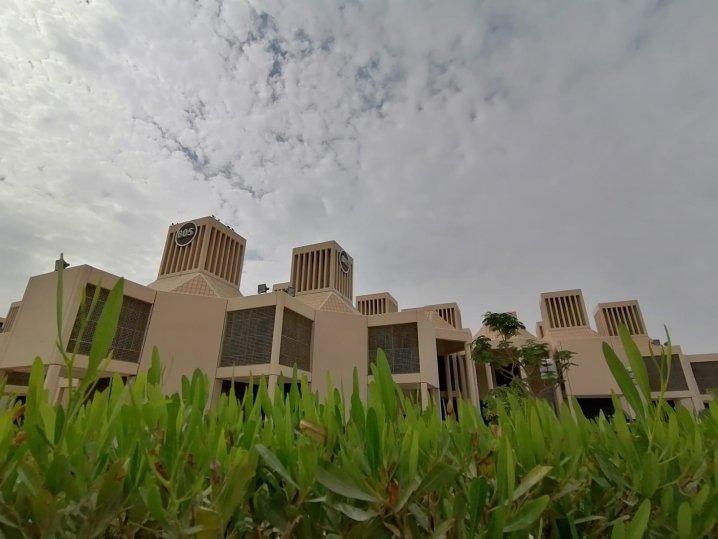
Pic: Salim Matramkot / The Peninsula
Qatar University (QU) strives for excellence through its education and research efforts while serving the local and international community and contributing to Qatar National Vision 2030. Besides the current challenges induced by the COVID-19 worldwide, Qatar University supports its research community with 74 newly-awarded projects for the new cycle. Qatar University also supports its students in their research work by funding about 250 students each year through different student grants. The Research Support (Grants and Contracts) at the Research and Graduate Studies Sector in Qatar University recently announced the Cycle 4 Internal Grant Awards.
Prof. Mariam Al Maadeed, Vice President for Research and Graduate Studies at Qatar University, attended the online event. The event started with a preview of the submitted grants. Globally, most of the programs had seen a significant increase in the total number of submissions compared to the last cycle, with the total reaching 267 this year.
For example, the High Impact Grant submissions increased from 7 to 27 submissions with six awarded projects. The Collaborative Grant submissions had an increase of 70%, with a total of 18 awarded projects. It was shown that the College of Engineering (CENG) and the College of Arts and Sciences (CAS) led the way by collectively claiming around 50 percent of the total submitted grants. In terms of research fields, most of the submitted proposals were in the Health and Biomedical Sciences and Energy & Environment research pillars of the university.
Due to COVID-19, the Office of Research Support recently established two specific short lifecycle grants as part of an international research effort to deal with the virus and support the speed of rapid scientific research initiatives. The QU Emergency Response Grant (ERG) provides support to new and early-stage investigations. It supported nine projects covering five research areas: basic molecular research, clinical research, social-behavioral research, infectious disease epidemiology, and e-health, and The Concept Development: Emergency Response grant (CD-ER) that deals with the high demand for innovative solutions.
CD-ER is intended to enable the development of innovative prototypes, processes, and innovative platforms. It covered seven additional awarded projects. Beyond studying the virus from different perspectives, QU researchers contribute to enhancing proper protection plans and awareness and highlighting the university’s role in addressing such emerging concerns. Through the International Research Collaboration Co-Fund (IRCC), the international collaboration remains highly attractive with new submissions from Canada, Malaysia, Turkey, China, Norway, Poland, France, Ukraine, Italy, Australia, UK, and the US, totalling 13 new cofunded projects.
This year, QU also strengthened its specific IRCC Strategic Track with Oman with four additional co-funded projects. From the industry side, Qatar University has initiated the new “QAFCO Research and Development Grant” (QRDG) in collaboration with Qatar Fertilizer Company (QAFCO). The grant targets faculty and students from different research fields and supports QAFCO’s strategy in creating knowledge, contributing to Qatar becoming self-sufficient, and building a knowledge-based economy to achieve Qatar National Vision 2030.
The grant has dedicated solutions with high Technology Readiness Level in process enhancement, environmental studies, climate change adaptation, and soil health management. QRDG supported eight early-stage projects in its first phase, from which two projects will be selected to continue as one-year projects by mid-2021. QU adopts an ambitious research roadmap to achieve the main and transformative priorities in the four research areas: Information and Communication Technology, Energy and Environment, Health and Biomedical Sciences, Humanities, and Social Sciences.
It aims at keeping high standards in terms of support for its faculty, researchers, and students