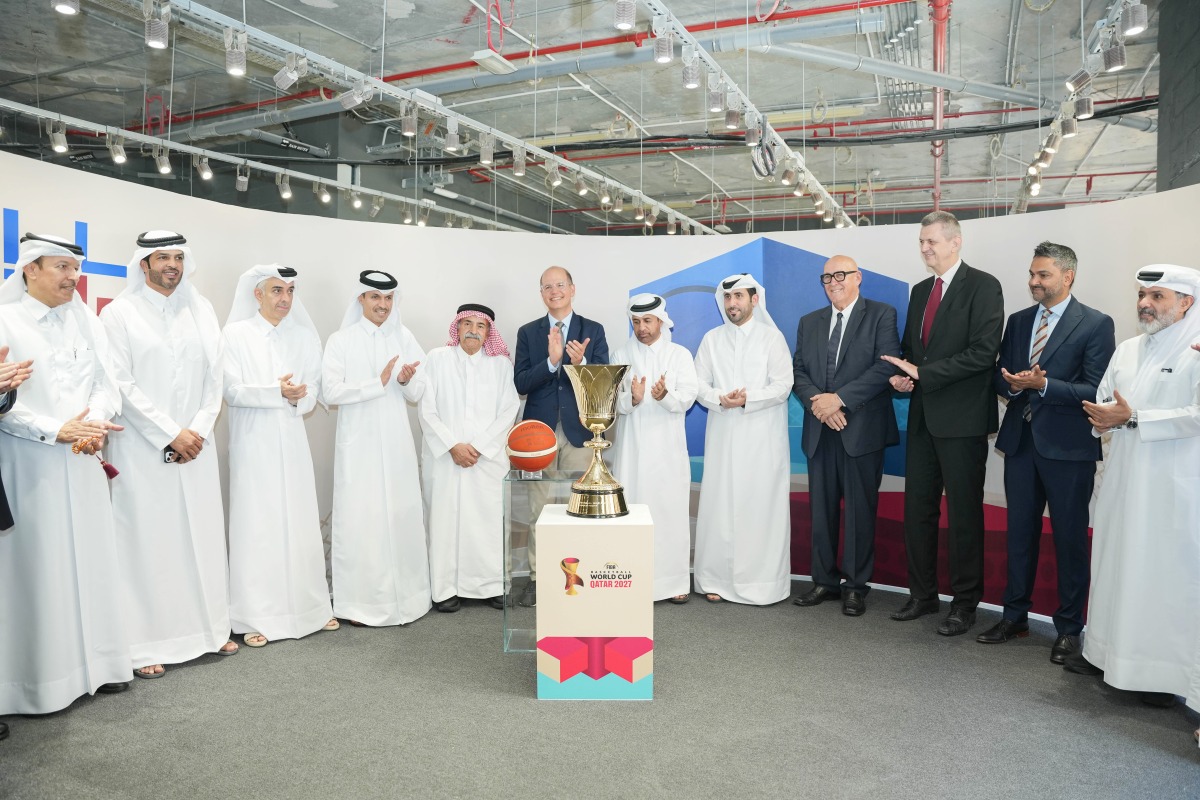
Officials during the inauguration of the exhibition yesterday.
DOHA: Secretary-General of the National Archives of Qatar and Director-General of the Organising Committee for the FIBA Basketball World Cup 2027 Dr. Ahmed Abdullah Al Buainain, inaugurated the “Beyond the Court:
The History of Basketball and Its Global Legacy” exhibition, organised by the National Archives in cooperation with the FIBA Foundation at Building 46 in Katara Cultural Village.
The opening was attended by President of the International Basketball Federation (FIBA) H E Sheikh Saud bin Ali Al Thani, General Manager of Katara Cultural Village H E Professor Dr. Khalid bin Ibrahim Al Sulaiti, Secretary-General of the Qatar Olympic Committee H E Jassim bin Rashid Al Buenain, Undersecretary of the Ministry of Sports and Youth H E Yasser bin Abdullah Al Jamal; Secretary-General of FIBA H E Andreas Zagklis and a number of senior officials.
The exhibition, which will run until March 27, 2027, attracted significant interest and engagement on its opening day. Visitors toured its various sections, explored its documentary content and historical collections, and experienced a number of interactive exhibits.
The exhibition presents a documented journey through the history of basketball over the decades, beginning with the origins and global spread of the sport and the establishment of FIBA. It highlights major milestones in the FIBA Basketball World Cup, along with prominent figures and icons of the sport, before tracing the establishment of the Qatar Basketball Federation and the development and growing presence of basketball in Qatar.
The exhibition is being held as Qatar prepares to host the FIBA Basketball World Cup 2027, reflecting the growing interest in the sport and bringing audiences closer to its history as part of preparations for the major international sporting event.
The exhibition also highlights the role of the National Archives of Qatar, which extends beyond preserving official documents to documenting various aspects of the nation’s collective memory, including its sporting history, and making these materials accessible to researchers and the public through modern exhibition and presentation methods.