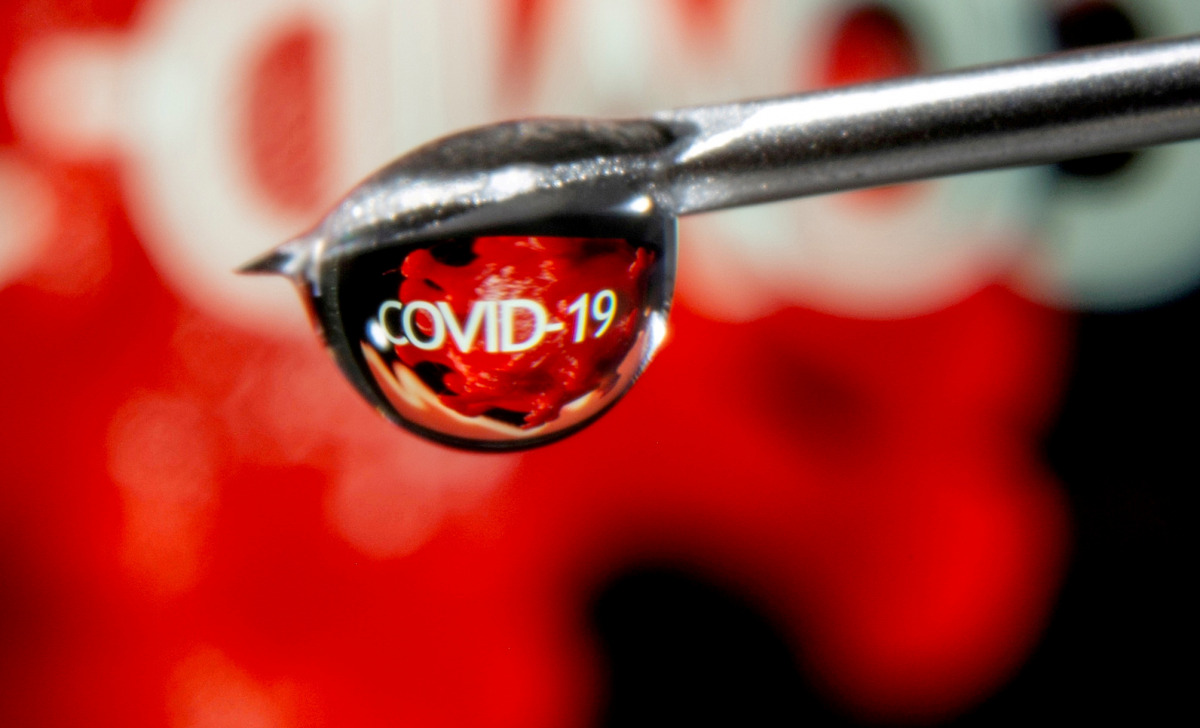
FILE PHOTO: The word "COVID-19" is reflected in a drop on a syringe needle in this illustration taken November 9, 2020. REUTERS/Dado Ruvic/illustration/File Photo
SARAJEVO - The first case of a new variant of the coronavirus has been detected in North Macedonia in a sample from a 46-year-old man who has already recovered from a COVID-19 infection, Health Minister Venko Filipce said on his Facebook page.
The so-called British strain of the virus was detected in a private laboratory in the capital Skopje during an analysis of a sample from the man who was registered in the Public Health Institute database as having recovered from the illness last week, Felipce said.
Several new variants of the virus have been discovered around the world, including a highly contagious, and potentially more deadly, variant first identified in southeast England and now widespread in Britain.
Felipce said the man was diagnosed with COVID-19 at the end of December, testing positive for the coronavirus several times. The patient had not reported being in contact with people from abroad nor indicated that he had travelled out of the state.
The laboratory determined that mutations defined in the new British variant of the virus were isolated from the patient's sample.
Felipce has not suggested that new restrictions will be imposed to stem the spread of the virus, but called on citizens to comply with measures already in place.
Serbia is so far the only other country in the Western Balkans region to report finding the new variant.
Felipce also said the government has agreed to purchase 200,000 doses of a vaccine based on the inactivated virus, on the top of 833,000 vaccines ordered under the COVAX scheme, but did not provide details.
North Macedonia, like Bosnia, Montenegro and Kosovo, has not launched its immunisation programme yet because the vaccines ordered under COVAX, the scheme led by the World Health Organization and the GAVI vaccine alliance, are only expected to arrive in February.
All the Balkan countries have also begun to negotiate the purchase of vaccines directly from producers, including those in Russia and China.