

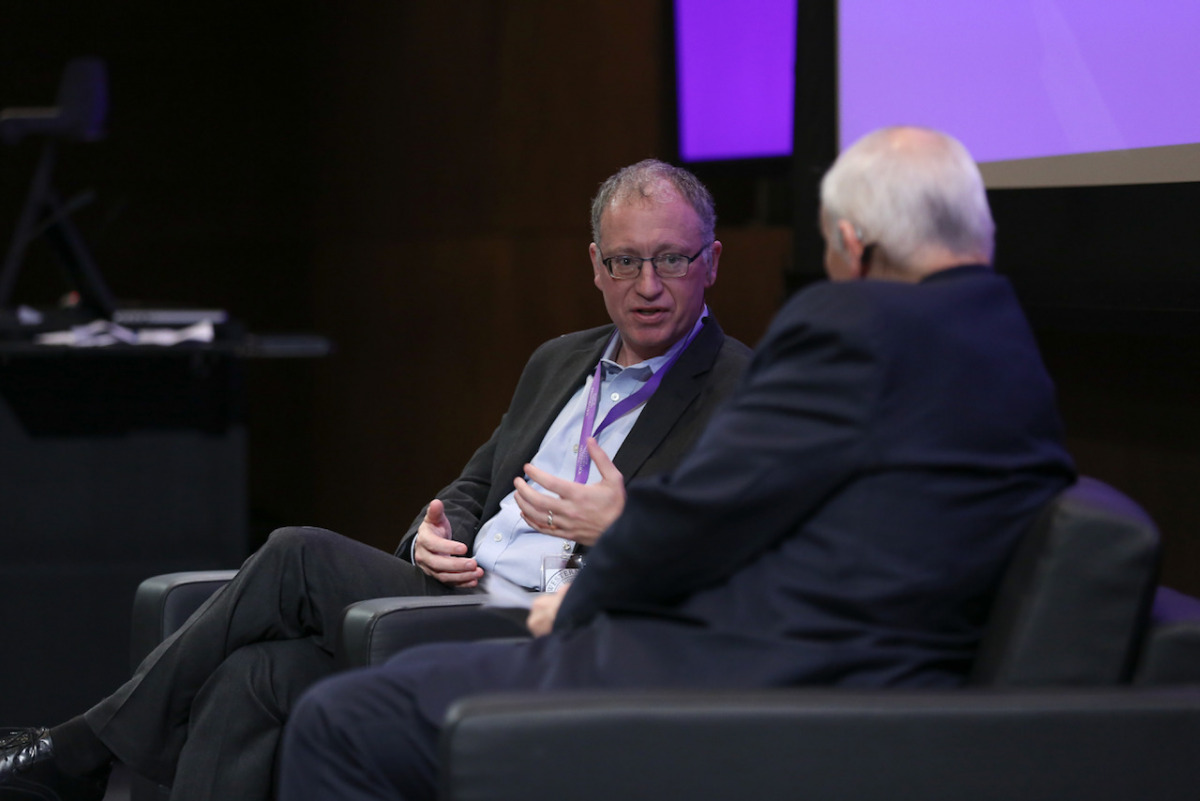
Doha: Marc Lynch, one of the most widely quoted experts on Middle East politics and media, spoke at Northwestern University in Qatar (NU-Q) and questioned the way many people generalise about the Arab Spring.
To the audience of students, faculty, and staff, Lynch explained that this conventional way of thinking results in categorising the countries in the region as either successes or failures based on the leadership in each country.
“This makes no sense to me at all,” said Lynch, “because what we’ve seen are really revolutionary transformations at every level from individual to societal to international. Every country has been profoundly affected by what’s happened since 2011 whether or not the leader changed.”
Lynch, a professor of political science and international affairs at George Washington University in Washington, DC and the founder and director of the Project on Middle East Political Science, believes a sense of shared Arab identity and fate inspired many throughout the region to join the Arab Uprising, and it was a powerful manifestation to witness. Lynch pointed out that every single Arab country despite their differences and internal characteristics, still face the same set of competitions and have a common position.
Everette E. Dennis, dean and CEO of NU-Q, moderated the event and opened the session by asking Lynch about his scholarly research and how to make sense of the complexity that surrounds the Arab world’s history of upheaval.
In response, Lynch said that he had been researching media, youth activism, and information technology in the Middle East before the Arab Spring started in Tunisia.
While most experts viewed it as an isolated event, he said that he recognised immediately that it was not a spontaneous event that would remain unique in Tunisia
A member of the audience asked Lynch his views on how the Arab Spring affected the different levels of society in the Middle East. Lynch said that the changes at the regional and international levels are “the most directly and obviously significant but likely to be the least enduring.”
The largest effects and most enduring impacts, he stated, ultimately are felt on the individual level, like when a young activist discovers he/she can make a difference.







