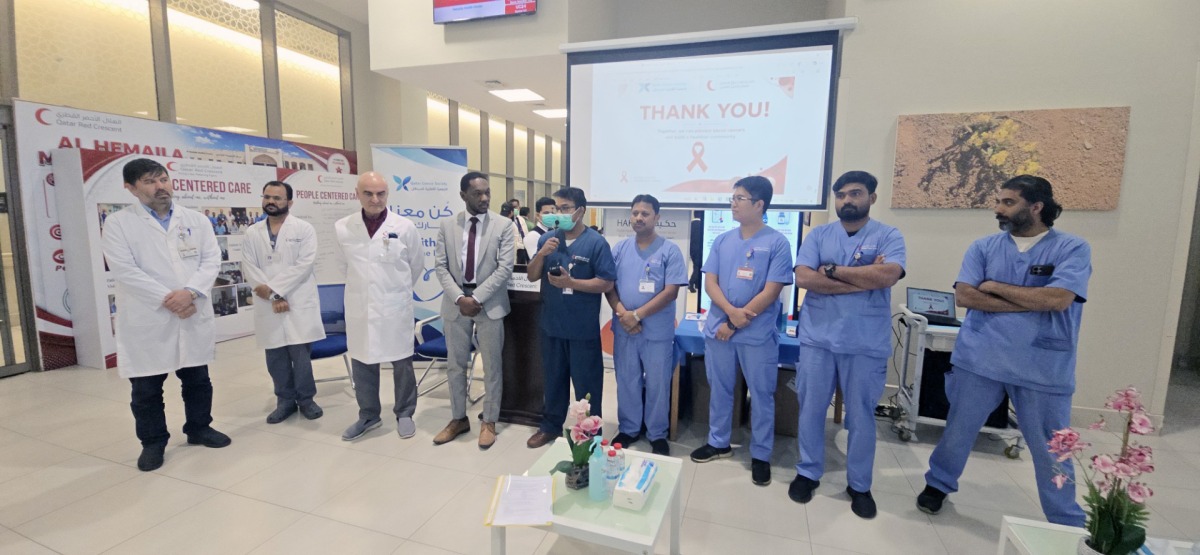
Officials and participants during the awareness campaign.
Doha, Qatar: Qatar Cancer Society (QCS) has launched a month-long awareness campaign aimed at increasing public awareness of blood cancers and highlighting the importance of early detection, which plays a vital role in improving treatment outcomes and quality of life.
The Society noted that recent advances in medical care have significantly improved the treatment of blood cancers and increased the chances of long-term remission and recovery for many patients.
It explained that blood cancers are a group of malignancies that affect the production and function of blood cells. These cancers usually originate in the bone marrow or lymphatic system, causing abnormal blood cells to multiply uncontrollably and interfere with the normal function of healthy cells. Because blood cells circulate throughout the body, blood cancers can affect multiple organs rather than a single location.
In this context, Director of Programmes at Qatar Cancer Society, Dr. Hadi Mohammed Abu Rasheed explained that the main types of blood cancer include leukaemia, lymphoma, and multiple myeloma, each of which has distinct characteristics, diagnostic methods, and treatment approaches.
He added that leukaemia is among the most common blood cancers in Qatar and ranks among the leading cancers overall, particularly among males.
Non-Hodgkin lymphoma is also relatively common and affects both men and women, while Hodgkin lymphoma tends to occur more frequently in younger adults. Multiple myeloma, on the other hand, is less common but is seen more often in older adults, particularly men.
Dr. Abu Rasheed stressed the importance of seeking medical advice if symptoms such as persistent fatigue, recurrent infections, unexplained weight loss, swollen lymph nodes, easy bruising or bleeding, or persistent bone pain continue, noting that although these symptoms may be caused by conditions other than cancer, persistent or worsening symptoms should always be evaluated by a healthcare professional.
He further explained that several factors may increase the risk of blood cancers, including advancing age, genetic predisposition, previous cancer treatments, exposure to high levels of radiation or certain chemicals such as benzene, weakened immunity, certain viral infections, and some autoimmune diseases.
Dr. Abu Rasheed also pointed out that diagnosing blood cancer requires a combination of investigations, including blood tests, bone marrow biopsy, imaging studies, and specialized laboratory tests to accurately identify the cancer type and determine the most appropriate treatment plan.
He noted that treatment options have advanced considerably in recent years and now include chemotherapy, radiation therapy, targeted therapy, immunotherapy, and stem cell (bone marrow) transplantation, all of which have contributed to improved treatment outcomes and increased survival rates.
He added, “Raising awareness about blood cancers is one of the fundamental pillars of cancer control efforts. Recognising warning signs early and seeking prompt medical evaluation can lead to earlier diagnosis and timely treatment, ultimately improving patients’ outcomes and quality of life.
The remarkable advances in diagnostic techniques and treatment over recent years have given hope to thousands of patients worldwide, enabling many of them to achieve better treatment outcomes and enjoy healthier, more stable lives.”