Ramallah: A recent Palestinian study found that Israeli occupation authorities are reshaping control over land in the West Bank through military land seizure orders issued for security purposes, aimed at imposing what it described as a gradual "functional annexation."
The study, published by Institute for Palestine Studies, revealed a marked increase in the issuance of such orders in recent years. Their number rose from 32 in 2023 to 35 in 2024, before surging to 94 in 2025, reflecting a growing reliance on this tool to establish new realities on the ground.
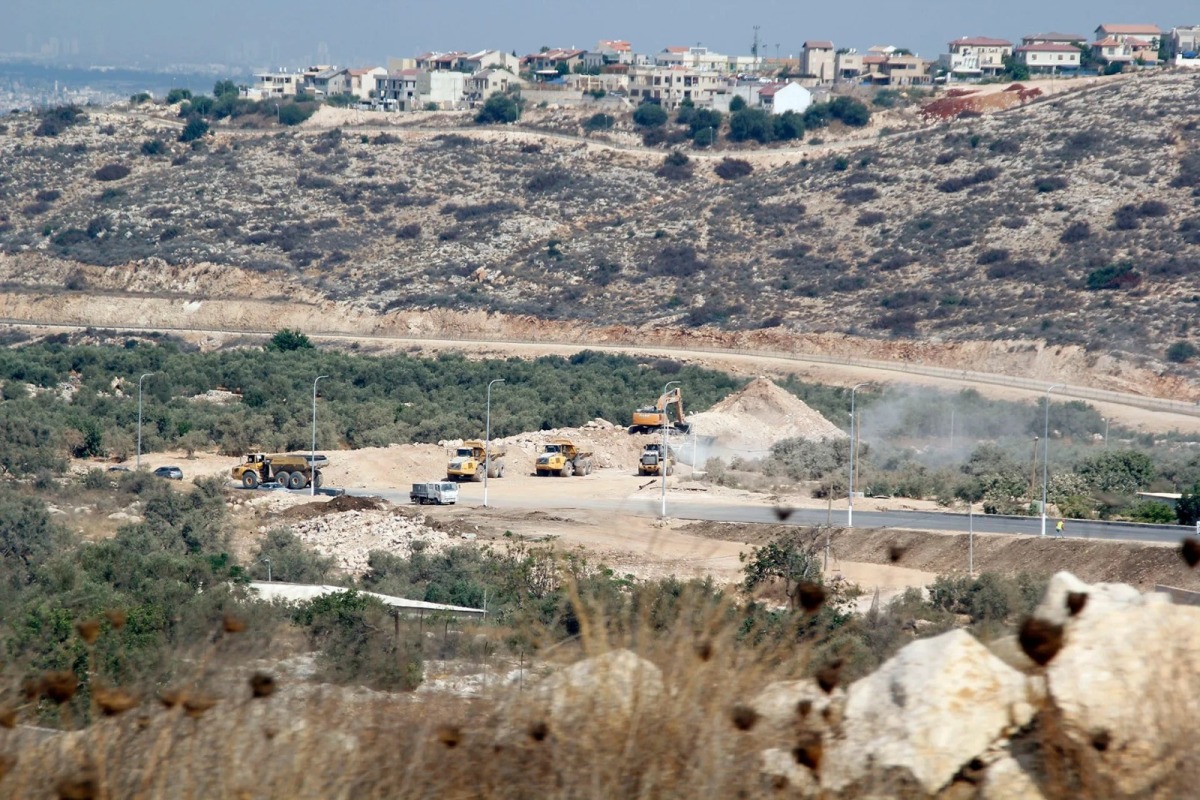
It documented the issuance of 173 military orders after October 7, 2023, resulting in the seizure of approximately 4,211 dunams of land, allocated to security road projects, buffer zones, military sites, barbed-wire fences, and other uses.
The study noted that this practice goes beyond the limits set by international humanitarian law regarding "military necessity," with the concept being expanded to include projects not directly linked to military operations but primarily serving the development of settlement infrastructure.
It further found that these orders, which are formally presented as temporary measures justified by military necessity, have effectively become a systematic structural policy used to create permanent facts on the ground. Rather than being tied to immediate and time-bound security needs, they are increasingly applied to long-term projects, including the construction of security roads, the establishment of buffer zones around settlements, and the expansion of territorial control.
According to the study, land seizure orders function as a legal workaround that preserves a temporary appearance while resulting in lasting changes in land use.
The study concluded that the cumulative impact of these policies amounts to what it termed "functional annexation," referring to the imposition of sustained control over land without formal declaration, thereby avoiding the legal and diplomatic consequences associated with explicit annexation.
This is achieved through altering land-use patterns, severing Palestinian ties to their land, and establishing entrenched infrastructure that supports settlement expansion.