Doha: Qatar has achieved advanced positions in several areas that are among the main pillars covered in the World Economic Forum’s (WEF) reports in previous years.
Qatar was ranked first in the Arab world and among the top 10 countries in many indicators. In the institutional pillar, Qatar ranked 7th globally in the “efficiency of the legal framework” index, 6th in the “government response to change” index, and 8th in the “long-term government vision” index.
The latest edition of The Global Competitiveness Report 2020, was published recently.
This report noted that Qatar is among the top ten countries in adopting ICT, flexible work arrangements, digital skills, and a digital legal framework, becoming the second Arab country in the classification.
The Competitiveness Report is issued annually by the WEF in cooperation with the Qatari Businessmen Association (QBA) and the Social and Economic Survey Research Institute (SESRI) of Qatar University.
The WEF report outlines priorities for recovery and revival, assesses the features that helped countries be more effective in managing the pandemic, and provides an analysis of which countries are best poised for an economic transformation towards systems that combine “productivity”, “people” and “planet” targets.
According to the study, few economies globally are ready for long-term prosperity through improved public services, green investments, and digitisation. While no nation has emerged unscathed from the COVID-19 crisis, this year’s Global Competitiveness Report finds that countries with advanced digital economies, strong social safety nets and robust healthcare systems have managed the impact of the pandemic more effectively on their economies and citizens.
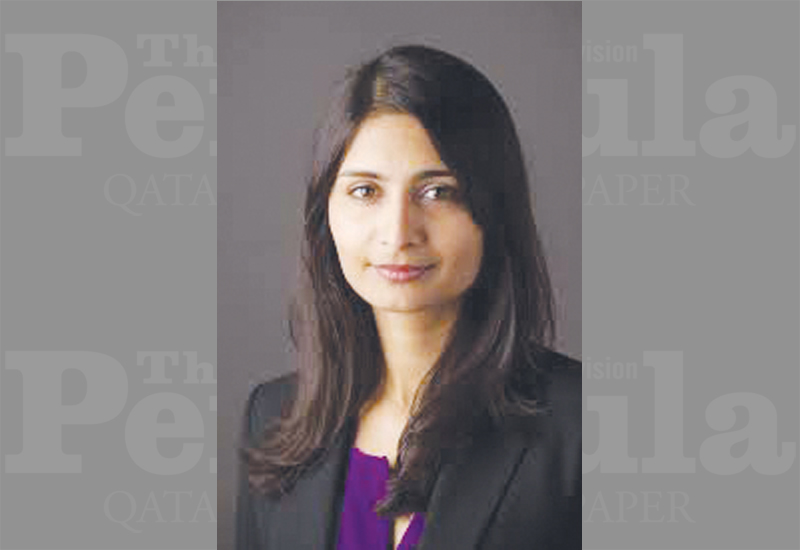
“During this time of profound uncertainty, the health crisis and economic downturn have forced a fundamental rethink of growth and its relationship to outcomes for people and planet. Policy-makers have a remarkable opportunity to seize this moment and shape new economic systems that are highly productive while growing shared prosperity and environmental sustainability,” said Saadia Zahidi (pictured), Managing Director at
WEF.
The ‘Global Competitiveness Report Special Edition 2020: How Countries are Performing on the Road to Recovery’, highlights how business sentiment has changed during the pandemic. In advanced economies, business leaders saw increased market concentration, a marked decline in competition for services, reduced collaboration between companies and fewer available skilled workers in the employment market as the shift to digitally enabled work accelerated. On the positive side, leaders saw greater government response to change, improved collaboration within companies and increased availability of venture capital.
In emerging markets and developing economies, business leaders noted an increase in business costs related to crime and violence, a reduction in judicial independence, a further reduction in competition and growing market dominance, and stagnating trust in politicians. They, too, expressed positive views on government response to change, collaboration within companies, and venture capital availability. They also noted an increase in the capacity to attract talent, potentially facilitated by the more digital labour market.
The report also considers pathways for revival and transformation in four areas including the enabling environment, human capital, markets, and innovation. It recommends that governments prioritise improving public service delivery, plan for managing public debt and expand digitisation. In the longer term, more progressive taxation, and upgrading utilities and building greener infrastructure are recommended. It also advocates a gradual transition from furlough schemes to a combination of proactive investments in new labour market opportunities, a scaling-up of reskilling and upskilling programmes, and safety nets to help drive the recovery. In the longer term, leaders should work to update education curricula, reform labour laws and improve the use of new talent-management technologies.
While financial systems have become significantly more stable since the last financial crisis, they need to be more inclusive, and growing market concentration and raising barriers to the movement of goods and people risk hampering the transformation of markets. The report recommends introducing financial incentives for companies to engage in sustainable and inclusive investments, while updating competition and anti-trust frameworks.
Although entrepreneurial culture has flourished in the past decade, the creation of new firms, breakthrough technologies and products and services that deploy these technologies has stalled. The report recommends that countries expand public investment in R&D while encouraging it in the private sector. In the longer term, countries should support the creation of “markets of tomorrow” and motivate firms to embrace diversity to enhance creativity and market relevance.