By David M. Levitt and Zainab Fattah
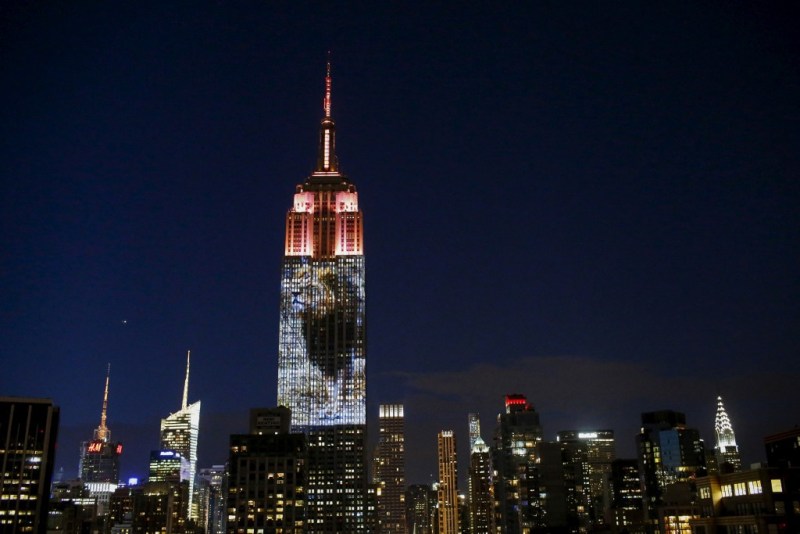
Qatar Investment Authority, the Middle Eastern country’s sovereign wealth fund, bought a near 10 percent interest in Empire State Realty Trust, owner of New York’s Empire State Building, as it boosts investments in North America and the Asia Pacific region.
The fund acquired 29.6 million newly issued Class A common shares at $21 each and will have a 9.9 percent economic and voting interest in the real estate investment trust. The acquisition translates into a new $622 million investment in Empire State Realty, the company said in a statement on Tuesday.
The QIA “is re-balancing its geographical exposure towards the U.S. and Asia because they were over exposed to Europe at one point,” Fadi Moussalli, MENA head of International Capital Group at JLL, said in a phone interview. “When Qataris invest in the U.S. they reduce their currency exposure because their riyal is pegged to the U.S. dollar, which isn’t the case with European investments.”
The fund has been adding to its real estate assets this year. In June it agreed to buy Singapore’s Asia Square Tower 1 from BlackRock Inc. in Asia Pacific’s largest single-tower sale, according to JLL. QIA has invested about $40 billion in property around the world, with about $22 billion in office transactions and $7.5 billion for hotels, including the 2014 purchase of the St. Regis Rome, according to Real Capital Analytics Inc.
‘Reliable Investor’
For Empire State Realty, the investment will help it “plan for the future, now with more capital and one of the most sophisticated and reliable real estate investors in the world as our partner,” John Kessler, the company’s president, said in the statement.
Empire State Realty didn’t say how it will deploy the money raised. Chief Financial Officer David Karp said that the company recently expanded its revolving credit line to $1.1 billion. Those funds, combined with Qatar’s infusion, will enhance the company’s “ability to drive long-term value” for shareholders, he said.
Empire State Realty Trust has been a publicly traded REIT since October 2013, following two years during which Empire State Building supervisors Peter Malkin and his son Anthony battled with some of the tower’s longtime investors over whether going public was in their interests. The shares closed yesterday at $20.52, up 14 percent this year. The company owns 10.1 million square feet (938,000 square meters) of office and retail properties, mostly in Manhattan, with the rest in New York’s northern suburbs.
Last October, Qatar Investment Authority and Brookfield Property Partners LP formed a joint venture on Manhattan West, an $8.6 billion mixed-use project on New York’s far west side. QIA, which was established in 2005, is the world’s ninth-largest sovereign wealth fund with assets valued at $335 billion, according to rankings by the Sovereign Wealth Institute.
More investments in U.S. real estate are sure to follow, JLL’s Moussalli says. “The U.S. real estate market is offering fantastic opportunities for equity-rich investors right now.”
More to follow
Notable investments over the past 11 years include a stake in the Volkswagen Group and the purchase of luxury British retailer, Harrods.
The Empire State acquisition comes almost a year after Qatar's ambassador to the US, Mohammed Al-Kuwari, tweeted that his country would invest $35 billion in the US economy over the next five years.
The Empire State Building, opened in May 1931, stands at 443 metres (1,454 feet) high and was once the world's tallest building.
It has featured in several Hollywood films, including Sleepless in Seattle, The Producers and the 1933 version of King Kong.
Bloomberg / AFP