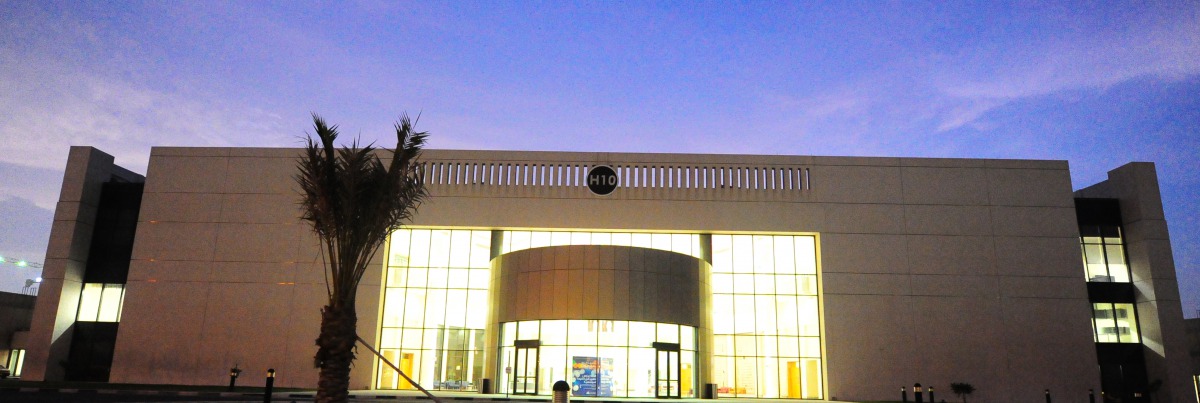
Qatar University Research Complex
DOHA: Qatar University (QU) produces the highest research volume in Qatar in the Elsevier’s Scopus bibliometric database, according to a recent article published by the Times Higher Education (THE) under the title “Can Qatar’s universities survive the Gulf blockade”
The university has been ranked first in the international outlook indicator in the overall Times Higher Education World University Rankings list (THE-WUR) since 2015 and third among universities in the Arab world in THE Arab World Rankings 2018.
The international outlook indicator considers the proportion of an institution’s international staff, international students, and research papers co-published with at least one author from another country.
THE used the international outlook indicator of the WUR to create the list. Qatar’s overall research output per capita has been increasing at a faster rate.
The field-weighted citation impact of Qatar’s research, a measure of quality that allows for fluctuations in citation rates by year and by subject, has also been higher.
On international collaboration, QU currently holds 32.9 percent of the overall percentage (70 percent) of institutions in Qatar.
This means that papers emerging from QU that are co-authored with international researchers make up one-third of all internationally-collaborated papers from Qatar as a whole. “As Qatar first national higher education institution, QU has a vibrant culture of collaborative research and an ambitious research roadmap targeting local, regional and international issues. International collaboration stands at the core of QU’s research strategy.
We encourage our researchers towards a culture of knowledge-sharing in seeking solutions to local and regional challenges,” QU President Dr. Hassan Al Derham said.
“The recent Gulf crisis did not affect QU’s research quality and quantity. Our ever-increasing research efforts have resulted in over 4,658 co-authored publications with 1,835 collaborating institutions. The university continues in its efforts to strengthen links with the society, and to maximize impact not only on students, but also on the wider community by advancing development programs, and bringing to bear its faculty and students’ expertise and experiences to various entities in Qatar and beyond,” Dr Al Derham added.
QU VP for Research and Graduate Studies Prof Mariam Al Maadeed said: “In its new strategy for 2018-2022, QU seeks to excel in innovative and focused research that addresses the society’s needs and provides effective solutions to local challenges.”
QU Scholarships and Partnerships Office Director, Cesar Wazen said: “The below data reinforce these facts as they prove that the resources devoted to research (income and PhD students) are increasing while QU is holding the quantity of research output steady, thus the quality goes up, leading to our biggest gain being in citation impact. Even in the current difficult times inflicted by the ongoing Gulf crisis, preceded by the drop in oil prices, resources were not affected.”