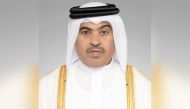
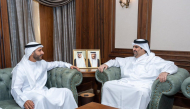
Permanent Observer for the Organization of Islamic Cooperation (OIC) H E Hameed Opeloyeru stressed that relations between the State of Qatar and the Organization of Islamic Cooperation are very distinguished, and that Qatar is one of the largest supporters of the Organization.
Speaking to Qatar News Agency (QNA), His Excellency said that the State of Qatar has and continues to provide generous support to the organizations humanitarian activities as well as issues that deal with socioeconomic challenges, in addition to being a resolute supporter of the peace and security of member states, including African countries.
His Excellency expressed his delight with the success of Qatari mediation in Chad, which was crowned with the signing of the Doha Agreement for Peace in Chad. He said that it was a good and important step towards reconciliation in Chad. He also said that the OIC held these efforts in high esteem, and stressed the importance of Qatar continuing its mediation efforts for peace and security to return to Chad.
On the outcomes the OIC would hope to see out of the 77th session of the UN General Assembly, Opeloyerusaid that this years agenda will focus on finding solutions to many of the worlds challenges.
For the OIC, we expect that those challenges that affect the OIC countries will be discussed. And then of course, one of them is the conflict situation in OIC countries. We have conflicts in most of our countries, which actually some of them came before and after COVID-19. Because of that we have problems of political, social and economic nature, we have also some humanitarian problems. And then we are also dealing with some of these problems, in Afghanistan, Syria and Libya he said. On the role of the OIC in resolving those issues, he said that the OIC has passed a lot of resolutions in this regard, and added that some of the resolutions also ask for closer cooperation with the United Nations.
“In the UN Charter, the regional organizations have a role. Our role is to make sure that we try to resolve all these crises peacefully, and this is what they call conflict prevention, conflict management, and conflict resolution,” he said.
He added that the role of the Permanent Observer of the OIC to the United Nations is to make sure that all the resolutions that were passed in the OIC are also discussed at the coordination meeting, set to take place on Sep. 22. Afterwards, a group from the OIC will issue a joint report that will be submitted to the General Assembly.
The Palestinian issue is the central issue for the Organization of Islamic Cooperation, and that the organization has dealt with this issue since its inception, expressing his disappointment with the failure to implement UN General Assembly and Security Council resolutions on Palestine. “Palestinians are facing enormous humanitarian and security challenges,” he said.
On UNRWA’s funding difficulties, he said it wasnt yet clear if Mulsim countries were making their contributions to the agency. He noted that the State of Qatar and other countries were trying to figure out how to deal with the agencys financing.
He added that the OIC has its Al Quds fund, and noted that the organization is always encouraging member states to make more contributions to it.
On Afghanistan, Opeloyeru said that the OIC has given a lot of attention to developments in the country and last year held an extraordinary ministerial meeting on Afghanistan, that took place in Islamabad. He noted that one of the outcomes was the creation of a humanitarian special trust OIC fund.
On recognizing the new administration in Afghanistan, he said that the OIC is meeting with all the stakeholders to make sure that the issues of good governance, inclusion of all segments of society such as youth and women is agreed upon, in order to “remove that tag of terrorism from the government.”
He said that most countries currently recognize the current administration in Kabul as a de facto government. He added that for these countries to start dealing with that new administration, the latter has to observe all international standards of governance and the return of peace and stability to Afghanistan.
He said that the OIC envoy to Afghanistan visits Kabul regularly to highlight these issues.
On the coordination between the OIC and the UN in protecting the rights of Muslims in non-Muslim countries, he said that the Sep. 22 meeting will deal with the issue of Rohingya Muslims in Myanmar, as the OIC will encourage the UN to support the rights of Rohingya so that they can enjoy their citizenship rights.
He also said that the OIC has held talks with the Chinese authorities on protecting the rights of Uyghur Muslims, and that the rights of freedom of religion and worship are observed. He said that a group from the OIC did visit the Uyghur region in China in 2019.
He also stressed that the OIC is concerned with all issues and challenges facing the world, and coordinates with nations on them, such as issues of climate change, energy, and the fight against poverty, noting that the OIC has a poverty alleviation fund under the Islamic Development Bank, which is a $10 billion fund.