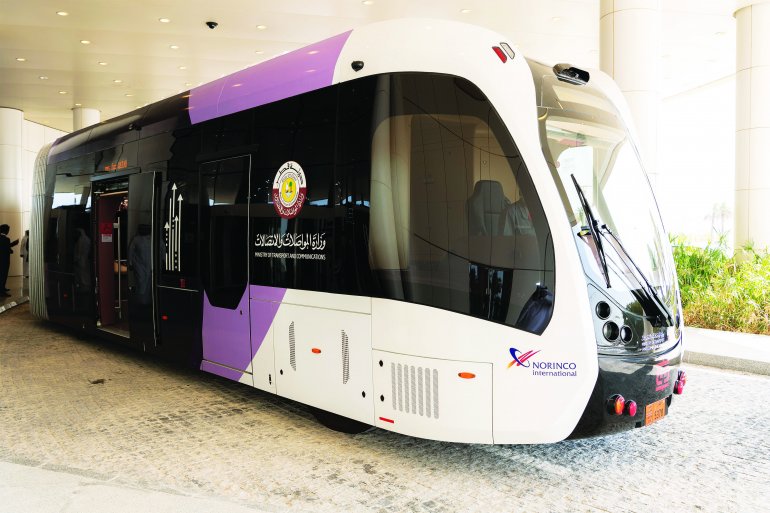
The Automatic Rapid Transit (ART) System vehicle, which was run on a trial basis on selected roads.
The Ministry of Transport and Communications (MOTC) continues to strive towards establishing a smart transport system, as part of the implementation of Tasmu Smart Qatar Program. The ministry is working on five main projects related to public transport.
They include electric buses; establishing 17 public transport infrastructure sites; 3000 smart bus stops; developing the West Bay buses centre, operating Water Taxis, in addition to improving the efficiency of public transport buses.
There are other projects that include using Wi-Fi on street lighting poles.
The programme aims to lower road fatalities to 6 per 100000 people, in addition to lowering car emissions by 10% among other goals.
The ministry’s work is part of the effort to transform the country into a knowledge-based digital economy. The contribution of the transportation sector to GDP in 2017 was around QR17.2bn, up from QR10.6bn in 2013. The state allocated 7.9% of its 2019 budget expenditure to transportation and communication. That is in addition to the QR1bn allocated this year to the expansion of HIA, a QR10bn project. That is in addition to the QR3bn allocated to the public transport program until 2021. The state will also increase the length of highways to 8500km.
The Ministry also implemented in cooperation with Qatar Rail and Karwa a plan to integrate different public transport means such as Metrolink and Metroexpress.
In aerial transport, Hamad International Airport Launched phase two of its smart airport programme, which uses facial recognition capabilities. The Smart Airport contributes to the improvement of the operational processes and provides optimal use of the airport's resources and facilities. It also helps provide the required information when making decisions regarding the future capacity of the passenger terminal and the flow of passengers, with the state targeting the flow of 53 million passengers a year by 2022.
In Maritime transport, Hamad Port began operations in 2016, before its official inauguration in September 2017. It links 50 ports regionally and internationally in three continents. The Ministry is overseeing the second phase of the port, which will be fully automatic. Phase two is set to be completed in 2021. Doha Port for its part is undergoing a development process worth $550 million, which will see it host tourism cruises.
The next Qatar IT Conference and Exhibition (QITCOM 2019), which will take place from October 20 to November 4, will see the Ministry review its latest developments in the fields of transportation. QITCOM will have more than 90 speakers. A total of 300 companies will participate in the exhibition, a 100 of which are startups.