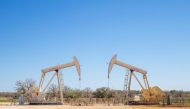
Doha, Qatar: The inception of Qatar’s modern renaissance, nestled within the desert and surrounded by Gulf waters, coincided with the initial oil discoveries. The pursuit of oil exploration in Qatar commenced after its discovery in neighboring countries.
In 1939, the drilling of the Dukhan Well No. 1 began, and the subsequent year marked the discovery of oil in Qatar. However, due to the circumstances of World War II, the well was closed. Exploration resumed later, with the first oil production in 1949, followed by successive discoveries. The oil extraction in 1949 amounted to 80,000 tons, escalating to 1.6 million tons in 1950, and eventually reaching 17 million tons in 1970.
The Dukhan Field stands as Qatar’s sole onshore oil field, stretching 47 kilometers long and 34 kilometers wide, pumping oil to the Mesaieed Port.
Discoveries like the Eastern Field in 1963, Bul Hanine Field in 1969, and the Maydan Mahzam Field in 1964 added to Qatar’s oil and gas reserves.
To oversee the exploration and sales of oil and all related operations, the establishment of a modern company became essential. Hence, the announcement of the Qatar Petroleum’s founding in 1974, now known as Qatar Energy, positioned as the primary entity responsible for energy production and petroleum in Qatar.
QatarEnergy became a global leader in liquefied natural gas (LNG) production, aligning with Qatar’s National Vision 2030, aiming for economic growth benefiting the Qatari people and resources.
QatarEnergy adopted several strategies, including enhancing technical capacities and operational models, maximizing oil and gas exploration and production, building a vast portfolio for oil exploration and production, and solidifying its global position in the gas and LNG sectors.
The rapid industrial development accompanied oil exploration. Qatar Fertilizer Company (QAFCO), established in 1969 as a joint project between Qatar and foreign partners, stands as one of the oldest industrial projects in the country. It aimed to diversify the economy by leveraging the enormous natural gas reserves available in the state.
Having successfully executed expansion projects over the past three decades, QAFCO is now among the largest fertilizer producers globally.
This development in exploration and oil-based industries significantly contributed to Qatar’s gross domestic product (GDP). From a GDP of barely $29bn in 1995, when the Father Amir H H Sheikh Hamad bin Khalifa Al Thani assumed governance, Qatar’s GDP now nears $192bn.
This development, especially in the oil industries, was propelled by successive gas discoveries in Qatar, making it one of the world’s largest exporters of LNG. Qatar aims to increase its production capacity from the current 77 million tons per year to 126 million tons by 2026.
While the North Gas Field was discovered in 1971, it took years to export it to global markets. Initially, Qatar focused on meeting its growing energy needs, primarily for water desalination and electricity production.
Qatar proudly looks back to its first shipment of Qatari natural gas to Japan’s shores in 1997, marking a historic turning point, opening doors for massive exports to global markets. Since then, Qatar has expanded its growth in this sector.
Furthermore, Qatar’s decision in the late ‘90s to begin gas-to-LNG conversion projects marks its global leadership in clean energy production and serves as an exemplary model for innovative technologies worldwide. Qatar built the Oryx GTL plant, the world’s first commercial-scale gas-to-liquids plant, in 2003, with production commencing in 2008.
In the context of Qatar’s efforts towards achieving sustainable development, the Al Kharsaah Solar Power Plant was inaugurated in October 2022 in the Al Kharsaah area. The plant has a capacity of 800 megawatts, marking the first of its kind in Qatar and one of the largest in the region in terms of size and capacity.
Additionally, both QatarEnergy’s Renewable Solutions Company and QAFCO, subsidiaries of QatarEnergy, signed agreements in August 2022 for the construction of the Ammonia-7 project, valued at $1.1bn.