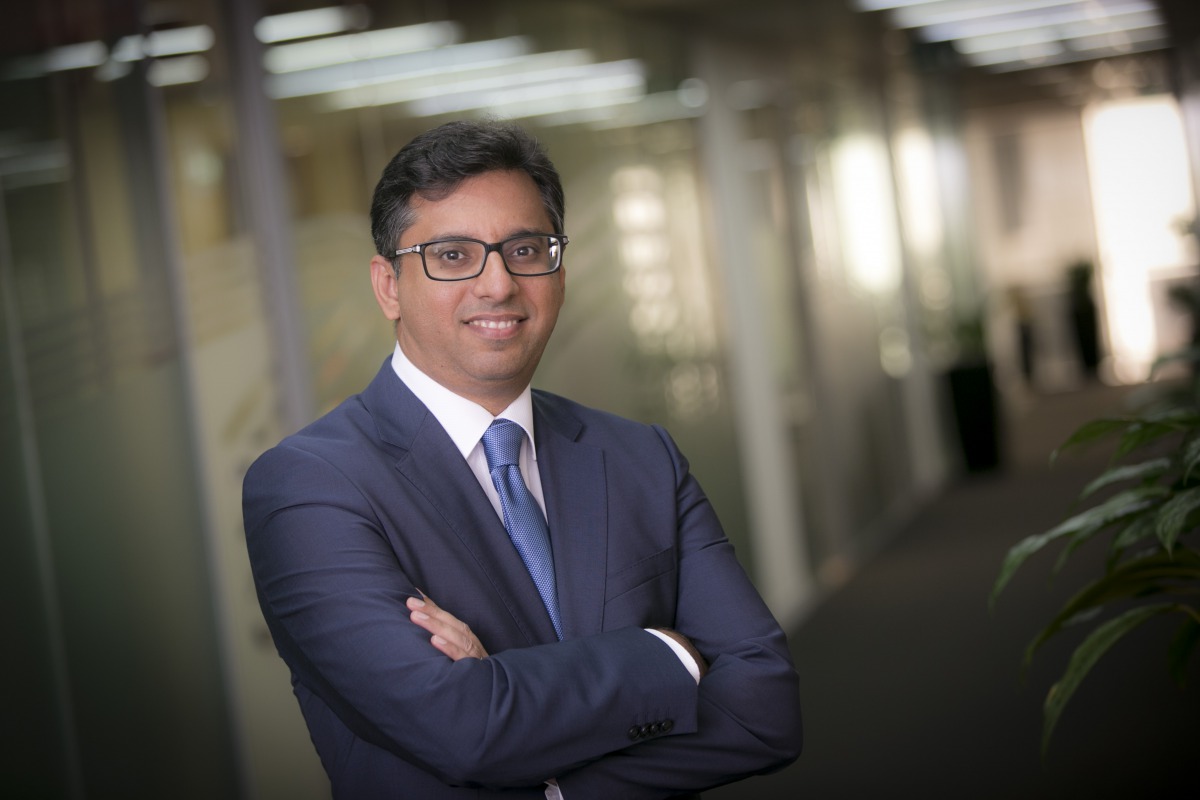
Osama Ali, Managing Director and Head of Global Banking at HSBC Qatar
Doha: The recent success of Qatar in debt capital market (DCM) suggests that the country is well-placed to explore ESG (environmental, social and governance) potential, noted industry experts at an event held yesterday.
A webinar jointly hosted by HSBC and Qatar Financial Centre (QFC) provided insight into Qatar’s success in the DCM and the country’s attractive ESG potential.
“We count ourselves fortunate that we are in a market which is looking for growth beyond these turbulent times. As we are positioning ourselves for the next cycle of growth, debt capital markets and sustainable finance are important funding sources from diversification, demand and pricing perspectives,” says Osama Ali, Managing Director and Head of Global Banking at HSBC Qatar.
As the world’s top liquefied natural gas (LNG) exporter, Qatar sold $10bn in 5-,10- and 30-year bonds in April, the first Gulf state to raise cash in the debt markets during the pandemic and against the backdrop of low oil prices. The sale attracted over $44bn in demand.
“Looking at the capital market development, the country has made great strides that have contributed to attracting international investors to its growing equity market and regular local bond and sukuk issuances,” said Yousuf Mohamed Al Jaida, CEO of the Qatar Financial Centre (QFC) Authority.
“Last year, the bond and sukuk issuance totalled $28bn, showing a compounded annual growth rate of 28 percent since 2015. This growth was largely driven by conventional bonds, which made up 83 percent of total issuance, and particularly sovereign bonds, which included the successful issue of a $12bn international jumbo bond in March 2019,” Al Jaida added.
COVID-19 has pushed sustainability higher up on the investment agenda as societies, governments and organisations look to build back better from the challenges posed by the pandemic. Landmark transactions, as part of its 2030 vision, include the debut green bond issued by Qatar National Bank (QNB) last month that sold $600m in 5-year notes, the largest issuance by a financial institution in the Middle East.
“This inaugural green bond issuance was an enormous success, achieving the lowest ever coupon for a Middle Eastern financial institution in dollars across any tenor, which further demonstrates the strong demand for green financing,” said Ali.
With the fast-growing interest in sustainable investments, ESG debt is presenting an interesting diversification option for companies in Qatar and across the Middle East.
“ESG Bonds are less volatile as secondary market investors usually tend to hold ESG bonds until maturity and are less likely to drop them in a market sell-off,” noted Ali.
With the creation by the Qatar Stock Exchange of an ESG benchmark index for listed companies, and the world’s largest single-country Islamic Exchange-Traded Fund (ETF) issued by Masraf Al Rayan bank in 2018, the country is well-placed for future growth in sustainable financing, said Henk Hoogendoorn, Managing Director of the Financial Sector office, QFC.
“It is of crucial importance to look at the opportunities for all issuers. This market is growing, and it fits perfectly with ESG criteria. HSBC is pleased to collaborate with QFC and other Qatari institutions to promote the corporate sector tapping the bonds and sukuk liquidity pool, and also to create awareness of the sustainable finance opportunities that are available outside of the traditional power and utilities sectors,” Ali concluded.