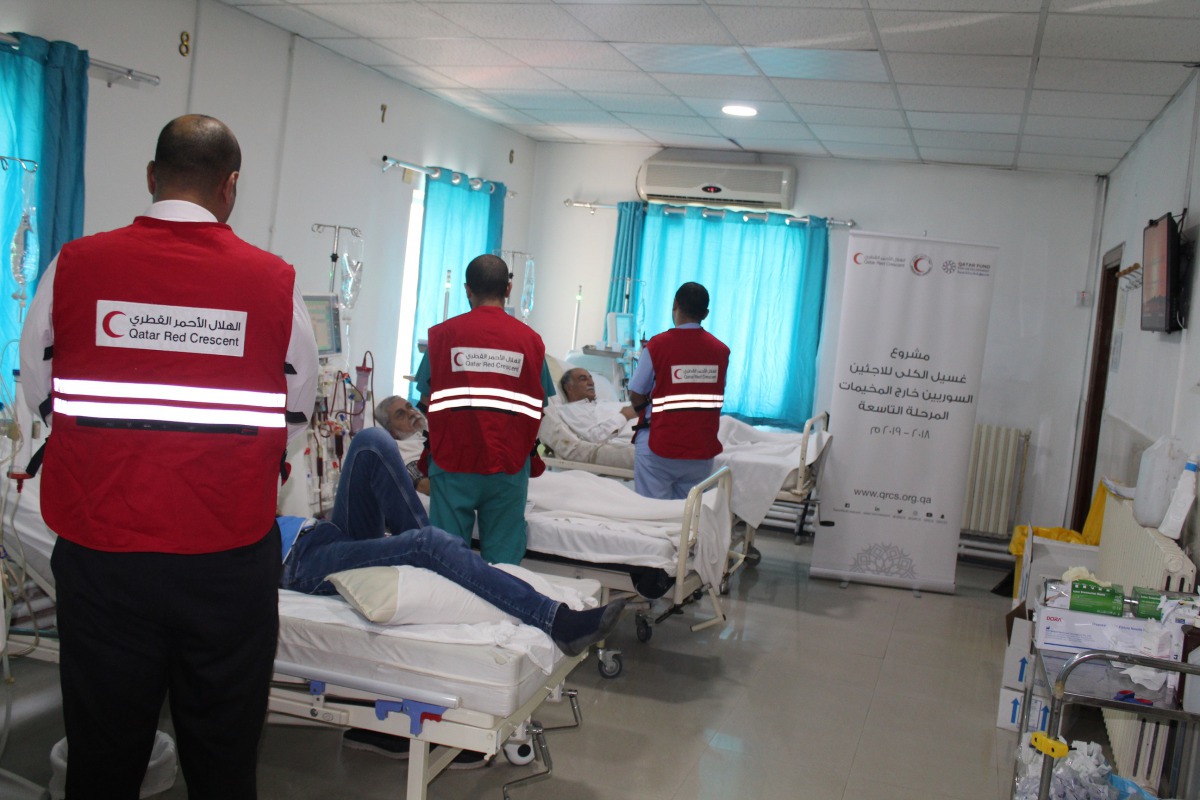
Qatar Red Crescent Society’s (QRCS) representation mission in Jordan has completed 9th phase of a project to provide dialysis for Syrian kidney failure patients who live out of refugee camps.
The project is fully funded by Qatar Fund for Development (QFFD), with a total cost of $875,204 (nearly QR3.2m). Overall, the project covered the costs of 8,885 dialysis sessions for a total of 418 patients, almost 65 percent of all Syrian kidney failure patients who live out of camps. Also, it involves providing regular medical examinations, dialysis medications, and venous access, as well as 50 referrals to specialized hospitals.
Six hospitals were contracted to host the dialysis sessions: Irbid Islamic Hospital, Al-Qawasmi Hospital, Maqasid Charity Hospital, Jordan Red Crescent Hospital, Al-Bayader Hospital, and Italian Hospital in Karak.
According to reports, the average age of beneficiaries is 51, and 90 percent of them are jobless. They are all classified as special hardship cases (SCH) under the Office of the United Nations High Commissioner for Refugees’ (UNHCR) Refugee Assistance Information System (RAIS).
The kidney failure cases are related to other chronic diseases such as diabetes, hypertension, depression, and stress. Dr. Mohamed Salah Ibrahim, Executive Director of Relief and International Development Division at QRCS, said, “This project is vital in protecting the lives of the patients, as well as easing the burden on their families and the local community. It helps to effectively meet the demand for tertiary health care among Syrian refugees, which translates into better satisfaction, sense of security, and quality of life”.
He emphasized that the contracted hospitals were selected in areas near to the locations of Syrian refugees. Other humanitarian organizations, including UNHCR, were approached to provide psychological support and other forms of assistance.
“Emergency cases were dealt with within the available resources or referred to partners who had better resources,” said Dr. Ibrahim. He thanked QFFD for its unlimited contributions over more than three years to numerous health and education projects that serve the Syrians both domestically and in neighboring countries.