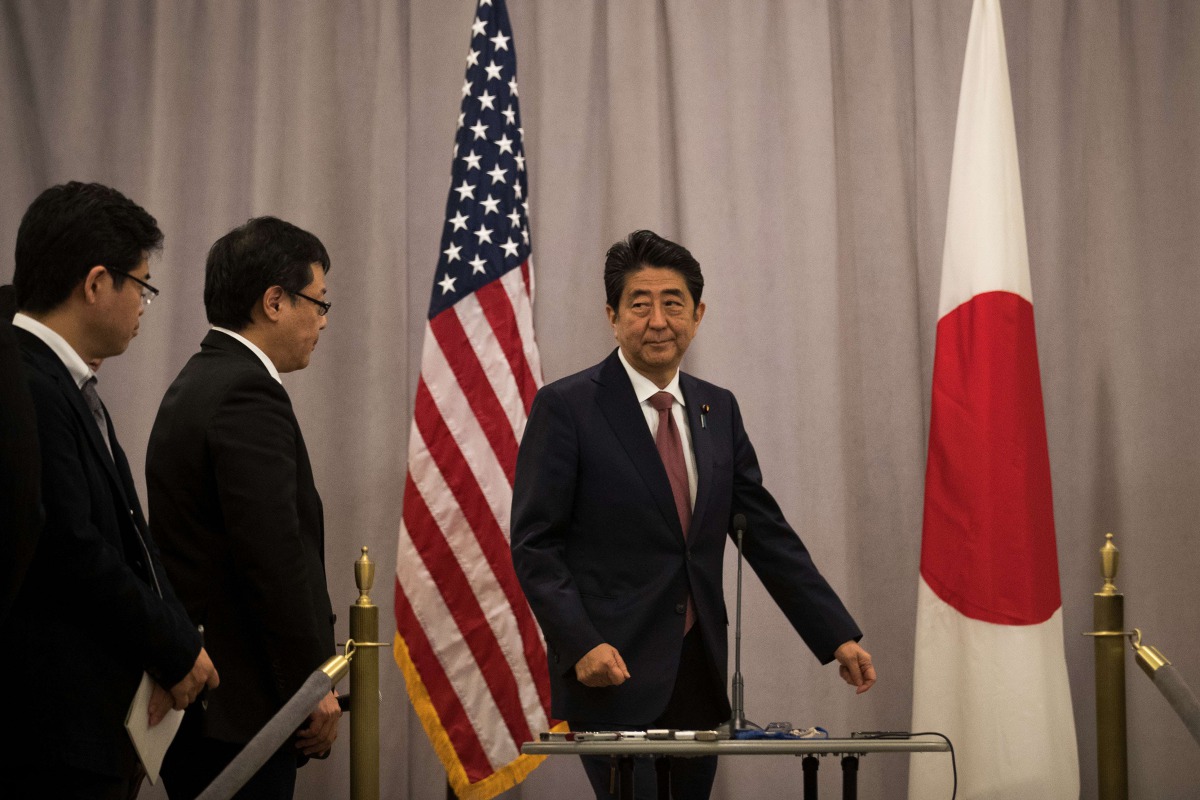
Japan Prime Minister Shinzo Abe arrives to speak to reporters following a meeting with President-elect Donald Trump, November 17, 2016 in New York City. Drew Angerer / Getty Images / AFP
Want to receive this post in your inbox every day? Sign up for the Terms of Trade newsletter, and follow Bloomberg Economics on Twitter for more.
Japanese Prime Minister Shinzo Abe could find out in a matter of days whether almost three years of cultivating U.S. President Donald Trump over golf and hamburgers have paid off.
Trump said this week his administration is nearing an initial trade accord with Japan covering tariffs and digital trade. Abe is holding out for a pledge that Trump won’t slap new levies on Japanese automobiles, the cornerstone of his country’s economy.
The upshot could become clear Sept. 25 in New York, when the two leaders are set to meet.
The proposed deal won’t lower the barriers protecting Japan’s rice farmers -- something Abe could claim as a minor victory as he takes the deal back to parliament, where it must be ratified before coming into effect.
But removing the threat of punitive tariffs on cars would be a welcome relief for Japan’s economy, as a nine-month decline in the country’s overall exports accelerates amid U.S.-China trade tensions.
Abe has emphasized Japanese automakers’ contributions to the U.S. economy, and Toyota Motor Corp. and one of its suppliers announced a combined $791 million investment in Texas as talks headed into what could be their final week.
A spiraling feud with South Korea is also beginning to take a toll on business ties between the two U.S. allies. South Korea on Wednesday removed Japan from a list of countries that receive preferential trade treatment - a decision Japan called "regrettable.”