DOHA: There are an estimated 2.5 billion adults across the world and only half of them have a bank account, says a study. This ratio is much lower (barely 18 percent) for adults in MENA (Middle East and North Africa) countries and only slightly higher (22 percent) in the member-countries of Organization of Islamic Countries (OIC).
The above figures for MENA and OIC countries are for the year 2011, according to Amin Mohseni-Cheraghlou, from the American University, USA.
About 700 million adults living in the OIC countries do not have a bank account or an account with a formal financial institution.
Studies suggest that among the reasons cited by individuals for not having a bank account, religious factors were the third largest in the MENA region.
About 12 percent adults in MENA (17 million) and seven percent (47 million) in the OIC states were out of the purview of banking network and they cited religion as the main reason.
According to the findings of the above study, the situation can be reversed in OIC and MENA countries if Islamic finance is made to play an effective role.
Islamic finance can enhance financial inclusion and it can have immense benefits in poverty reduction and narrowing down inequality among Muslim communities around the world.
This can be done especially effectively in MENA and OIC countries where financial exclusion due to religious reasons is the highest. The paper by Mohseni-Cheraghlou will be presented at a key conference being held here from March 23 to 24 on ‘Islamic Economics and Finance’.
This is the 10th conference to be held on the subject and among the other issues that will come up for discussion at the event is the question of absence of a centralized world regulatory framework for Islamic banking and financial institutions.
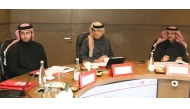
Details, including the schedule, of the conference were announced yesterday by Dr Hatem El Karanshawi, founding dean of Qatar Faculty of Islamic Studies (QFIS), Professor and Director, Centre for Islamic Economics and Finance, QFIS, Dr Syed Nazim Ali, and Professor in Islamic Finance Program, QFIS, Dr Taiqullah Khan, at a press conference. The venue of the conference will be Hamad Bin Khalifa University (HBKU) Students’ Centre. Welcome message for the event will be by Dr Aisha Al Manai, Dean of QFIS, which is part of HBKU.
The Centre for Islamic Economics and Finance (CIEF) has been the driving force behind organizing the past three conferences as host for the 8th and 10th ICIEF. The 10th ICIEF is being jointly held by CIEF, QFIS, HBKU, Islamic Development Bank (IDB) of the OIC and others.
Another paper will discuss how Islamic banking and financial institutions are relying overly on debt instruments like (sukuk) and highlights its negative aspects.
The Peninsula