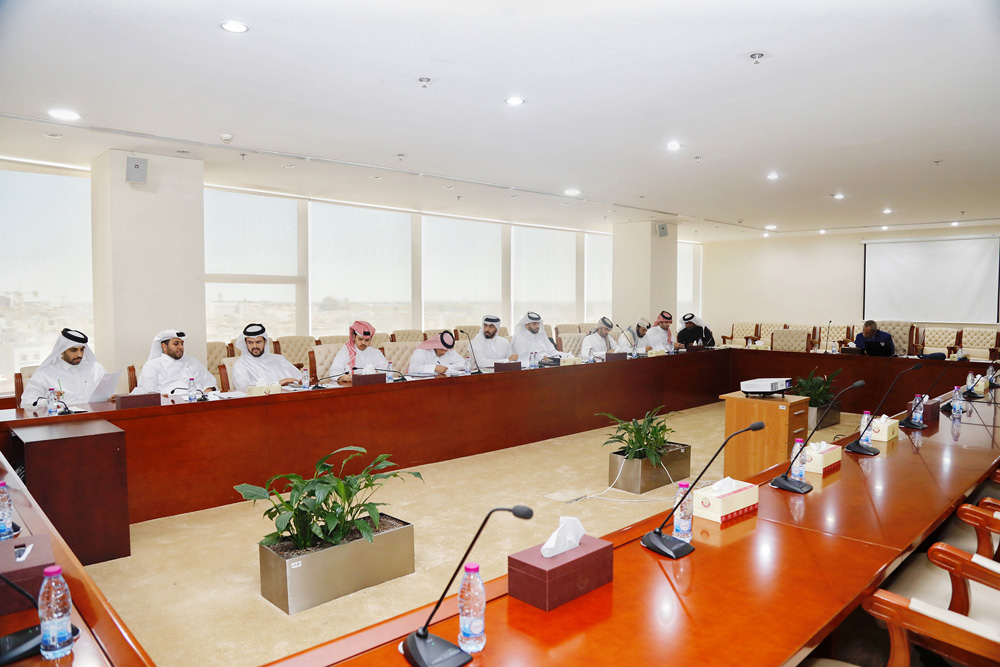
Participants during the workshop organised by the Supreme Judiciary Council for judge assistants.
DOHA: The Supreme Judiciary Council (SJC) has held a workshop, entitled 'Administrative Judiciary in Qatari Law and Comparative Laws', for judge assistants .
The workshop highlighted that the judicial function is carried out by two independent judicial bodies, one of which examines disputes between individuals and is known as the ordinary judiciary, while the other is concerned with looking at administrative disputes and is known as the administrative judiciary, pointing to what distinguishes the administrative judiciary from the ordinary judiciary by its independence from the ordinary judiciary and administration.
It explained that the administrative judge is a legitimate judge, and as a general rule, he does not have the authority to confront the appropriateness of administrative actions.
The possibility to examine the element of appropriateness in the administration’s actions and decisions if it comes to restricting individual liberties, as well as in the field of disciplinary penalties.
The workshop gave a historical brief on the administrative judiciary presented in comparative laws such as French law and the laws of other countries, highlighting Law No. 7 of 2007 regarding separation of Qatari administrative disputes, and explaining the terms of reference for the competent departments to consider administrative disputes and their formation and conditions for accepting requests to cancel the final administrative decisions according to the indicated law.
The importance of these lectures comes to qualify judge assistants in the areas of administrative judiciary and to engage in work in the administrative departments of the courts.