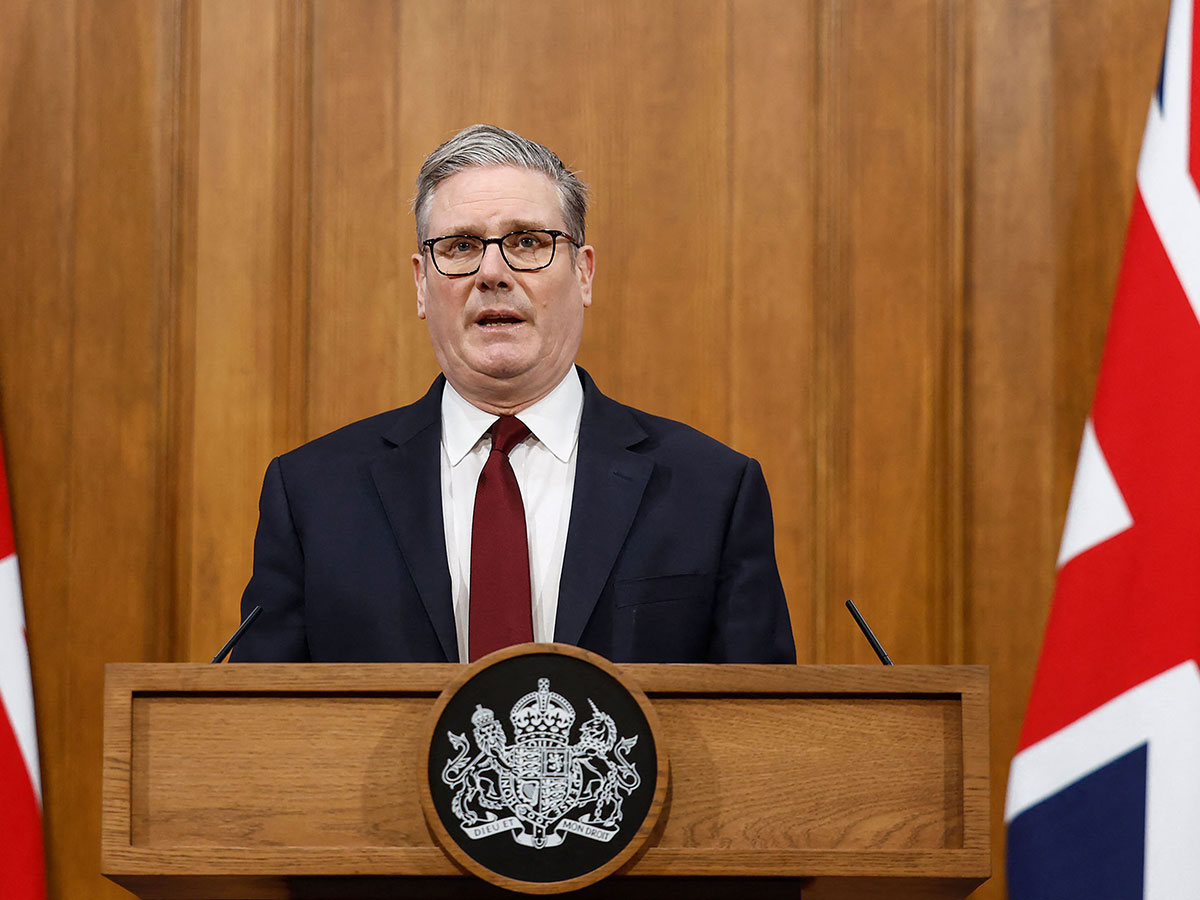
London: British Prime Minister, Keir Starmer said on Monday that the United Kingdom is working with its allies to develop a practical plan to reopen the Strait of Hormuz, stressing that any such operation must command broad international consensus and will not take place under the framework of NATO.
Speaking at a press conference, Starmer said Britain was taking the necessary measures to defend itself and its allies, but made clear that the government does not intend to be drawn into a wider escalation in the Middle East.
He explained that the proposed plan to reopen the vital waterway would be coordinated with multiple international partners to ensure the swift and effective resumption of maritime navigation, without any formal role for NATO.
Starmer said the objective of the initiative is to restore freedom of navigation through the strategically critical Strait of Hormuz and mitigate the economic impact of the crisis on global energy markets.
He noted that discussions over possible measures were still ongoing and that the government had not yet reached a final decision on operational steps related to the strait.
The British prime minister also stressed that the United Kingdom would not participate in the ongoing conflicts between the United States and Israel on one side and Iran on the other, underlining the importance of international cooperation to reach a swift resolution to the crisis.
Starmer added that the government would introduce domestic measures to cushion the impact of the energy crisis, including imposing a cap on household energy bills until the end of June, reducing fuel duty until September, and taking legal action against companies found to be excessively raising prices.
His remarks came after a call by Donald Trump urging several countries to deploy warships to help protect oil tankers and commercial vessels transiting the Strait of Hormuz.
The strategic waterway carries around one-fifth of the world's oil supply and has faced near closure since the outbreak of US and Israeli attacks on Iran on February 28, raising fears of severe disruptions to global energy flows.