Strengthening financial sector supervision and regulatory cooperation, developing financial markets and enhancing financial innovation, maintaining confidence in the financial system, enhancing financial inclusion and education, and developing human capital are the highlights of the Second Strategic Plan (SSP) unveiled by Qatar Central Bank (QCB), Tuesday.
The second strategic plan for strengthening the financial sector is an extension of the first strategic plan 2011-2016. The SSP was jointly prepared by QCB, Qatar Financial Markets Authority (QFMA) and Qatar Financial Centre Regulatory Authority (QFCRA).
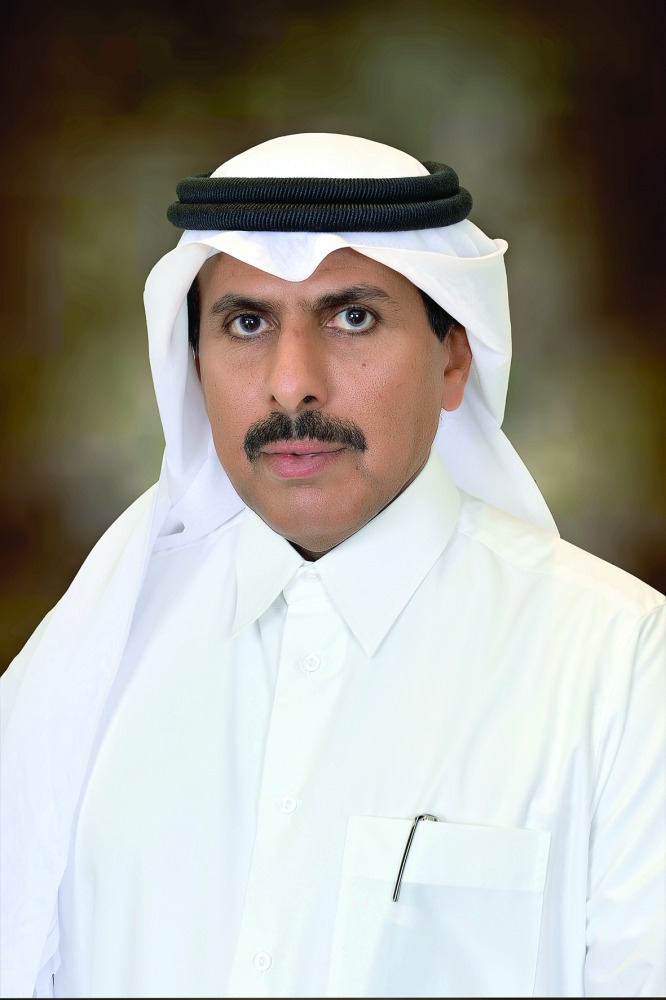
Announcing the launch of second strategic plan, Qatar Central Bank Governor H E Sheikh Abdulla bin Saoud Al Thani (pictured) said the first strategic plan was developed to find a way out of one of the biggest financial crises in the world, and at a time when most of the world’s central banks were not sure about the direction that should be taken to get out of that crisis.
The central bank governor said the first strategic plan has achieved many of its objectives. The basic financial structure has witnessed a great development especially in the fields of governance, payment systems, settlements, clearing and others, he said. Financial markets have become more profound and effective, and credit information systems and customer protection mechanisms have been strengthened and activated.
The efforts intensified in this regard, and significant progress has been made in the area of financial stability. The implementation of the strategic plan in the aftermath of the last financial crisis helped the financial sector in the country to overcome the repercussions of that crisis.
Sheikh Abdullah, who is also the Chairman of QFMA and Chairman of QFCRA, stressed that the second strategic plan for financial sector in the country comes at a time when an unjust and unfair siege is imposed on Qatar by its neighbours.
Their intention was damaging the state and its people and its residents and this was clear in the closure of the country’s only land port, its airspace and sea space, which resulted in the suspension of the flow of goods and foodstuffs through these ports and thus affecting the Qatari economy. But they were disappointed, thanks to the wise leadership of the Emir H H Sheikh Tamim bin Hamad AlThani.
The State managed, within a very short period, to overcome the effects of the unjust blockade by opening urgent supply lines with friendly countries and through preparing and making ports and airports ready in a record time to receive ships and aircrafts from different countries of the world.
Elaborating on the five-pronged second strategic plan, Sheikh Abdullah said these objectives have been carefully formulated taking into account the lessons learned from the implementation of the first strategic plan, as there was a need for greater coordination to complete much work and to create a common base for cooperation, along with the need to issue joint instructions to entities under supervision in a number of areas.
He said the development of financial markets will lead to the creation of more opportunities for lending and investment and helps transform the economy from a system based on bank financing to the non-bank financing system, which will contribute to the activation of the policy of diversification of the economy and achieve the greatest growth.
The use of financial technology (Fin Tech) has become necessary in the view of the challenges facing information security globally, so we have to take advantage of financial strengths and work to improve the credit information network and take all precautions to maintain the security and integrity of information in the financial sector.
The central bank Governor stressed that integrity and confidence in the country’s financial system are necessary to strengthen the financial sector and attract foreign capital. In this regard, all measures related to transparency, governance, consumer and investor protection, as well as dealing with all problems arising from suspicious transactions and financial crimes have been taken.
The financial inclusion has gained great importance in recent times, and the Board of Governors of the Arab Central Banks in its meeting in April of last year stressed the need to commit to improving and developing the financial coverage because of its great importance in achieving economic development. “Therefore, we focused on this in the second strategy,” he added.
The aim of the second strategy is to take all measures to implement it, such as financial and banking literacy, promoting best practices of sustainable management, and others.
“We hope that the implementation of this objective will help to develop our financial systems and expand their activities in order to contribute to national economy,” Qatar Central Bank Governor H E Sheikh Abdulla bin Saoud Al Thani, said
Human capital is an important element in achieving economic growth. “With the same attention as we have shown in the first strategic plan, we reaffirm our focus on and attention to human capital through capacity building, identifying career paths, sponsoring national talent, training and qualifying them for further development and economic growth,” he said.
The QCB Governor added that achieving the objectives of the second strategy of financial sector faces a number of challenges, about which every efforts must be taken to confront them firmly. These challenges include cybersecurity threats which have increased significantly in the world, which could cause severe damage to the economy.
There are also many risks surrounding the work of central banks around the world, especially in the area of expectations and price pressures and behavior of institutions and financial markets and information and data and their direct importance in the process of policy-making and the development of future plans and programs, in addition to some geopolitical fluctuations that have a negative impact on the economy in general.
Therefore, such challenges and risks must be addressed and all the procedures and arrangements must be taken to address and confront them to reduce risks.