

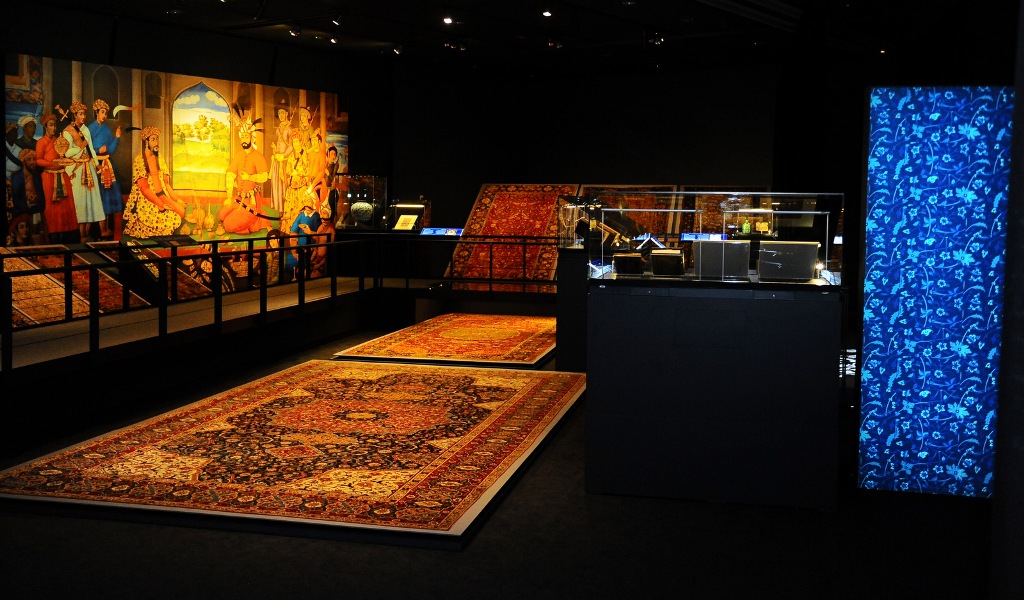
Objects showcased at the Imperial Threads: Motifs and Artisans from Turkey, Iran and India exhibition which opened yesterday at the Museum of Islamic Art (MIA).
An interesting link between the Ottoman, Safavid, and Mughal empires is shown through 110 objects showcased at the Imperial Threads: Motifs and Artisans from Turkey, Iran and India exhibition which opened yesterday at the Museum of Islamic Art (MIA).
"The 110 objects on display are from MIA's permanent collection, 60 percent of which have never been displayed before," Dr Mounia Chekhab Abudaya, curator of the show, told the media at a preview prior to the opening of the exhibition. The varied pieces on show produced during the early modern period in Islamic art includes 25 large carpets which took MIAs textile conservators about 18 months to conserve, said Abudaya.

The show highlights the exchange of artistic and material cultures between the empires, primarily from the 15th to the 19th centuries. It illustrates the cultural and artistic background of this time by featuring artefacts including carpets, manuscripts, metalwork and ceramics.
“MIA houses one of the greatest collections of Islamic art spanning over 1,400 years, and we are extremely excited to showcase some of our most exquisite objects from the Ottoman, Safavid, and Mughal empires in this exhibition. Through this exhibition, we hope to take art and history lovers on a unique journey to truly understand the connection behind these major dynasties, who were pioneers in Islamic Art," said Abudaya.

Each empire has a dedicated section at the exhibition starting with the Safavid Empire section (1501-1736) showcasing works from the Safavid royal Kitabkhanah, or manuscripts workshop, as well as artistic motifs developed under patrons such as Shah Tahmasp. The Safavids played a major role in the transfer of artistic practices by means of travelling artists to the neighbouring Ottoman and Mughal courts. The Ottoman Empire section showcases examples of carpets and other mediums characteristic of local tribal designs, merged with outside influences coming from Iranian ateliers produced from the 16th to 18thcenturies..

The exhibition ends with the Mughal Empire (1526-1858) section which offers a look into the culmination of artistic styles integrating Safavid, Ottoman and local traditions. Among the pieces are those with detailed floral designs that represent a major part of the decorative repertoire, found particularly in carpet and jewellery.
Educational programmes, workshops, activities and events will be organised alongside the exhibition, aimed at engaging and enriching young peoples’ lives. Among the workshops and activities are a talk by Artist Faig Ahmed whose works are inspired by designs from Islamic Art, and an introduction to Carpet Weaving workshop to be held from March 19 to 23. The exhibition is open to the public from tomorrow until November 4.







