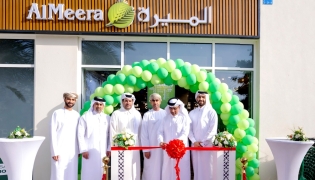
The second edition of the four-day Katara amber exhibition concluded on Saturday. There were exhibitors and participants from 13 countries this year, with more than 90 stalls exhibiting a wide and exciting array of products.
The International Amber Exhibition which Katara Cultural Village is organising every year will help promote the amber tradition in Qatar and enhance the country’s position in the global amber industry, an international amber expert has said.
Giedrius Guntorius, CEO and General Manager of Amber Trip, an annual amber exhibition held in Lithuania, and one of the biggest amber exhibitions in the world, said that the huge success of the second Katara International Amber Exhibition has made Qatar a prominent member in the international amber community.
The second edition of the four-day Katara amber exhibition concluded on Saturday. There were exhibitors and participants from 13 countries this year, with more than 90 stalls exhibiting a wide and exciting array of products.
“It’s kahraman, kahraman everywhere,” Guntorius said, referring to the Arabic word for amber. “I am visiting this show for the first time and I am really excited to see that this country has a strong and deep amber culture like my own country Lithuania. It’s a kahraman life in Doha,” he added.
Guntorius, who has been in the amber industry from early 1990s, first as a businessman and now as an organiser of the Amber Trip, said that Qatar’s huge interest in amber will be reflected in the increased participation from this country in Amber Trip. Amber Trip is being organised for 17 years and this year’s show will be held from March 11 to 14.
“Last year, we had around 20 participants from Qatar in the show and this year we are expecting 50 individuals and companies to participate,” he said. “We have more visitors from Middle East this year and will have special prayer rooms at the expo for these visitors.”
Qatar and Kuwait are two leaders in amber in the Middle East now, he said. The second amber exhibition in Qatar is a testament to the huge popularity and acceptance of the first show. “It’s easy to organise a first show. You can do it and forget it if you want, but to organise it a second time, and which means to continue it in the coming years, means something else. This shows the first show was a huge achievement. I thank Katara Cultural Village for inviting me to this exhibition,” he said.
Amber demand is going up all over the world, as are the prices. According to industry sources, 600 tonnes of amber raw materials are mined every year, and Russia is the leader, contributing 400 tonnes. The prices too have seen a significant increase in the past several years, going up from ¤300 per kilogramme in 2006 for Fractions 20-50 GR, which is the standard amber, to ¤3900 per kilogramme in 2014. But since then, the prices have seen a decline.
Guntorius said that amber is the gold of Lithuanians, in the same way as oil is considered the black gold in the Gulf region. “We and people in Europe and Baltic region use amber for a variety of purposes like jewellery, and in rings, lamps, chairs etc. It’s also used as a cosmetic as its powder is used for amber massage to smoothen skin,” he said.