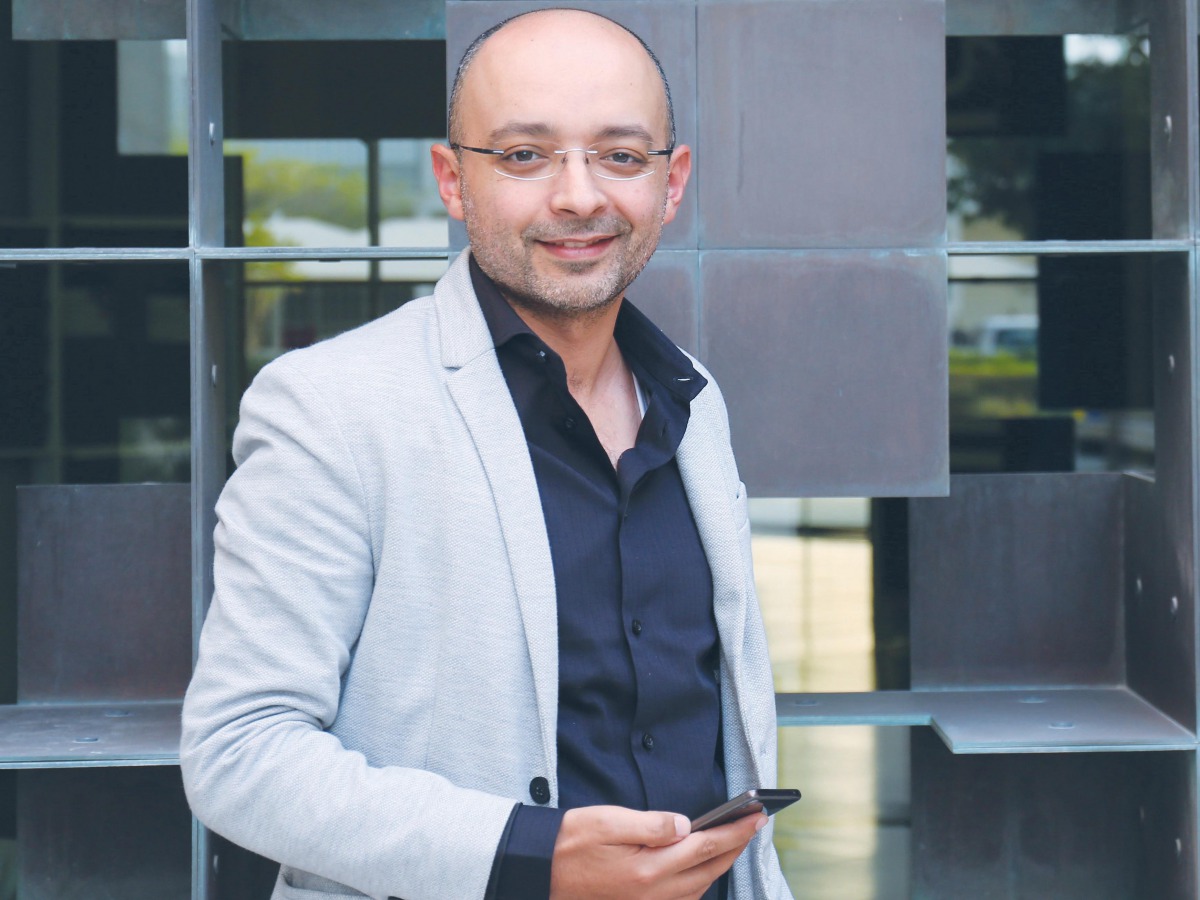
Hamoda Youssef, Head of Technical Affairs, Qatar Green Building Council.
Doha: As employees have begun to return to offices following COVID-19-imposed remote working, and Qatar now in phase four of its lockdown regulations, creating a healthy, safe working environment has become of paramount importance to companies and organisations.
Hamoda Youssef, Head of Technical Affairs at Qatar Foundation member Qatar Green Building Council (QGBC), has highlighted areas for employers welcoming back staff to consider creating a health-conscious workplace.
“To start with, you need to ensure good air quality,” he noted.
“Filters need to be properly cleaned, and the ventilation system double-checked, making sure that there is clean enough, fresh air being brought into space, as just re-cooling existing air doesn’t remove contaminants and pollutants.”
It’s also essential to consider the nature of the space when looking to make it healthy.
“Employers can also provide tools to educate employees, such as installing air quality monitors. In this way, people will learn to understand how various factors can change the air quality. And being able to check the air quality could also help reassure them, making them feel safer and more comfortable.”
Another critical consideration that will impact the health and well-being of employees, according to Youssef, is access to natural daylight, which can help improve moods, reduce depression, and increase productivity.
He also explained that “frictionless experiences” will help to minimise people touching shared surfaces.
“Automatic doors and faucets in washrooms are examples of this,” he said. “You can have contactless elevators, too, and automatic hand sanitizer dispensers. They can help in the sustainability of the space itself. Automatic sensors only turn on light fixtures and air conditioning units when someone enters a room. Also, relying on natural daylight decreases energy consumption.
Ultimately, these tools can improve hygiene, cleanliness, and overall comfort levels, as well as helping with the overall efficiency of operations.”
Youssef also suggested incorporating plants into communal spaces, purifying the air, and helping to combat what is now being referred to as “COVID fatigue.”
“The pandemic has been going for many months, and people are exhausted – they need to have their spirits lifted. Plants can have calming benefits, which, in turn, help improve general mental health,” he explained.
Employers can also utilize the concept of a “free address,” Youssef said.
“Globally, we are now seeing office spaces expand into what we call the free address, which means not being tied into a specific physical workplace. So if you feel more comfortable working from a meeting room, or a cafeteria, or from a lounge, you have that freedom of movement.”
Another factor to consider is employing sustainable ways of cleaning.
“From the start of the pandemic, the recommendation has been to use regular soap. We weren’t told to use disinfectants, which unfortunately became the case extensively. But being exposed to such harsh chemicals isn’t good for our skin or our health. And as things start to settle down, people will begin to look for more eco-friendly and human-friendly products and begin to have more trust in these alternatives.
“Essentially, it’s not just about going to the office solely to deliver work, but also about promoting overall well-being – whether social, mental, or physical.”