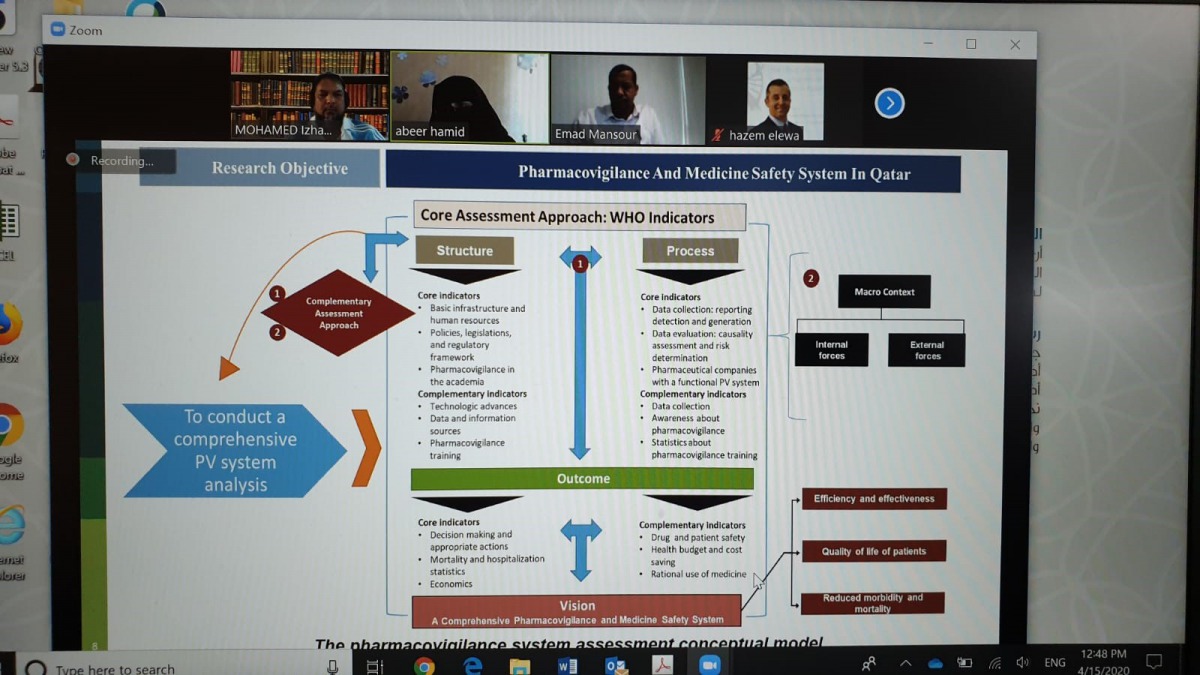
Qatar University’s College of Pharmacy (QU-CPH) MSc student in Clinical Pharmacy and Practice, Abeer Abdullah Hamid defended recently her MSc thesis entitled Evaluation of the Pharmacovigilance System in Qatar- A Mixed Method Study on Structure Process, and Outcome.
This research project aimed to provide a comprehensive understanding of the current status of pharmacovigilance at the national and sub-national levels in Qatar based on the quantitative and qualitative research approaches that included survey methods, interviews with key stakeholders who are involved in pharmacovigilance activities, official document reviews, and field observation.
The project included a situational analysis of pharmacovigilance systems and conducting a survey on pharmacovigilance systems performance using the World Health Organization (WHO) key performance pharmacovigilance indicators.
The study included Qatar’s healthcare regulatory authority, public healthcare sector, private healthcare sector healthcarerelated higher academic institutions, and local pharmaceutical industry. According to Abeer, “This is the first mixed-method research study utilizing the WHO pharmacovigilance key performance indicators conducted in Qatar and the Middle East and North Africa region”.
The data collected from various levels of the healthcare systems were utilized to provide a baseline understanding of the pharmacovigilance system performance status in Qatar compared to the most up to date WHO and international pharmacovigilance standards and to identify the strengths, opportunities, and limitations that can affect the development of pharmacovigilance systems as well as to study the establishment and sustainability of a future national pharmacovigilance center in Qatar.
The study included a number of recommendations such as the need to establish an organised national pharmacovigilance center and implement strategies to streamline the national reporting system for patient safety and medication safety; ensure the development of internal capacities through the adequate inclusion of pharmacovigilance in educational systems; and implement active pharmacovigilance activities through multisectoral collaboration.
Finally, the research provided a proposed organizational structure for a national pharmacovigilance centre as a key improvement measure required for a comprehensive pharmacovigilance system.
Professor Mohamed Izham Mohamed Ibrahim, Principal Supervisor of this project emphasized that “the outcomes of this research can potentially serve to target the challenges and utilize the available opportunities to help improve the current pharmacovigilance situation and ensure effective system performance and adequacy. This is expected to result in the successful implementation of pharmacovigilance within the healthcare system in Qatar”.
Abeer mentioned that during her MSc journey the primary supervisor and the research committee members from the Qatar University College of Pharmacy were so supportive and essential for this research project successful completion.
Furthermore, Abeer noted that she was lucky that during her MSc journey, Qatar University has provided support for this research project by providing student grants and supporting the dissemination of this research in national and international conferences and international scientific journals.