

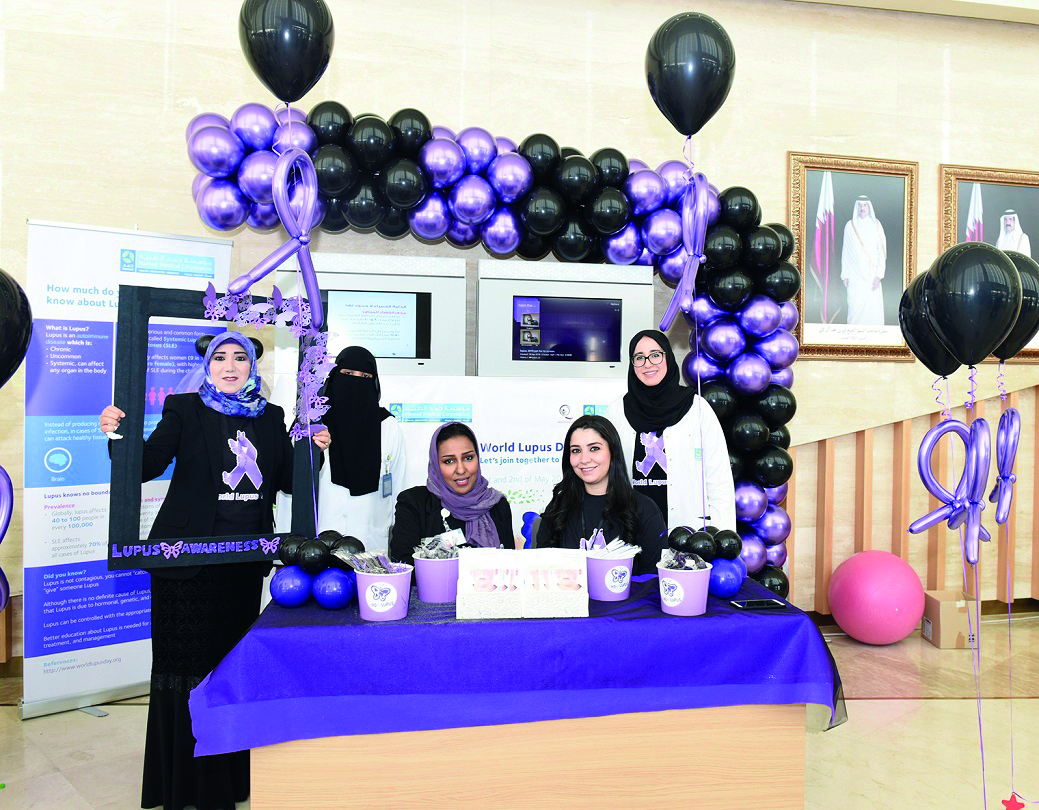
The medical practitioners at the World Lupus Day.
Dr Samar Al Emadi, Head of the Rheumatology Division at Hamad Medical Corporation’s (HMC) Hamad General Hospital, has said that a new group therapy program set to be introduced later this year will provide patients living with lupus with support from others who understand their condition.
“Systemic lupus erythematosus, more commonly known as lupus, is a complex, chronic autoimmune disease that occurs when the body’s immune system attacks its own tissues and organs,” said Dr Al Emadi.
“Lupus has many different symptoms and affects each person differently, with symptoms ranging from a mild skin rash to serious complications impacting major organs such as the heart and brain. The symptoms of lupus can come and go and can change over time, making the disease difficult to diagnose and treat. The emotional effects of lupus can be as challenging to manage as the physical effects, so our planned peer-based group therapy will help enhance our patients’ self-efficacy in managing their condition,” said Dr Al Emadi.
Dr Al Emadi said the new support group will allow patients to talk candidly about their experience of living with lupus, asking each other questions and providing words of encouragement during difficult times.
Dr Al Emadi says HMC is currently treating around 450 patients with lupus and has been at the forefront of lupus care in the region. Last year HMC introduced a specialist antenatal clinic for pregnant women with lupus.
The first of its kind in the Middle East, the clinic cares for around 55 pregnant women each year.
“Lupus is more common in women and tends to appear in women of childbearing age. It can be very challenging to diagnose and treat, especially in pregnant women, and it can lead to pregnancy loss, pre-eclampsia, premature birth, and a failure of the baby to grow. Since its establishment, our clinic has recorded excellent outcomes among patients and their babies,” said Dr Al Emadi.
While lupus develops mostly in women between the ages of 15 and 45, men, older people, and children can also be diagnosed with the disease.
Dr Omar Alsaed, Associate Consultant, Rheumatology Division, says a lupus diagnosis is life-changing and he notes that early diagnosis and proper medical treatment can significantly help control the disease.
“Worldwide, around five million people are thought to live with lupus. While the signs and symptoms vary, common symptoms include extreme tiredness, headaches, painful or swollen joints, fever, and a butterfly-shaped rash across the cheeks and nose. There is no cure for lupus and because no two people with lupus are alike, the best treatment is one that is tailored to each patient’s specific condition. It is important to see a doctor immediately if you experience symptoms of lupus,” said Dr Alsaed.







