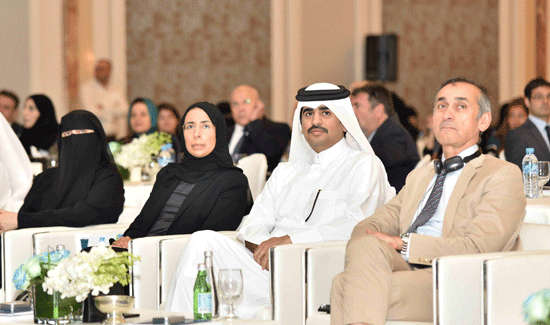
DOHA: The final draft of the proposed mental health law is ready and will be enforced as part of Qatar National Mental Health Strategy, a meeting by the Supreme Council of Health (SCH) at Four Seasons hotel was told yesterday.
Minister of Public Health H E Abdullah bin Khalid Al Qahtani opened the event that marked World Mental Health Day and highlighted Qatar’s achievements in mental health and contribution to global initiatives.
Plans under the strategy include enacting and implementing the law, setting quality standards, developing an autism plan and supporting delivery of mental health services to migrant workers, the meeting was told.
Qatar’s first mental health awareness campaign will be launched next year.
In his opening address, the Minister said, “Joint efforts of the SCH, Hamad Medical Corporation (HMC), Primary Health Care Corporation (PHCC), stakeholders and supporters have led to successful implementation of the strategy — Changing Minds, Changing Lives — since its launch in December 2013.”
He reiterated the government’s ongoing commitment to mental health and thanked guests and partners for efforts to support the strategy over the past two years and in the coming years. “Together we remain dedicated to our strategy’s vision of promoting good mental health and delivering patient- and family-centred mental health services,” the Minister said.
Highlights of strategy implementation were profiled at the event through presentations and panel discussions on achievements and plans for 2016 against the four key strategic objectives underpinning the development of the mental health system.
Key achievements for objective 1, education and prevention, included drawing up a promotion and prevention action plan, carrying out a survey to measure attitudes towards mental health issues and the associated stigma, and piloting an awareness program in workplaces.
Achievements in mental health service provision were shared for objective 2 by Qatar’s primary and secondary healthcare providers. PHCC trained over 400 family physicians in foundation level mental health and over 60 in advanced training and developed clinical guidelines for depression and anxiety. Plans include introducing primary care mental health teams.
HMC opened the first community mental health hub in Muaither for children, young people and adults. It also expanded hospital psychiatric liaison services, implemented an appointment system for psychiatry outpatients, and provided specialist training for nurses in mental health. Plans include providing inpatient mental health services at Al Wakrah, expanding HMC community mental health services and delivering teaching and training programmes for staff.
Under objective 3, leadership and governance, achievements included conducting an impact evaluation of the strategy and completing the final draft of the law.
Achievements for objective 4, information systems and research, included developing a mental health minimum data set and clinical care pathways across secondary care for child and adolescent mental health services, forensic, substance misuse, and adult services. Plans include developing a priority mental health research agenda in 2016, including research governance and evaluation.
The Peninsula