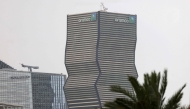
Doha: Qatar Exchange snapped a 10-day rally yesterday when trading closed at 12,189.69 points, down 27.06 points, or 0.22 percent, from the previous closing of 12,216.75 points on Monday.
The volume of shares fell to 23,514,316 from Monday’s 32,599,378 and the value of shares decreased to QR915,439,624.65 from QR,243,074,145.88.
Among the top losers were Vodafone Qatar, whose share was down 1.17 percent to QR13.56, Masraf Al Rayan lost 0.80 percent to QR43.15, The Investors fell 5.92 percent to QR60.40 and Al Meera decreased by 1.05 percent to QR179.20.
The banking and financial sector index lost 0.35 percent, while consumer goods and services sector index added 0.39 points. The industrial sector was up 0.17 percent while insurance sector gained 0.89 percent.
Elsewhere in the region, Dubai’s main stock market posted its biggest gain in three weeks as real estate investment trust Emirates REIT listed on the smaller of the two markets, NASDAQ Dubai, following the emirate’s first initial public offer in five years.
Shares in Emirates REIT closed at $1.44, up 5.9 percent from the IPO price, with 21.4 million shares changing hands out of a total of 128.68 million sold in the $175m offer, which was 3.5 times oversubscribed. “I think it was a very good start,” said Sebastien Henin, head of asset management at The National Investor. “The company listed on NASDAQ Dubai and usually investors don’t really like that.”
Dubai’s equity trading is heavily concentrated on the main exchange, Dubai Financial Market (DFM), but that market requires IPOs to offer at least 55 percent of a company, which discourages some potential issuers. NASDAQ Dubai has looser requirements but less liquidity and fewer listed stocks. Emirates REIT’s IPO price was roughly equal to its book value, which Henin said was “a perfect approach” to valuation.
“We should expect the price of the stock to be aligned with the net asset value,” he said. “The stock price shouldn’t be too volatile and its risk profile will be very different from that of developers.
A few other property firms and banks also gained. Shares in contractor Arabtec rose 6.1 percent.
Abu Dhabi’s index edged down 0.1 percent to 5,007 points but stayed above the psychologically important 5,000-point mark. Telecommunications operator Etisalat , down 0.9 percent, was the biggest drag as it continued to decline after paying out its 2013 dividend last Thursday.
Saudi Arabia’s bourse gained 0.6 percent, largely on the back of agricultural firms, food producers and banks.
Banque Saudi Fransi climbed 2.4 percent after posting an estimate-beating 25.2 percent rise in first-quarter net profit on Monday.
Egypt’s index rose 2.3 percent to 7,705 points, regaining some ground after a sell-off that began in late March. However, one-day recoveries have in the last two weeks been followed by even deeper drops.
“At this stage it is very difficult to say whether that specific correction is overdone,” said Khan from Shuaa Asset Management.
Profit-taking, which market players say was amplified by heavy leverage, started when former army chief Abdel Fattah al-Sisi said he would run for president; local investors, who largely support him, had built up positions in anticipation of the announcement.
QNA & Reuters