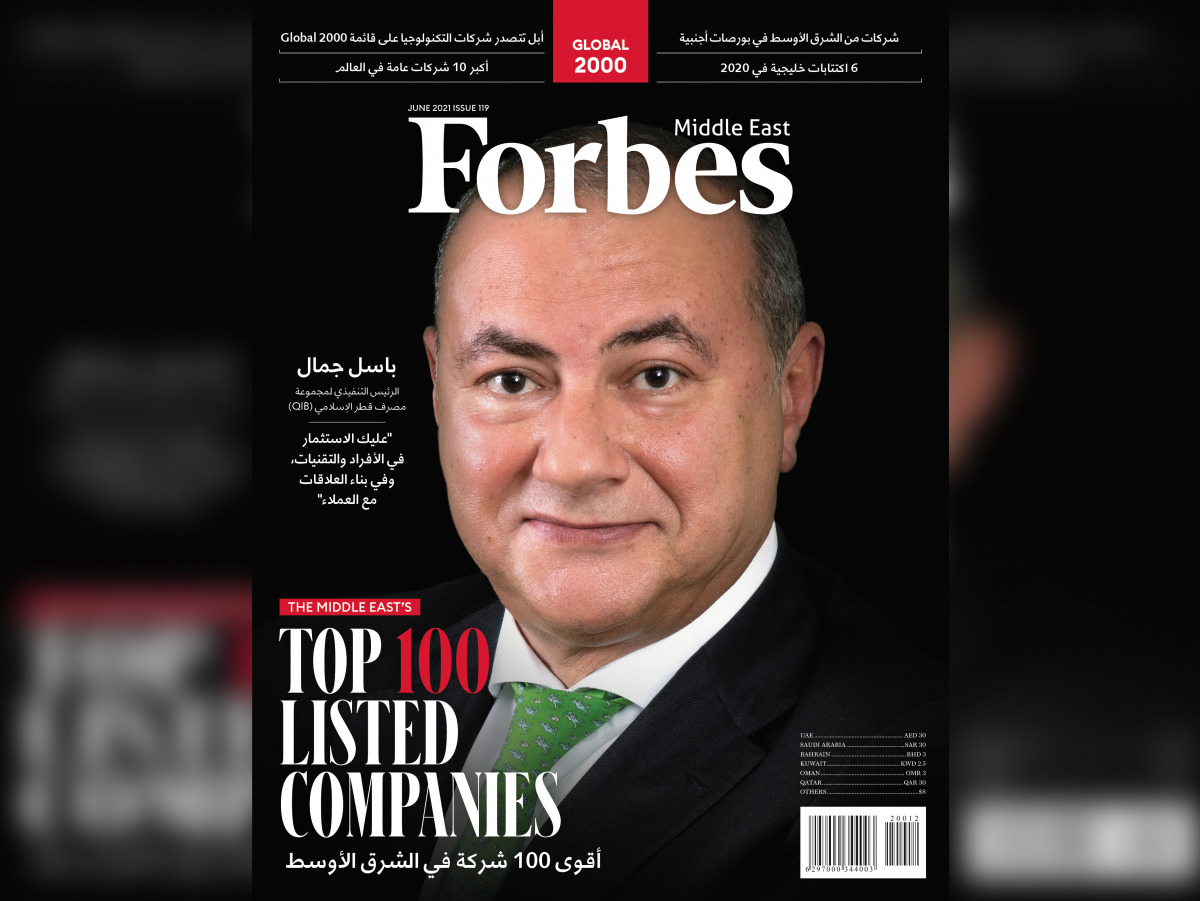
Doha: Qatar Islamic Bank (QIB) was ranked 18th out of Top 100 Companies in the Middle East by Forbes Middle East Magazine’s annual ranking of the top 100 listed companies in the region for 2021. The Bank was ranked 2nd top company in Qatar according to the same ranking.
The new ranking reflects QIB’s continuous improvement in performance and stability, its ability to withstand business continuity considering the COVID-19 pandemic, and its success in maintaining its longstanding position as Qatar’s largest private bank, the largest Islamic bank in the country, and a leading Islamic bank regionally.
Featuring the largest, most valuable, and profitable companies in the region, Forbes’ selection of Top 100 Companies in the Middle East is based on collected data from listed stock exchanges in the Arab countries, and ranks companies based on four elements, including market value, sales, assets, and profits.
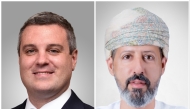
The ranking was revealed in Forbes Middle East’s June 2021 issue, featuring Bassel Gamal, QIB’s Group CEO. Gamal gave an in-depth and exclusive interview to the magazine, where he highlighted QIB’s plans and vision to the financial industry, in addition to sharing his thoughts on the future of banking in Qatar and the region.
QIB, founded in 1982, currently has a 42 percent share of Qatar’s Islamic banking sector and a 12 percent slice of the crowded domestic banking sector overall. It had $47.9bn in assets and a total income of $2.2bn and profits of $831m in 2020, making it the second-largest player in Qatar and the GCC’s fourth-largest Islamic lender by total assets. QIB, which also posted more positive earnings in Q1 2021, now has a market value of $11.3bn.
Commenting on the new ranking, Gamal said: “We are pleased with our ranking amongst the top 100 companies in the Middle East and being one of the top 20 performing business institutions in the region. This prestigious ranking is indeed a confirmation of QIB’s outstanding financial performance and stability despite the challenges posed by the coronavirus pandemic since 2020.”
He added: “QIB is a leading regional Bank, and we have contributed to reshaping banking in Qatar and the Middle East through our ambitious business model, digital innovation, and customer centric approach. What we achieved so far is only possible thanks to the collective efforts of all our employees, the continuous support from our Board of Directors, and our clients’ trust and loyalty”.
Featured on the cover page of Forbes Middle East magazine, Gamal shared his insights on Islamic Banking’s biggest challenge, which is changing people’s misconception. In an interview with the magazine, he also shed light on QIB’s development and growth achieved despite the COVID-19 challenges.
Globally, the $2.2 trillion Islamic banking industry seems to be facing up to economic challenges, with S&P Global Ratings predicting that it could grow 12 percent in the next two years.
However, many people in some key markets still think Islamic banking is only for those interested in Sharia-compliant products. “That’s a very limited way of looking at things,” Gamal told the magazine. “You have to invest in people; you have to invest in technologies. You have to invest in building relationships with the clients,” he added.
Forbes noted that QIB has modernised its business in recent years, overseeing consistent investments in technology and online banking capabilities. QIB has steadily introduced new digital banking services, from instant personal financing on its mobile app to a digital wallet allowing instant transfers to other users. It was especially active last year, introducing a flurry of services helping retail and corporate customers to bank remotely.
Those moves appear to be making an impact as majority of customers opened new accounts last year through mobile banking, while April 2021 saw roughly half of QIB’s personal financing sales come through its App. The bank has continued adding to its digital platform in 2021, including a new customer service chatbot and updates to its online corporate banking.
Gamal expects customers to continue using digital services at higher rates and is planning more investment in this area.
He said the industry has come a long way in the past decade. Simultaneously, it appears the drawdown of geopolitical tensions is opening doors. QIB is reviving old relationships with regional businesses and institutions that hadn’t been very active. In a positive sign, in January 2021, HSBC Bank Middle East completed its first Islamic trade facility in the region by linking up with QIB in a transaction valued at $100m, Forbes said.
Gamal foresees expansion in QIB’s future and eyes new markets.
“We became a customer-centric bank,” Gamal said in the interview. “I think that was a key component in our ability to grow,” he added.