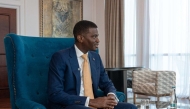
Advisor to the Prime Minister and Official Spokesperson for the Ministry of Foreign Affairs, H E Dr. Majed Al Ansari
Doha, Qatar: Qatar has called for a deeper and more structured partnership between the Gulf Cooperation Council (GCC) and the European Union (EU) in the fields of mediation, conflict resolution, and energy security.
Speaking at the Doha Forum 2025 yesterday, Advisor to the Prime Minister and Official Spokesperson for the Ministry of Foreign Affairs, H E Dr. Majed Al Ansari, said the Gulf and Europe are natural partners facing increasingly intertwined challenges.
He noted that both regions share long-standing cooperation in investment, economy, and energy, but their relationship now needs to evolve to respond to rapidly changing global realities. “The two blocs, Gulf and EU, enjoy a lot of similarities. They have been working a lot on investment, economy, energy. The issues of our region end up being the issues of Europe. Whether through migration patterns, conflicts, or coalition against terrorism; in all of these issues, we find ourselves neighbors living next to each other and suffering from similar fates with everything that’s happening,” he said.
Dr. Al Ansari stressed that mediation and conflict resolution have emerged as the most promising areas for strengthening partnership. “It is now mainly conflict resolution and mediation where Europe and the Gulf can come together,” he said, pointing to the peace agreement between the Colombian government and the EGC group signed in Doha on Friday. He said the deal was mediated by Norway, Spain and Qatar, demonstrating how cross-regional collaboration can deliver concrete results.
“These consortiums for peace that we need developed from all of these conflicts around the world can only be formed around not only like-minded countries, but those countries that have the capacity, the experience, the financial stability, and the political stability to act as mediators and to act in conflict resolutions. We in Qatar right now are mediating in 10 different conflicts. In Europe, I’m sure, a lot of conflicts are being mediated in different capacities,” he added.
Touching on shifts in global geopolitics, Al Ansari referenced the newly-announced US National Security Strategy, noting that Washington’s focus is moving away from both Europe and the Middle East. “And we have the depth of experience when it comes to mediation in the EU, and the depth of the political decision and political will in the Gulf to go on with these mediations. It’s very important to start working on these issues,” he said.
Energy security, he argued, is another major area requiring joint action. He said recent global disruptions have revealed vulnerabilities that extend far beyond any single region. “What has happened between Russia and Ukraine, what has happened in maritime security, in a number of instances in the past, including the Red Sea, has merited a discussion that goes beyond the typical when it comes to energy security around the world today,” he said.
Dr. Al Ansari also addressed the stalled GCC–EU Free Trade Agreement, describing it as one of the longest-running negotiations on any such agreement. “Our bureaucracies need to sit together and decide how to take this forward. One of the main problems in that front was always the fact that on both sides you don’t have a technical relationship that goes beyond the leadership relationships between the two sides. You need a technical relationship between the bureaucrats, between people who work in investment and business, that formulates an understanding on what it means for our leaders to be partners.”
The session titled Gulf-EU Relations in the Age of Strategic Isolation also featured Dr. Norbert Röttgen, Dr. Paolo Magri, and Dr. Abdulaziz Sager, and was moderated by Caroline Kanter of the Konrad-Adenauer-Stiftung.