

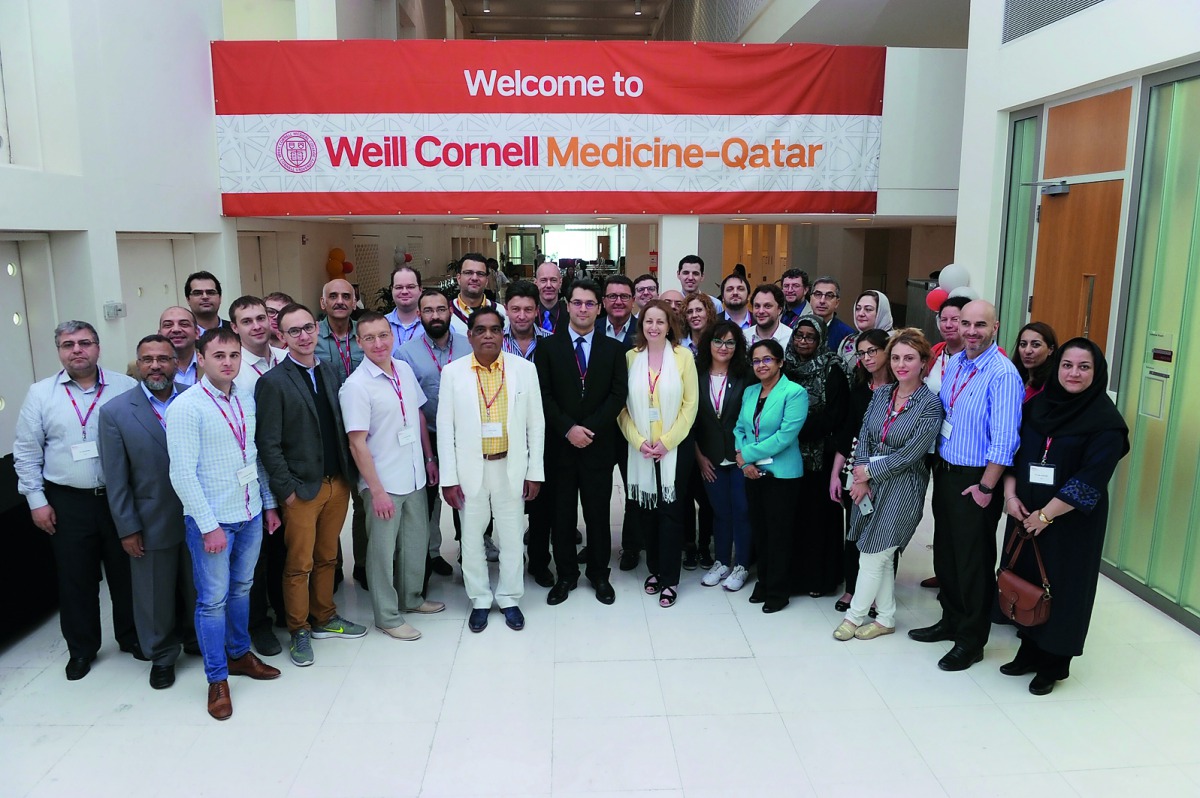
Healthcare professionals during the symposium on perioperative bleeding management coordinated jointly by WCM-Q, HMC and Danube University Krems, Austria.
Advanced methods of blood management in trauma and critical care patients were discussed during five days of seminars, workshops and panel discussions at Weill Cornell Medicine-Qatar (WCM-Q) recently.
The Perioperative Bleeding Management – Patient Blood Management symposium was attended by more than 40 physicians and other healthcare professionals and the event was organised in collaboration between WCM-Q, Hamad Medical Corporation (HMC) and Danube University Krems, Austria.
The event addressed topics including blood management in trauma and critical care patients, as well as in patients undergoing cardiac, liver or orthopedic surgery. The symposium also discussed bleeding management in pediatric surgery, the effects of drug treatments and inherited disorders on bleeding and coagulation, iron therapy, thrombosis, and the role of red blood cells, plasma and platelets in blood transfusions. The event, which was coordinated by WCM-Q’s Division of Continuing Professional Development, was attended by some of the world’s leading physicians and healthcare professionals in their fields, which included anesthesiology, intensive care, internal medicine, surgery, transfusion medicine and blood banking. Effective blood management is a crucial element of perioperative care, which covers the three phases of surgery: preoperative, intraoperative and postoperative. As such, medical practitioners are working to develop new and enhanced blood management processes to maximise healthcare outcomes.
Dr Marcus Lancé, Senior Consultant in the Department of Anesthesiology, ICU & Perioperative Management at HMC, said, “In Europe and the US the medical profession is moving towards a more standardized approach to perioperative bleeding management with established best practices based on very good data.”







