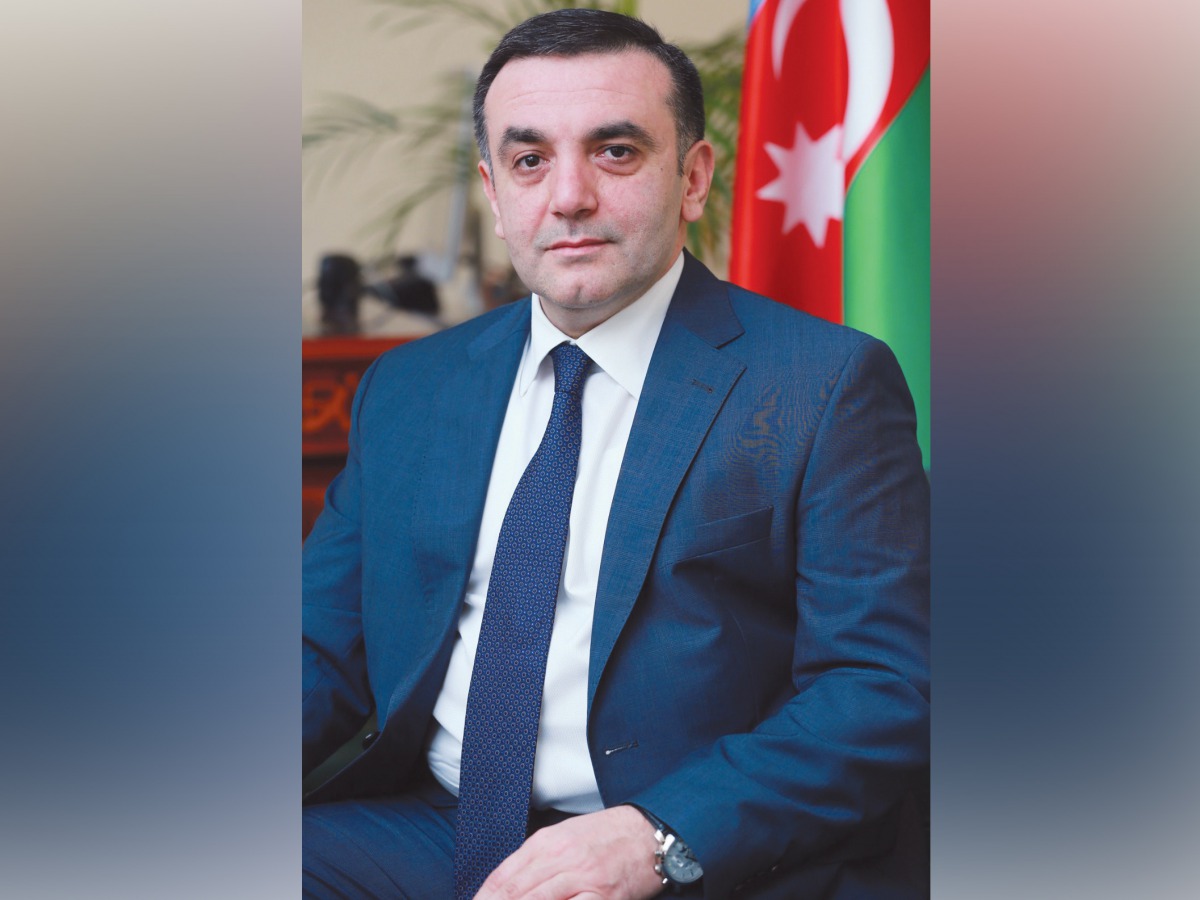
Ambassador of Azerbaijan to Qatar, H E Rashad Ismayilov
Doha: Azerbaijan and Qatar have taken many important steps to develop bilateral relations in all fields since establishing relations in 1994. The two countries witnessed since then remarkable progress and expanded areas of cooperation at various levels through establishment of joint committees and the exchange of visits at the highest level.
However, the emergence of COVID-19 has affected all aspects of life, including relations and cooperation of countries, therefore we preferred to get latest developments in this regard from Ambassador of Azerbaijan to Qatar H E Rashad Ismayilov.
Ambassador Ismayilov pointed out that the two countries have managed to launch new mechanism for political dialogue in the form of political consultations held first time in 2019 where a wide range of important issues of bilateral agenda were discussed.
Last February, the meeting of the Azerbaijan-Qatar Joint Economic, Trade and Technical Commission took place in Doha where officials and business representatives of both sides considered the current status of economic cooperation, exchanged their views about the possibilities of fostering economic and trade relations, said the Ambassador in an exclusive interview with The Peninsula.
He further explained that the two countries have established a joint Investment Working Group to encourage mutual investments and both sides rely on its active work in the coming years, adding that Azerbaijan is diversifying its trade with foreign partners.
About the Azerbaijan-Qatar Joint Economic, Trade and Technical Commission which so far held two meetings, in Baku and Doha, and widely discussed various aspects of cooperation and made important decisions, the Ambassador said: “The works done by the Commission in a short period of time have created a wide range of opportunities for both governments. It helped in fostering partnerships in areas such as trade, investment, industry, education, health, agriculture, culture, and tourism.
“The pandemic affected the Commission’s work as well and we had to postpone and reschedule our initial plans for 2020. Nevertheless, we do hope that as soon as the pandemic is over, we will be able to renew our negotiations on the topics and the date of the next meeting of the Commission.”
Like all fields and countries, the spread of COVID-19 pandemic has affected, among others the interstate relations and economic cooperation in particular tourism sector.
“The two countries were set to implement promising plans of joint projects and promotion activities in 2020,” he said, noting this includes reciprocal visits at various levels, consisting high-level visits, participation of delegations of both countries in a number of international conferences and fairs.
Furthermore, other events that were supposed to be held in Baku and Doha, were cancelled or rescheduled due to the pandemic, Ambassador Ismayilov underlined, adding that both sides look forward to restarting implementation of previous plans while working together on new potential projects of mutual interest.
Ambassador Ismayilov also stressed that both Qatar and Azerbaijan are working on a permanent basis to expand the existing legal framework between them and thus to foster cooperation in various areas. In this regard, he stressed that there are several draft bilateral documents are under consideration by the two countries. “These include agreement on mutual administrative assistance in customs legislation, prevention, investigation and reduction of customs violations; and agreement on cooperation in the field of veterinary medicine; and one on the abolition of short-stay visas.”
This is along Memorandum of Understanding (MoU) on cooperation in the field of small and medium business; as well an MoU on the twinning of Baku and Doha cities; and another on pensions and social cooperation.
He furthermore underlined the untapped potential for effective collaboration in other fields attractive to both sides saying that both sides are keen in promoting relevant contacts at various levels.
With regard to the ongoing military clashes with Armenia, and reason behind escalation rising again, the Ambassador started his answer with what he called ‘general facts’ available in open sources but the media in Qatar are not aware of or not having detailed background information about the conflict between Azerbaijan and Armenia over the region of Nagorno-Karabakh and accordingly this necessitated a brief historical background about the region.
The name Karabakh itself combined of ‘gara’ which means ‘black’ and ‘bagh’ meaning ‘orchid’ in the Azerbaijani language.
In the Middle Ages, Karabakh was part of a state governed by Turkic Muslim dynasties that existed in today’s Azerbaijan’s territory, and was inhabited by Turkic-speaking nations.
The 18th century was marked with the creation of the Karabakh Khanate ruled by the Turkic (Azerbaijani) Javanshir dynasty. After Karabakh Khanate was forced to sign the Kurekchay Treaty (1805) with the Russian Empire, the Khanate became subject to the rule of the Russian Empire. According to Ambassador, the region witnessed rapid mass resettlement of Armenians following the conclusion of the Gulustan (1813) and Turkmanchay (1828) peace treaties between Russian Empire and Persian Empire.
On 28 May 1918, the Democratic Republic of Azerbaijan was proclaimed with Nagorno-Karabakh as a part of it and it remained in this status during the Soviet rule. The moment the Republic of Azerbaijan gained independence from the Soviet Union, the former administrative borders of the Azerbaijani SSR, which also encompassed the Nagorno-Karabakh Autonomous Region, were deemed henceforth to be international borders and to be protected under international law (uti possidetis juris).
At the end of 1987, the Armenian Soviet Socialist Republic (SSR) openly laid claim to the territory of the Nagorno-Karabakh Autonomous Region of the Azerbaijani SSR. When Soviet Union ceased to exist, Armenia perpetrated aggression occupied the region of Nagorno-Karabakh and the seven adjacent districts and some exclaves.
The then war has claimed the lives of tens of thousands of people and destroyed properties and one million Azerbaijanis forced to leave their homes and properties.
In 1993, the UN Security Council adopted resolutions 822 (1993), 853 (1993), 874 (1993) and 884 (1993), condemning the use of force against Azerbaijan and called for immediate, complete and unconditional withdrawal of the occupying forces from all occupied territories of Azerbaijan and respect the internationally recognised borders.
Regarding the military clashes that broke out recently and are still continuing in Nagorno-Karabakh, the Ambassador accused Armenia of “moving towards what happened recently for several months” citing a statement of Armenian Defence Minister David Tonoyan “new war for new territories”, adding that “Armenia’s armed attack on Azerbaijani settlements along the state border in Tovuz region in July once more proved Armenia’s aggression policy and intention to create new sources of tension.”
According to Ambassador Ismayilov, Armenia launched attack on September 27, 2020 against Azerbaijan, intensively targeting the positions of the armed forces of Azerbaijan and thus blatantly violated the ceasefire.
As a result, there have been casualties among the civilians and military servicemen of Azerbaijan, he said, adding that extensive damage has been inflicted on many houses and infrastructure.
“In order to repel another military aggression by Armenia and ensure the security of civilians and densely populated residential areas deep inside the internationally recognised territories of Azerbaijan the Armed Forces of the Republic of Azerbaijan undertook counter-offensive measures within the right of self-defence and in full compliance with the international humanitarian law,” he said noting that Azerbaijan is fighting in its own territory to restore its territorial integrity and liberate territories that have been occupied by Armenia.
Speaking about the consequences of the current fighting, Ambassador Rashad said: “So far, 22 civilians including a family of five killed, 74 injured and 248 houses, 49 civilian facilities destroyed as result of attacks of Armenian Armed forces since September 27.”
For almost 30 years, he added, 20 percent of Azerbaijan territory is under Armenia occupation. Ambassador Rashad accused Armenia of forcibly expelling Azerbaijanis from their homelands as more than one million have become refugees and internally displaced persons.
“They are deliberately targeting the civilian population and infrastructure which is blatant violation of the norms and principles of international law, in particular international humanitarian law and the Geneva Conventions of 1949.”
Asked about no effects of calls made by Russia, the US and France for immediate ceasefire on grounds, Ambassador Rashad Ismayilov said: “The ceasefire cannot be achieved unilaterally.”
“According to the Mandate of OSCE Minsk Group, Co-Chairmen are guided in their activities by the principles and norms of the OSCE, the United Nations Charter, and as applicable resolutions of the United Nations Security Council (UNSC),” he underlined, saying, “It means the mission of the Minsk Group is to facilitate and find solution for the conflict based on the four UNSC resolutions which I mentioned above,” he added.
“Therefore, the co-chairmen should insist and demand Armenia to unconditionally implement resolutions of the UN Security Council. Mediation can only work if Armenia complies with the international law and starts immediate withdrawal from the territories according to a timetable. Armenia bears full responsibility for the recent escalation and Azerbaijan retains its right to take adequate measures against legitimate military targets to defend civilians and enforce Armenia to peace.”
In light of the growing fears of widening the scale of war between the two countries - Azerbaijan and Armenia - who are still refusing to stop the war, and each insisting on adhering to his positions, His Excellency Ambassador Ismayilov believes that his country “has always shown constructiveness on the negotiation track, in particular, in the past two years.”
“We have repeatedly stated that we are committed to the resolution principles developed over the years … but it is obvious that Armenia is not interested in resolving the conflict through negotiations…”.
“If you track their actions and statements’ chronology, you will clearly see that the Prime Minister of Armenia publicly declared that ‘Karabakh is Armenia and full stop’, visited the occupied territories of Azerbaijan six times since his inauguration.”
“Furthermore, Armenia organised in March ‘elections’ on the occupied territories of Azerbaijan which is yet another provocation,” the Ambassador said, adding that they organised the so-called swearing-in ceremony in Nagorno-Karabakh in Shusha, and decided to move the so-called parliament to Shusha.